Thomas's Wall-Beating Robbery Exposes Sutter Health Park's Right-Field Liability
By Justin Erickson ·
Colby Thomas's catch-of-the-year candidate in West Sacramento reveals a ballpark quirk that may reshape how to price Angels fly-ball hitters against Oakland.
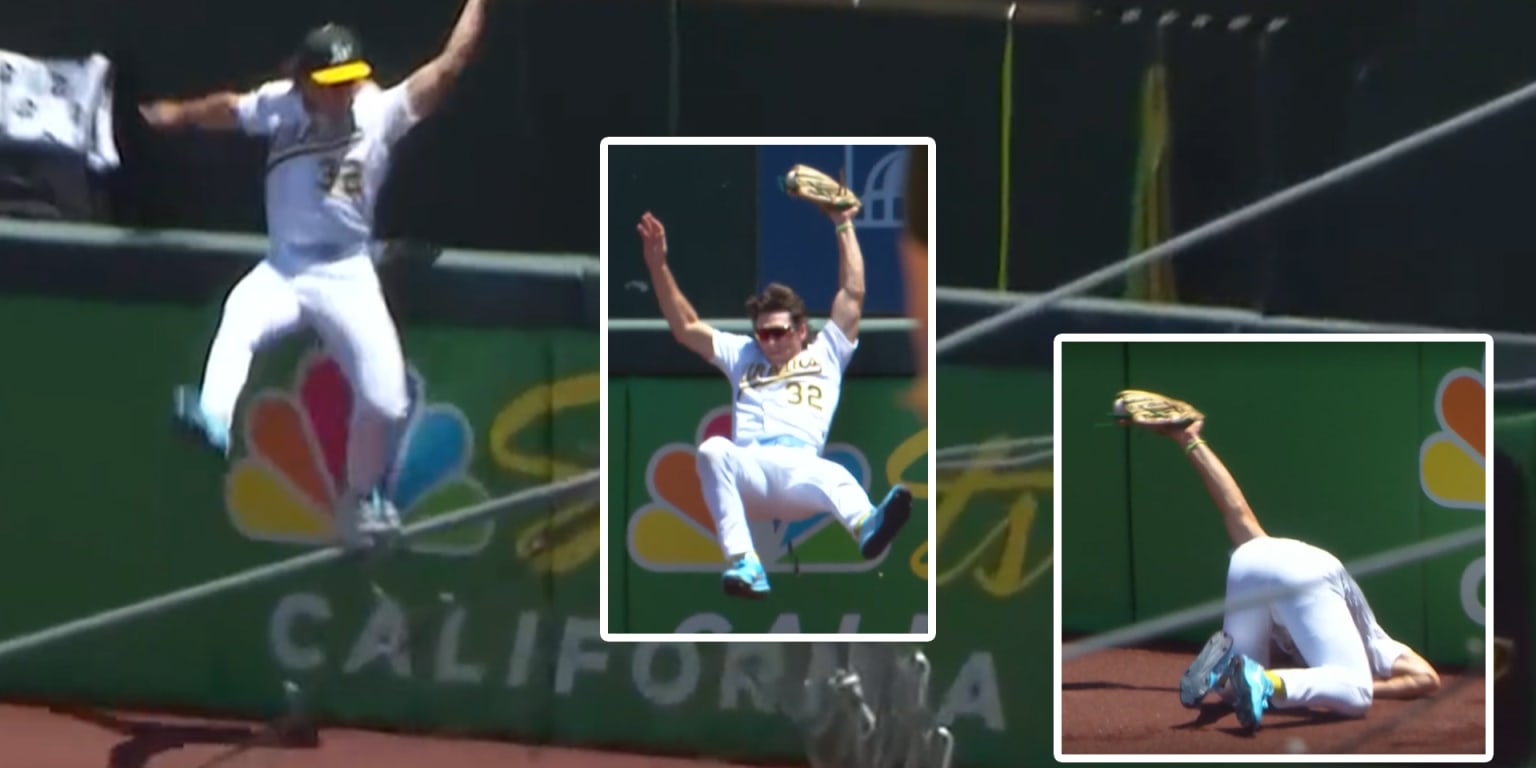
Colby Thomas made a leaping robbery at the short wall in right field Sunday that would have cleared the fence in 14 of MLB's 29 other stadiums. Jo Adell's 96.5 mph fly ball was crushed hard enough to be a home run anywhere else; at Sutter Health Park, it became an out and a standing ovation. The play was aesthetically spectacular—Thomas timed his jump, made the catch, crashed into the wall, and lived to watch the replay with his dugout—but it also exposed something more useful to bettors: the structural quirks of Oakland's home ballpark systematically suppress right-field power in ways opposing lineups may not fully price.
Sutter Health Park's right-field wall sits at an awkward depth and angle. Outfielders routinely struggle to read fly balls in the corners due to shadow play and sightline complications. On Sunday, Thomas—a disciplined right fielder with plus range—conquered those elements. But the catch itself is less predictive than what it reveals about the venue. A ball that carries 96.5 mph off the bat and qualifies as a home run in 48% of MLB parks is a borderline outcome at best in West Sacramento. That variance matters enormously for two groups: Angels hitters facing Oakland's pitchers at home, and Oakland's relief arms tasked with suppressing fly balls in that specific zone.
Adell, who has been generating loud contact all season, is a particular case. His spray chart and exit-velo profile suggest he should be a home-run threat in neutral or hitter-friendly parks. At Sutter Health Park, his power upside gets neutered by geography. Thomas's catch was extraordinary, yes. But it was also inevitable given the ballpark's design. The market does not yet fully account for this asymmetry—casual bettors see "big fly ball" and assume traditional home-run probability, not ballpark-adjusted expected outcomes.
For prop bettors, the angle is straightforward: Angels fly-ball hitters (particularly Adell and others who elevate for power) carry hidden value in under propositions when playing at Oakland. Their expected home-run totals look high relative to what Sutter Health Park actually yields. Conversely, Oakland's ground-ball and strikeout-generating relievers gain leverage they don't receive pricing for when facing Angels batters at home. A's pitchers with elevated strikeout rates—especially those who induce weak contact—gain a secondary edge from the ballpark's geometric suppression of fly-ball distance. Jack Perkins, the starter who pumped his fist after Thomas's catch, is worth monitoring for strikeout props in future Oakland home starts; his ability to force pop-ups and shallow flies is amplified by Sutter Health Park's design in ways his season-to-date xFIP may not fully capture.