Arizona's Chase Field Fortress Extends Winning Streak to Five Against Struggling Rockies
By Justin Erickson ·
The Diamondbacks' ninth-inning heroics mask a deeper advantage: their offensive profile matches perfectly with Colorado's pitching vulnerabilities in a scheduled 13-game gauntlet.
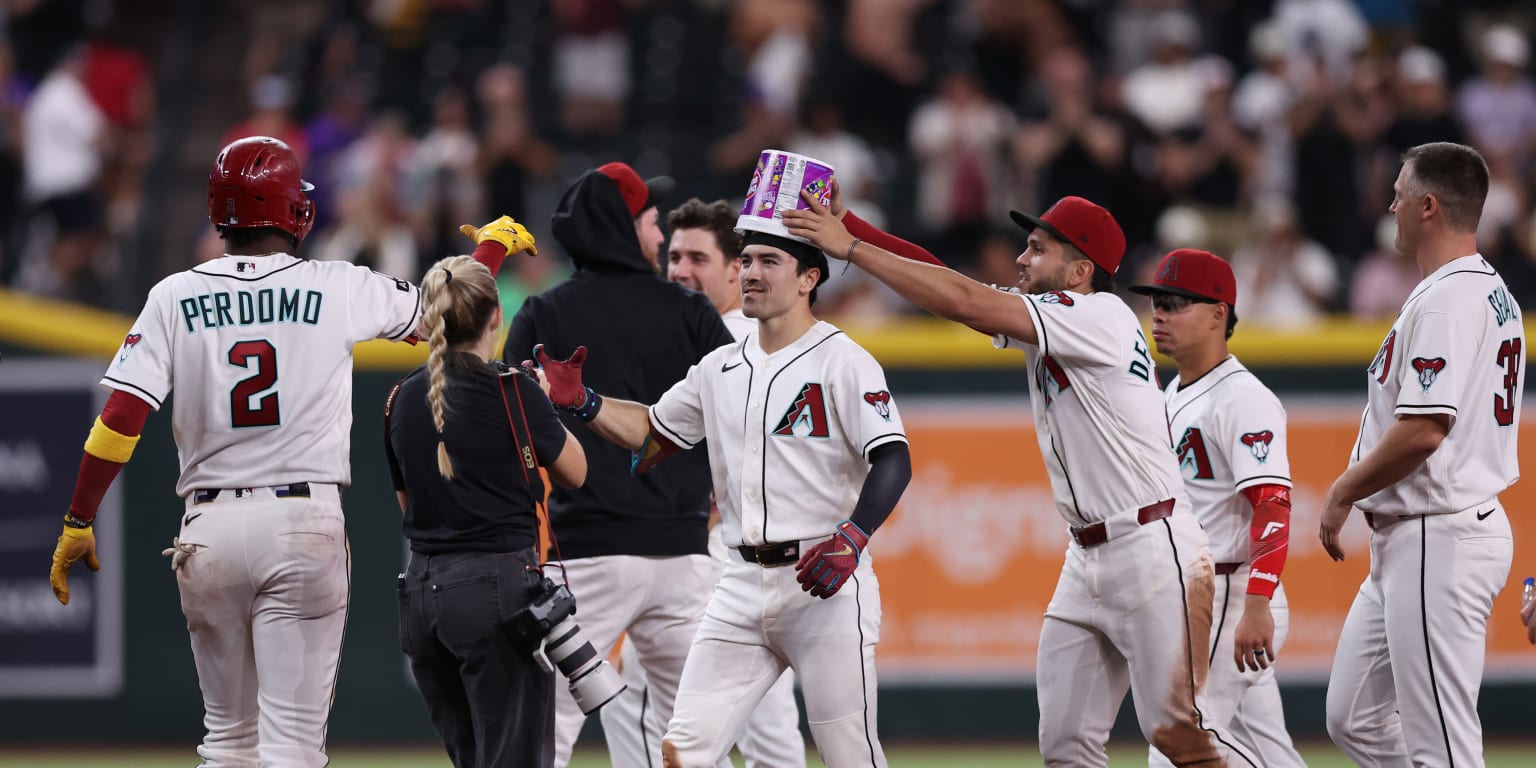
Corbin Carroll's walk-off single to right in the ninth inning gave Arizona a 2-1 victory over Colorado on Thursday, extending the Diamondbacks' winning streak to five games and their success at Chase Field to six wins in their last seven outings. The late-inning execution matters, but the underlying pattern is what bettors should track: Arizona has now won 18 of its last 23 matchups against the Rockies at home since the start of 2023—a 78% win rate in a home stadium context where the Diamondbacks have built significant tactical advantage.
Edurdo Rodriguez allowed no runs across seven innings, repeatedly escaping trouble in the fifth and sixth before handing the game to the bullpen with a 1-0 lead intact. Colorado's starter Zach Agnos was sharp in his MLB debut—five scoreless innings on one hit and four strikeouts—but the Rockies managed only one run across nine frames, a byproduct of Arizona's pitching depth and the team's ability to manufacture offense in low-leverage situations. Ryan Waldschmidt's leadoff walk in the sixth that preceded the game-winning sequence illustrates how Arizona's offense functions: patient approach generating baserunners, then converting them through pressure situations.
The Diamondbacks now enter a 13-game homestand against Colorado and San Francisco, two teams ranked bottom-five in runs per game and offensive ISO this season. Arizona's 108 OPS+ at Chase Field ranks among the top third of MLB franchises at home; Colorado's road OPS+ sits at 98. The gap between those two environments is roughly 80-100 runs per season—meaningful in a shortened series context. Rodriguez's seven-inning performance also signals Arizona's pitching staff is healthy enough to stack multiple quality starts across the stretch, a luxury Colorado's thin rotation cannot match.
For prop purposes, Carroll's ninth-inning heroics may trigger overreaction in the futures market, but the edge in this series belongs to Arizona's sustained home-field advantage and Colorado's structural offensive limitations. The Rockies scored one run; their season-long run differential against teams with winning records is minus-47. Arizona's pitching depth means each game features a starter capable of posting a sub-3.00 ERA—Rodriguez just did so in seven innings. Carroll himself is hitting .289 with a .378 OBP at home this season; the Rockies' bullpen has surrendered a 4.12 ERA in road games. The ninth-inning drama masks the real story: Arizona is positioned to bleed Colorado across multiple games in a favorable matchup.
Bettors should monitor Arizona's team total over/unders as the homestand deepens. Early-week numbers against a weak Rockies rotation may hang at 4.0-4.5 runs; by game three or four, if Arizona sustains offensive consistency, those lines will shift upward. The edge is not in chasing the single-game heroics—it's in recognizing that Arizona's home-field advantage and Colorado's offensive deficiency create a multi-game structural advantage that the market will eventually price, but hasn't yet fully valued across the 13-game stretch.