Cardinals Six-Man Rotation Shields Young Arms While Auditioning Dobbins as a Starter
By Justin Erickson ·
St. Louis moves Hunter Dobbins into the traditional rotation as it stretches out its pitching depth, reshaping both immediate workload risk and mid-season trade leverage.
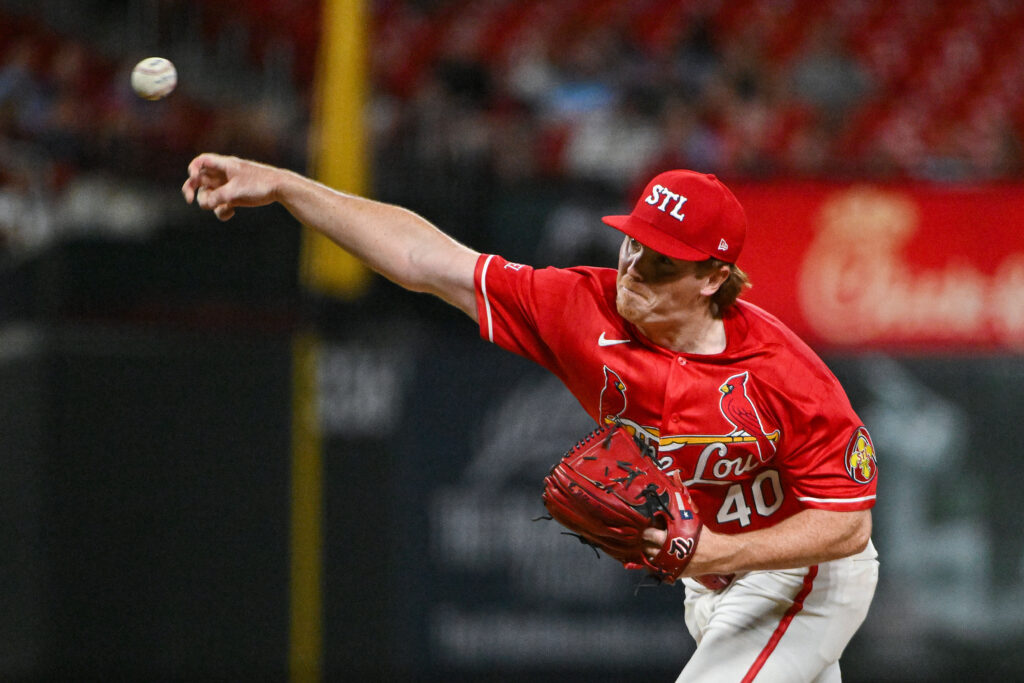
The Cardinals are shifting to a six-man rotation effective immediately, with Hunter Dobbins transitioning from bulk-relief duties to traditional starter roles. Dobbins, recalled roughly one week ago, has logged two appearances out of the bullpen since his call-up; the pivot to the rotation signals both a structural change in St. Louis's pitching plan and a meaningful audition for Dobbins' longer-term viability in the starting mix.
The mechanics behind the six-man rotation are straightforward but consequential. By cycling an extra starter into the regular turn, the Cardinals compress each pitcher's workload per appearance and extend rest windows between outings. For a rotation anchored by young talent—and notably, one containing Dustin May, who carries a documented injury history—that built-in decompression matters. May has been a durability concern throughout his career; St. Louis's investment in additional rest suggests the front office is prioritizing health preservation over the calendar-efficiency of a five-man turn. The move also creates de facto insurance: if one starter hits the injured list, the Cardinals don't immediately cannibalize their bullpen depth or rush a minor-league arm into a high-leverage spot.
Dobbins himself represents the secondary strategic layer. He's been given a clean pathway to audition as a starter during what amounts to a low-risk window—the team isn't betting its season on his success in June, but they're documenting how he performs over multiple innings and consecutive starts. If he performs at or near league-average effectiveness, he becomes either a trade chip at the deadline (teams needing rotation help will pay for a cost-controlled arm) or a long-term rotation piece. If he struggles, the six-man framework allows St. Louis to demote him or keep him as a fallback bullpen option without the rotation collapsing.
For bettors, the six-man rotation creates two distinct prop angles. First, Cardinals starter strikeout totals will likely decline slightly over the next 4-6 weeks. A pitcher working fewer innings per start—typical in six-man systems, as starters are pulled earlier to preserve deep-bullpen usage—sees fewer at-bats and fewer strikeout opportunities. May, the ace, will probably see 5-6 innings as his typical outing rather than 6-7; his K prop should be discounted accordingly. Second, the Cardinals' bullpen usage rate will spike. More starter changes mean more bullpen appearances, which can bloat reliever workload and increase injury risk within the relief corps itself. Over totals—both team and individual—may carry elevated variance during this stretch as the bullpen absorbs additional volume. If you're projecting June or early July Cardinals games, account for lighter starter innings and heavier late-inning bullpen exposure when sizing unders on team totals or reliever prop lines.