Báez's Triple-A Power Surge Signals Prospect Readiness, But MLB Timing Remains Uncertain
By Justin Erickson ·
Joshua Báez has hit 28 homers in 75 Triple-A games, claiming the minor league lead, but prospect power doesn't automatically translate to major league prop edges.
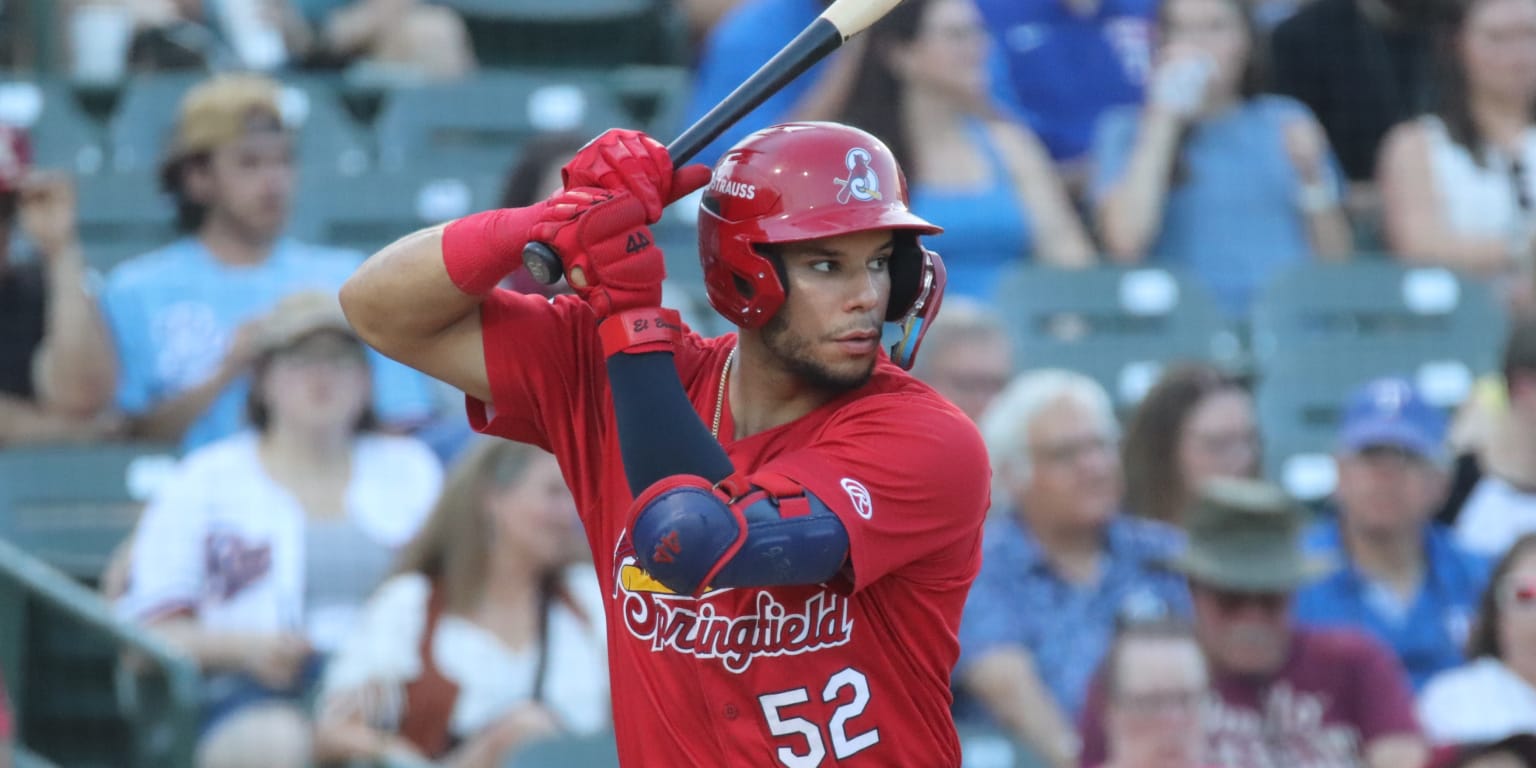
Joshua Báez delivered his fourth multihomer performance of the season Thursday night for Memphis, launching two solo shots in an 8-6 victory over Charlotte to seize the minor league home run lead with 28 on the year. The Cardinals' No. 3 prospect, ranked No. 49 across MLB prospects, has compressed his power output into a brutally efficient 75-game stretch—a .617 slugging percentage that obliterates typical Triple-A benchmarks. He's outpacing the pace that produced 20 homers across 117 games last season, a cognitive leap that catches the eye of every scout in the system.
What Báez has done at the Triple-A level is undeniable: four multihomer games, 28 total homers, stolen bases woven into an offensive profile that combines patience (.333 OBP) with explosive exit velocity (both Thursday blasts registered above 103 mph). The velocity signature matters because it's repeatable. A 103.8 mph line drive isn't a lucky swing; it's a mechanical statement. He's proven he can scale up his approach against breaking balls and elevated fastballs that Triple-A arms throw with regularity. His June 16 outburst—four homers, seven RBI against Nashville—exists in the statistical record, not as a fever dream.
But there's a structural gap between dominating a league 90 miles from the majors and translating that into actionable MLB prop value. The Cardinals haven't called him up, and there's no announced timeline. Until Báez is on a major league roster, he doesn't generate betting surface. Even if a call-up arrives within the next month or two, the first-season bias is real: rookies entering the majors post identical hole frequencies to established hitters—they just haven't seen them yet. His .267 batting average at Triple-A hints at contact precision concerns that velocity alone won't solve. MLB breaking balls move differently, arrive earlier, and live in zones where 28 homers in 75 games becomes a 35-homer pace over 550 AB—respectable but hardly transformative.
What this does signal is organizational confidence. The Cardinals wouldn't allow a No. 3 prospect to rack up 100+ games and sustained power production without a credible path. When and if Báez reaches St. Louis, his home run prop lines will price in youth volatility and the minor league-to-majors transfer tax. Early-season calls for Báez HR overs will almost certainly be overvalued because the market will anchor to his minor league pace. Conversely, unders on his strikeout total might hold value if his contact issues persist in the majors—a 24% K-rate in the minors is tolerable; 28% in the show is a problem. For now, Báez exists as a prospect milestone, not a prop edge.
The Memphis power display matters for one thing: when the roster move comes, it will come without a minor league adjustment period baked into the decision. The Cardinals are preparing him for immediate impact, not a rehab assignment. That's the real signal buried under the home run totals.