Cal Raleigh's Timing Collapse: A 0-for-34 Disaster Built on Mechanics, Not Luck
By Justin Erickson ·
The Mariners catcher is chasing more, hitting softer, and starting his swing a fraction late—a mechanical breakdown that's now the worst hitless streak in Live Ball Era history for any player coming off a 40-homer season.
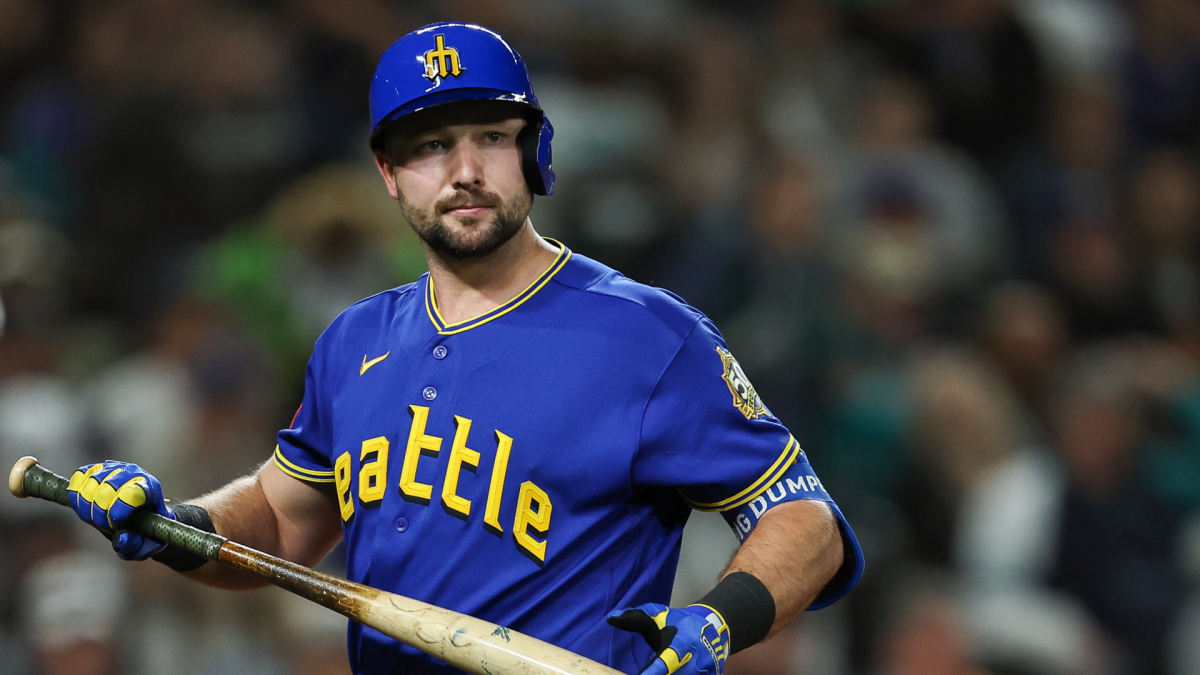
Cal Raleigh extended his hitless streak to 0 for 34 Monday against Houston, the longest such drought since 1920 by any hitter following a 40-homer campaign. That's not variance. That's structural failure. The reigning AL MVP runner-up is now batting .157 with a .559 OPS through 42 games—numbers that belong to a bench player, not a franchise cornerstone who mashed 60 homers last season and was a legitimate MVP candidate just 12 months ago.
The mechanics tell the story more clearly than the scoreboard. Raleigh is arriving late to his pitch. Video analysis shows his front-foot leg kick initiating measurably later in 2026 than it did in 2025, a tick of timing that compounds across an entire at-bat. When he connects, the ball is leaving his bat at 87.0 mph average exit velo—down 4.3 mph from last year and nearly 2 mph below the MLB average. His hard-hit rate has collapsed from 49.6% to 28.7%, ranking 161st among 177 qualified hitters. Simultaneously, he's chasing at a 37.4% rate (up from 31.8%), and when he does chase and connect, he's making softer contact than true contact specialists like Caleb Durbin or TJ Friedl. That combination—late timing, weak contact, elevated chase rate—is the mechanical blueprint of a player whose internal clock is off.
The oblique injury that sidelined him for three games earlier this month may have accelerated the problem but didn't create it. Raleigh was already struggling before the injury surfaced. His strikeout rate sits at 31.4%, nearly a full 10 percentage points above the league average, and only five qualified hitters are making less contact on pitches in the zone. The mental strain of a 0-for-34 is real and deserves acknowledgment—slumps of that magnitude weigh on anyone—but the underlying machinery is broken, not merely rusty.
For bettors, the timing issue is the operative angle. High-velocity fastballs (95+ mph) have historically been Raleigh's sweet spot, but the delayed leg kick is most punishing against heat. If opposing pitchers attack him upstairs in the zone with velocity, his whiff rate will remain elevated and contact quality will stay suppressed. This isn't a regression bet in the traditional sense; it's a recognition that the market has not yet fully repriced Raleigh's props for a player operating 4 mph softer on average exit velocity with a swing timing issue that favors fastball-heavy approaches. Strikeout prop lines on Raleigh—especially in games where the opposing starter sits 94+ mph average fastball velocity—have not widened enough to reflect his current 31.4% K-rate. Similarly, any batting average or hit-count prop remains overvalued because it's priced on career baseline or 2025 performance, not on a 42-game sample of .157 baseball with mechanical rot showing on slow-motion replay.
The path out of this exists—timing adjustments are fixable—but until Raleigh's leg kick synchronizes again with the pitcher's release, Seattle's lineup loses a power source and bettors should treat Raleigh as a fade on contact-dependent props until video evidence shows the timing correction. The 0-for-34 will end; the mechanical issue won't unless Raleigh's coaching staff identifies and corrects it. Until then, expect more weak contact and more strikeouts.