Burrows' Pitch-Selection Gamble Backfires Against Seattle; Astros' Rotation Reliability Takes Another Hit
By Justin Erickson ·
The Astros' offseason trade acquisition abandoned his most reliable stuff against the Mariners, eating five-plus runs in what should have been a manageable outing—a pattern that's beginning to define his tenure in Houston.
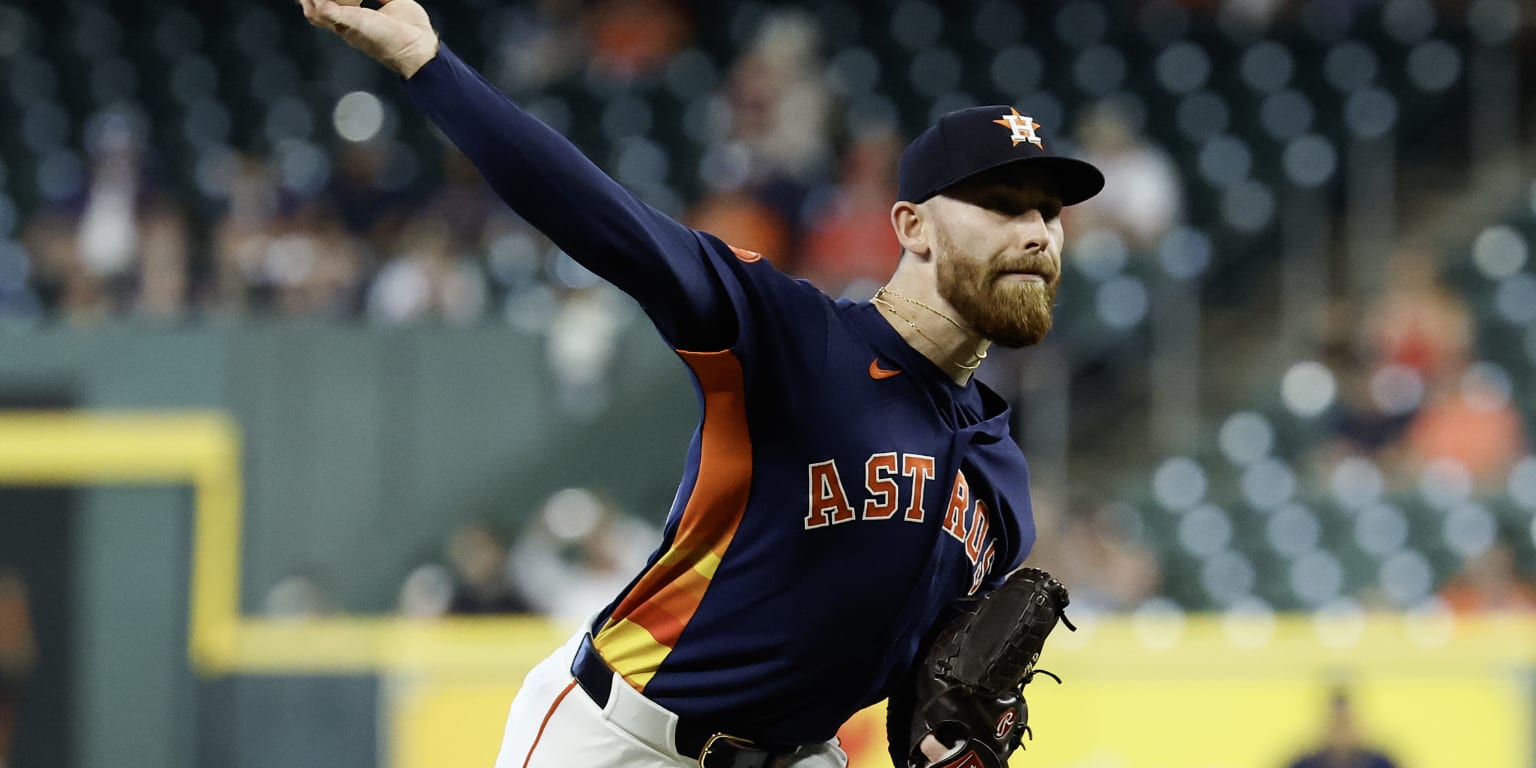
Mike Burrows walked into Thursday's start against Seattle off a career-best seven scoreless innings against Cincinnati. He left with a career-worst seven runs on eight hits and a blown opportunity that now frames a troubling arc: in nine starts, he's posted four disasters (four-plus runs allowed) against five quality outings. That volatility is what manager Joe Espada was dancing around when he said Burrows was "one or two pitches away" from a quality start—a diplomatic way of acknowledging that inconsistency, not talent, is the issue.
The mechanics tell the story. Burrows normally leans on his four-seam fastball and changeup (each around 28% of the time), mixing in slider, curve, and sinker. Against the Mariners, he flipped the script: 29 changeups, 22 sinkers, 21 sliders, but only 16 four-seamers and 14 curves. He got whiffs on the changeup and slider—each four times—but the sinker was a liability, and Luke Raley's three-run blast in the first and Mitch Garver's two-run shot in the fourth proved that sequencing experiments don't matter when location fails. Burrows himself acknowledged the fastball to Raley was "exactly what I was trying to do"—meaning he wasn't pitching out of his depth, just executing a plan poorly.
What's notable is the Astros' investment in Burrows. They traded for him in the offseason with rotation reinforcement in mind, and he's delivered innings: 50 1/3 through nine starts, the team leader. But volume without reliability is a trap. He leads the Astros' staff in strikeouts (46) and homers allowed (10), a split that suggests he's living on thin margins—the kind of pitcher who can look unhittable one turn and get exposed the next. Against a league-average lineup like Seattle's, that margin collapses. Against top defenses and disciplined hitters, the strikeout rate that makes him look like an asset becomes masking tape over a structural problem: walk rate and pitch-sequencing vulnerabilities that compound in high-leverage counts.
For prop bettors, this is the tell. Burrows' next start is Friday, presumably in the Rangers series. The market will likely bump his strikeout line down slightly (he's averaged 5.1 K's per game), but the real vulnerability is in opponent-specific props and team totals. Against lineups that punish fastballs in the zone and sinker hang (Seattle profile), his expected home-run rate climbs; the market will underweight that because the sample is small and recency bias favors the Reds gem. But a pitcher who alternates between dominant and disaster is a contra-bet candidate: fade his strikeout overs when the opponent has above-average home-run rates, and lean into Texas team totals (4.5-5.0 range) if sportsbooks price Burrows as a steady rotation piece.
Espada is right that consistency is the ask. The problem is that consistency isn't something Burrows has demonstrated yet in Houston, and Thursday proved that even his good stuff doesn't inoculate against the kind of pitch-execution failures that cost runs in bunches. Until he stabilizes, he's a fade-the-overs asset, not a lock-in-the-line arm.