Harper's Deadline Plea Exposes Phillies' Offensive Fragility—And A Stubborn Front Office
By Justin Erickson ·
Philadelphia's star outfielder publicly called for reinforcements after an 3-8 skid since the All-Star break, but management's resistance to deadline urgency signals the team won't pivot despite the clearest offensive crisis in baseball.
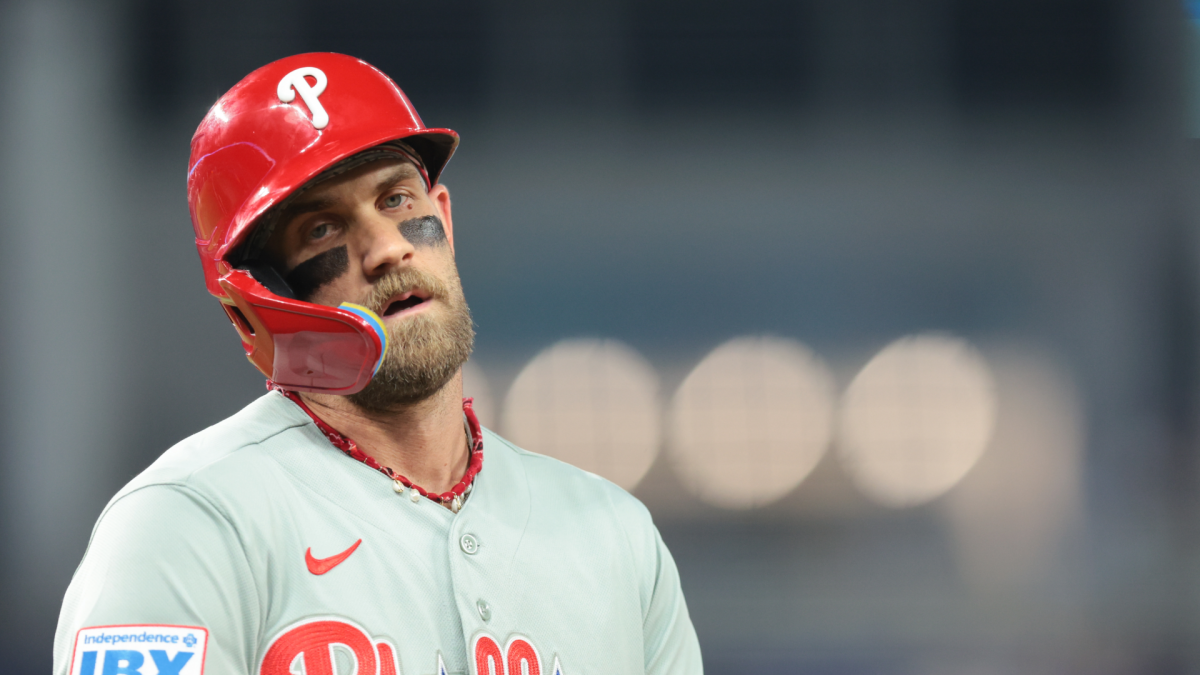
Bryce Harper didn't mince words after Tuesday's 1-0 loss: the Phillies need help before Monday's trade deadline. The team sits 57-51, six games behind Atlanta in the NL East, but the real problem isn't the record—it's the offense. Over the last 11 games since the All-Star break, Philadelphia has scored 43 runs, a pace so barren that two double-digit outbursts barely registered. Strip away a 10-run game and an 11-run game, and the baseline production is anemic. The Phillies have now played two 1-0 games in five days, which isn't random variance; it's a symptom of an offense operating at the margin.
The statistical evidence is damning. Philadelphia's right-handed hitters carry a .646 OPS, the worst in baseball by 16 percentage points. Right field production ranks among the sport's dregs. These aren't small sample noise—they're structural weaknesses in a lineup that can't carry itself through a tough division race. A right-handed-hitting outfielder would address the gap, as would bullpen depth. Both are obvious targets at the deadline, yet both require Dombrowski to move. Instead, interim manager Don Mattingly essentially told Harper to mind his business. Mattingly's rebuke—framed around protecting the players already on the roster—reads as organizational defensiveness masquerading as loyalty. The implication is clear: the Phillies aren't treating Monday as a moment to push all-in; they're treating it as a maintenance window.
What makes Mattingly's resistance particularly revealing is that it contradicts Dombrowski's recent track record. He added Jhoan Duran, Brandon Marsh, and Gregory Soto in recent deadline cycles. Dombrowski knows how to act. But when Harper—a generational talent and the face of the franchise—publicly requests reinforcements, the manager's response isn't "we're working on it" or "Dave's got options." It's a lecture about organizational patience and an insinuation that wanting better players somehow insults the ones already here. That's organizational failure dressed up as philosophy.
From a betting perspective, this gap between Harper's urgency and the front office's equanimity is the real story. Phillies unders have been attractive since the All-Star break because the offense can't sustain production, and that dynamic intensifies if the deadline passes without meaningful addition. The team's right-handed OPS deficit will persist; it's baked into roster construction. Games against teams with strong left-handed pitching become higher-variance plays, and team totals compress downward as margin-for-error shrinks. If Dombrowski doesn't move by Monday, expect Phillies team totals to drift lower into August and September as the offense regression becomes a recurring structural problem rather than a temporary slump.
The Braves' six-game lead isn't insurmountable, but it becomes so in a division where Philadelphia's upper-deck offensive ceiling is lower than Atlanta's floor. Harper's plea will matter only if it moves Dombrowski. Right now, all signs suggest it won't.