Harrison's Forearm Strain Fractures Brewers' Rotation Mid-Season
By Justin Erickson ·
Milwaukee loses its breakthrough starter to a 15-day IL stint just as the All-Star break arrives, forcing a bullpen-heavy approach down the stretch.
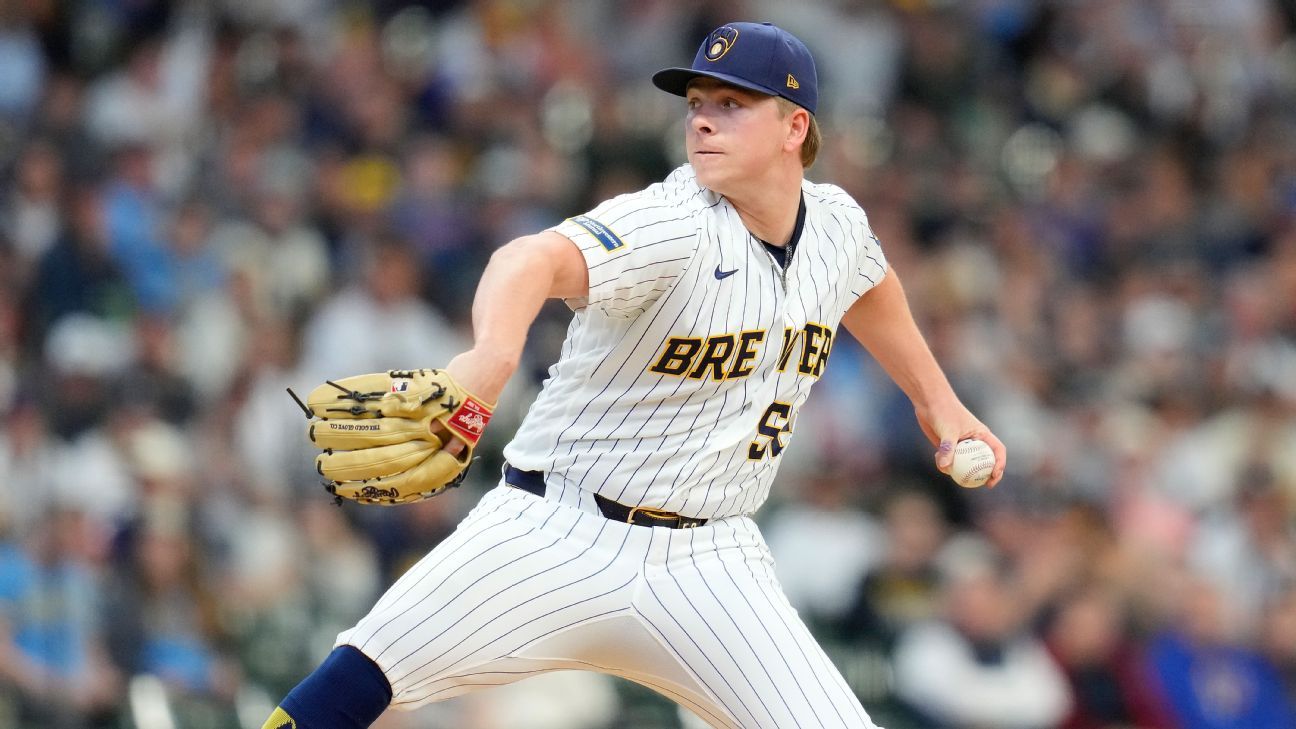
Kyle Harrison landed on Milwaukee's injured list Saturday with throwing forearm tightness, a move made retroactive to Thursday and announced before the Brewers' doubleheader against Pittsburgh. The left-hander reported elbow soreness after a four-inning outing against St. Louis on Wednesday—a loss in which he surrendered five runs. Robert Gasser, the organization's depth option, was recalled from Triple-A Nashville to fill the rotation slot.
Harrison's injury arrives at a brutal juncture. The 26-year-old acquired in a February trade with Boston has been Milwaukee's most reliable starter this season, posting an 8-2 record with a 3.01 ERA across 83⅔ innings and 101 strikeouts. That's elite peripherals for a pitcher in his first year with the franchise—the Brewers' confidence in paying for him in February directly backs his value to the rotation. But his last two starts tell a different story: six runs allowed over 6⅔ innings, a velocity cliff that typically precedes an IL visit.
Forarm tightness in pitchers sits at the blurry edge between day-to-day management and genuine structural concern. A 15-day assignment—rather than a longer absence—suggests the organization views this as containment, not damage control. That timeline means potential return in mid-to-late July, before the trade deadline scramble, if inflammation recedes without complication. Gasser (2-3, 4.15 ERA) becomes the short-term replacement; he's logged eight starts but doesn't carry Harrison's strikeout upside or command consistency.
For betting purposes, Harrison's absence reshapes Milwaukee's pitching-dependent edge for the next two weeks. The Brewers' rotation K-rate props and game totals over 8.5 now flow through less efficient starters in higher-leverage spots. Harrison's strikeout total—likely to have been 7.5–8.5 in his next start—vanishes from the board, but his removal also removes a run-suppression anchor. Look for Brewers game totals to tick upward slightly across the next four-to-five starts (Gasser's early appearances), as replacing a 3.01-ERA arm with a 4.15-ERA relief fill creates a scoring differential of roughly 0.3–0.5 runs per game. That's enough to flip unders at totals of 8.5 or lower from lean-under to slight-lean-over terrain.