Brewers' Second-Inning Explosion Signals Timing Realignment, Not Offense Reset
By Justin Erickson ·
Milwaukee's eight-run burst against the Braves ends a three-game skid, but the context—elite RISP execution in one inning after weeks of drought—carries different betting implications than a simple offensive awakening.
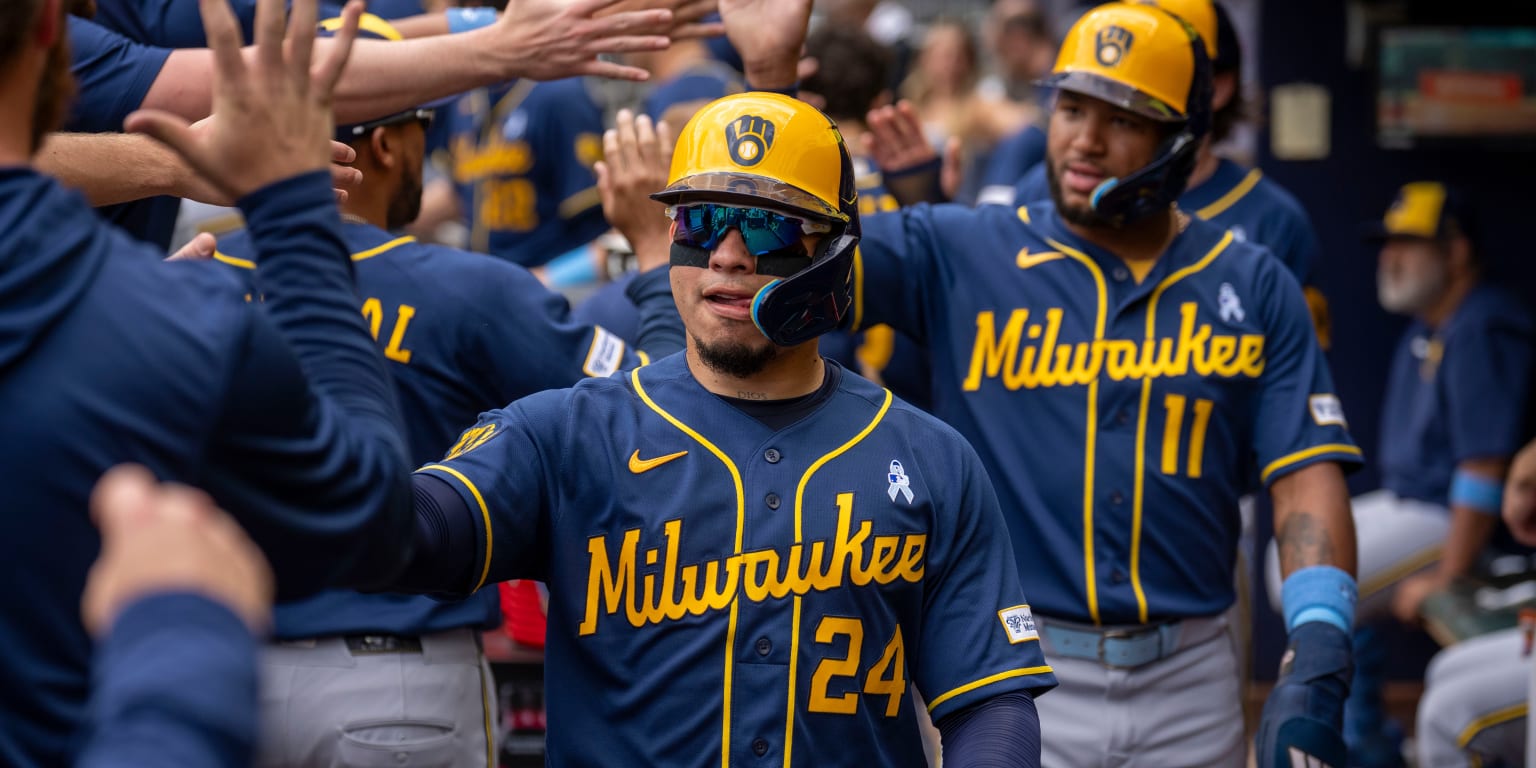
The Brewers scored nine runs Sunday at Truist Park to avoid a series sweep, with the damage concentrated in a devastating second inning where William Contreras bookended eight runs with a single and a three-run homer. Milwaukee had entered the game limping through its first three-game losing streak in roughly two months, managing just five hits in 31 at-bats (.161 average) with runners in scoring position across that stretch. The second inning reframed the entire offensive narrative: the Brewers went 5-for-7 with runners in scoring position against Braves starter Bryce Elder, a spike that directly matched the team's cumulative RISP production over the preceding 31 at-bats.
This wasn't a broad-based offensive renaissance. Contreras and Jackson Chourio delivered their usual quality, but the supporting cast—Sal Frelick, David Hamilton (RBI double), and Brice Turang (RBI single)—suddenly executed with timing and contact precision that had been absent. The eight-run output matched the Brewers' largest single inning of the season, equaling their sixth-inning explosion against Arizona on April 28. That parallel matters: Milwaukee hasn't become a different offensive team in the past eight weeks. Rather, the team cycled through a extended cold spell in high-leverage situations and then corrected it in one concentrated window.
Behind the plate, Robert Gasser delivered his first victory since Tommy John surgery in 2024, working six innings with seven strikeouts while allowing two runs. The workload and strikeout rate (7 K in 6 IP) sit at career highs for innings pitched, signaling both that Gasser is tracking toward his pre-surgery capacity and that the Brewers' medical team is comfortable extending him. That confidence matters for the team's rotation depth as the calendar moves toward July and trade-deadline decisions.
For bettors, the inning-specific eruption creates a measurement problem. Milwaukee's RISP woes weren't a function of lineup construction or ballpark effects—they were a timing and sequencing crisis that resolved itself in a single inning. The risk now is overweighting Sunday's corrective spike as evidence of sustained offensive improvement. The Brewers remain a team that scored nine runs total across three games before the series finale; one eight-run inning doesn't retroactively restore those lost games. However, the timing of the correction—exiting a slump with a display of RISP discipline—does lower the probability of continued drought over the next 10-14 games. Expect Brewers team totals to remain modest (4.5–5.0 range) in their next series, as the market hasn't fully repriced the offensive reset yet. The edge isn't that Milwaukee's offense is suddenly elite; it's that the market still prices them as if the RISP crisis is ongoing.