Acuña's Return Sets Up a Braves Bounce-Back Spot Against Garrett's Miami Debut Blowout
By Justin Erickson ·
Atlanta's best-in-baseball lineup gets Ronald Acuña back in a matinee against a Marlins starter who imploded in his first outing.
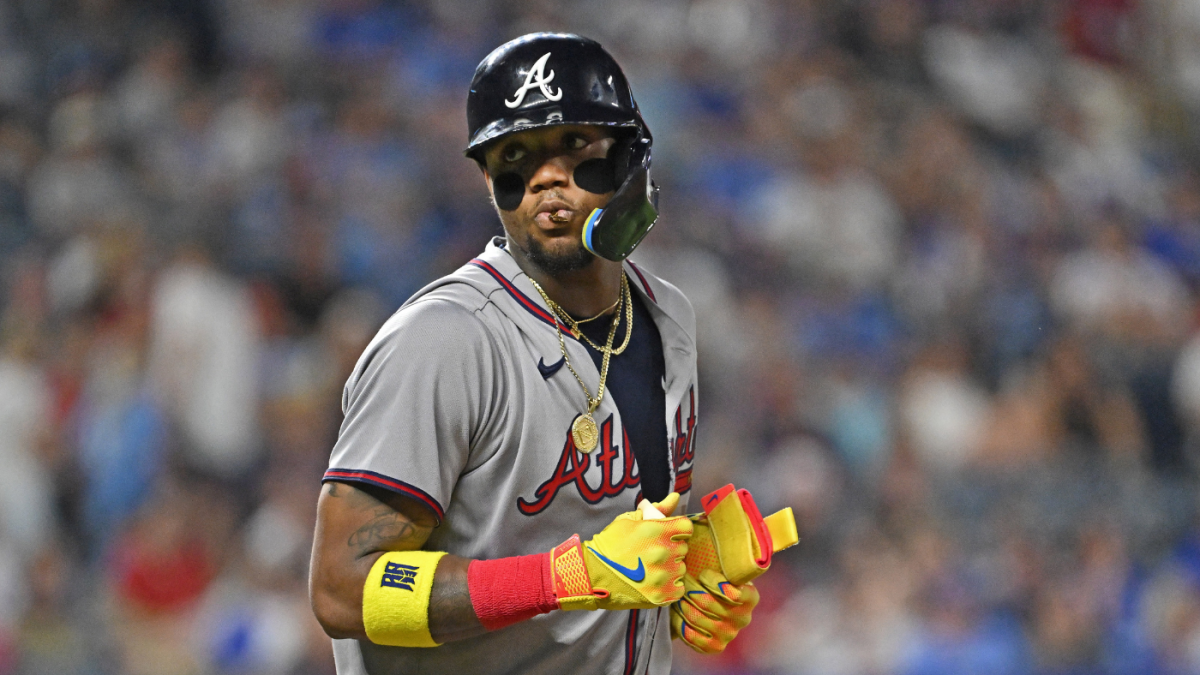
The Braves arrive at loanDepot park Tuesday with a 32-16 record and the majors' largest division lead, but they're angry. Monday's 12-0 home shutout loss—the worst home loss in Marlins franchise history—was a complete offensive collapse; Atlanta managed four hits against a pitcher who was unremarkable. That thumping came without Ronald Acuña Jr., the franchise's centerpiece, sidelined since May 2 with a hamstring strain. Acuña is expected to be active Tuesday, likely as the designated hitter to avoid the harsh Miami turf early in his ramp-up. His return immediately upgrades an already elite Braves lineup that leads MLB in hits (430) and slugging percentage (.439).
Atlanta's offensive foundation remains intact even with Acuña shelved and slow starts from Austin Riley and Mike Yastrzemski. The Braves are tied for first in batting average (.263) and second in runs (250). More importantly, they've won 13 of their 15 series played this year—only dropping two of three in Seattle and splitting four in Arizona. The pitching is equally formidable: a 3.14 team ERA that ranked first in baseball before Monday's aberration, plus a 12-game stretch of allowing three or fewer runs that ended just yesterday. Spencer Strider and Chris Sale form one of the game's best rotation anchors, but Tuesday will feature Martin Perez, a 35-year-old veteran who has shuffled between relief and rotation duty. Perez carries a 2.25 ERA through five starts and hasn't faced Miami this season. No Marlins hitter has more than three career at-bats off him.
Opposite them sits Braxton Garrett, a 28-year-old lefty making his season debut after a rough Triple-A recall. In his first start last Thursday against Minnesota, Garrett lasted 1.1 innings, surrendered five runs, and walked five hitters—a complete unraveling that signals deeper control or command issues. The Marlins are priced at +1100 for extra innings and -2500 to play nine regulation, a market perception that reflects Miami's weak pitching and the Braves' proven ability to produce in games without Acuña. Otto Lopez is the lone bright spot for Miami—he's hitting .337 to lead all of baseball and was the first and only player to reach 60 hits this season—but one standout hitter doesn't scaffold a full roster.
The Braves' underlying profile here is dominant. Atlanta is 28-5 when scoring four or more runs and only 4-11 when held to three or fewer. Garrett's implosion in his debut suggests that trend accelerates Tuesday. Perez is a neutral arm with a sub-2.30 ERA, meaning the Braves' lineup quality matters far more than starter delta. With Acuña either back in the lineup or available off the bench, and facing a pitcher who demonstrated minimal command in his last appearance, the Braves' offensive floor is substantially elevated. Unders at 11 or above assume Miami can stay in pace with a team that scores 4.1 runs per game (pre-Monday). That's a bet against both Garrett's stability and the Braves' capacity to get production from a group that led the majors in hits before this one blowout erased nothing.
The matinee environment also matters for betting flow. Day games absorb sharper action from offshore and proprietary syndicates that exploit thinner market liquidity. The Braves opened as -400 favorites for the NL East crown this season—their internal valuation by the market already reflects championship-contender status. A money-line bet on Atlanta here is not a contrarian value play; it's simply recognizing that Garrett's wildness, Perez's steadiness, and Acuña's offensive gravity align against a basement-dwelling pitching staff. The under at 11 carries more acute risk.