Braves Gamble on Santana as Depth Play, But Injury History Limits Upside
By Justin Erickson ·
Carlos Santana joins Atlanta on a minor league deal after an adductor strain ended his Diamondbacks tenure in week one, creating a low-cost veteran option but no meaningful impact on near-term offensive production.
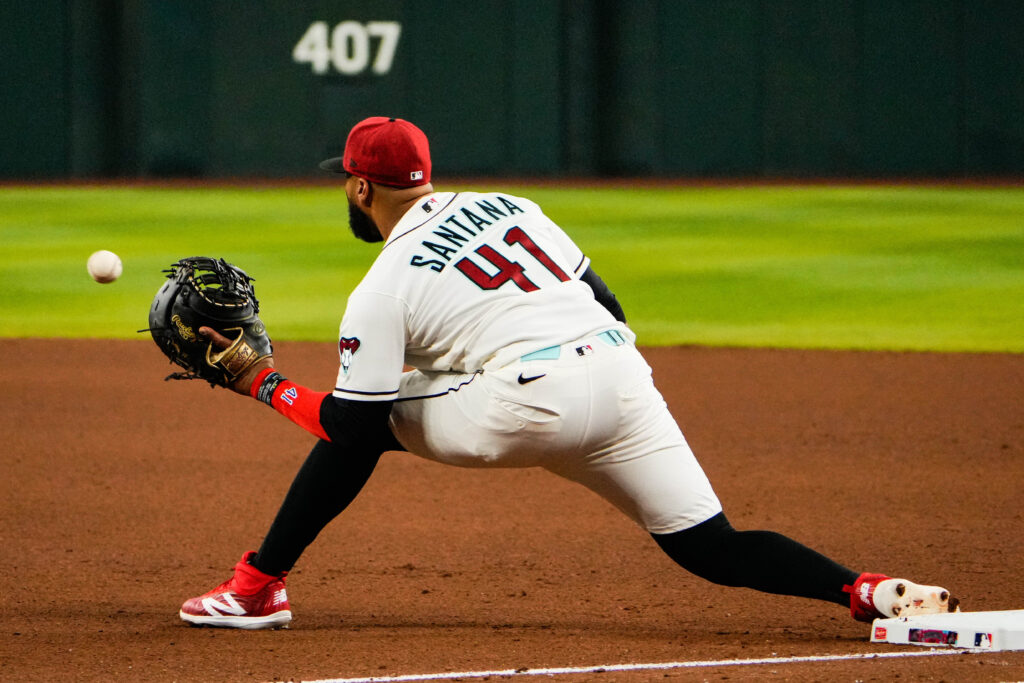
The Braves signed Carlos Santana to a minor league deal on Saturday, per ESPN, less than 24 hours after the Diamondbacks released him. Arizona had inked Santana to a $2 million spring contract and watched him play just eight games before an adductor strain in early April forced him to the sidelines. With the injury rehab complete, the Diamondbacks chose to cut ties rather than continue carrying a veteran catcher-first baseman through what remains of a lost-for-now season. Atlanta absorbs only the big-league minimum for any time Santana spends on the active roster; Arizona remains liable for the bulk of his original deal.
Santana's veteran profile—career .225 isolated power, 12% walk rate, still capable of handling left-handed pitching—has always traded on consistency over ceiling. At 38 years old and returning from a soft-tissue injury that cost him two months, he enters this situation as organizational depth, not a cornerstone piece. The Braves' first base picture remains fluid with their rotation of trade acquisitions and minor league prospects, and Santana provides a roster anchor with 18 years of big-league experience. But the injury timeline matters: he hasn't faced live pitching since late March, and the adductor strain is the kind of lower-body issue that often resurfaces under the rigors of daily competition.
From a betting lens, Santana's arrival carries minimal direct impact on Braves team totals or individual offensive props in the immediate window. His at-bats will be carved from a shallow offensive ecosystem already struggling to generate consistent runs—Atlanta's offense ranks 19th in runs per game since June 1—and Santana is unlikely to elevate that baseline materially. If he reaches the majors and receives regular playing time, his presence might slightly depress the offensive prop lines of whoever he displaces in the first base or DH rotation. But that's conditional on a smooth return from injury, which is far from assured.
The more actionable angle lies in the Braves' broader desperation signal. This move suggests internal concern about depth capacity heading into July—the team isn't confident enough in their current first base group to rely on prospects alone. That understated urgency could cascade into trade market behavior later this month, with Atlanta potentially accelerating a deadline acquisition to shore up the middle of the order. For prop bettors, the Santana signing itself doesn't move Braves team total lines meaningfully, but it flags that the organization views its lineup as fragile enough to need immediate veteran reinforcement. Watch for follow-up roster moves; they'll carry more predictive weight than Santana's actual statistical impact.