Strider's Velocity Collapse Signals Serious Arm Trouble for Braves
By Justin Erickson ·
Spencer Strider's fastball dropped to 88-89 mph mid-start Friday—a stark departure from his season norm—and he exited with right arm soreness after Tommy John surgery less than two years ago.
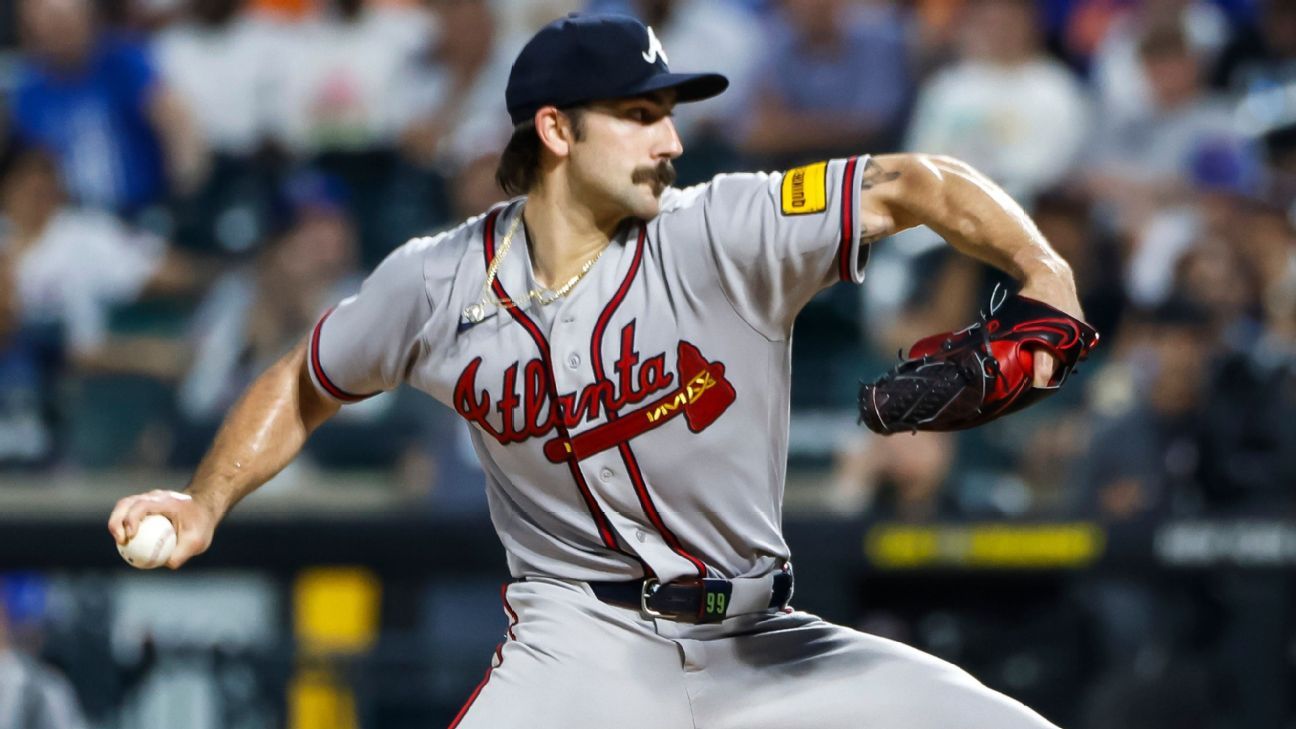
Spencer Strider lasted one batter into the fourth inning Friday night against the Mets before exiting with right arm soreness, a development that carries weight given his surgical history. The Braves' ace allowed six hits and seven earned runs—including a grand slam to Bo Bichette—in just three innings, but the velocity tells a far more troubling story than the line itself. During a sixth-pitch walk to MJ Melendez in the fourth, Strider's fastballs registered at 88 and 89 mph, a dramatic drop from the 92-96 range he'd consistently maintained through the first two innings. That collapse didn't happen gradually across the outing; it happened between innings, suggesting a mechanical or physical issue rather than normal fatigue variance.
The context here is critical. Strider underwent Tommy John surgery in 2024 and missed the first 34 games of this season recovering from a strained left oblique. He was making only his eighth start as the Braves climbed back into contention. Oblique strains are notorious for creating compensation patterns—hitters who protect an abdominal injury will often change their lower-body drive, upper-body rotation, and ultimately how they apply force through their shoulder and elbow. A pitcher with oblique soreness six weeks ago who suddenly loses 4-7 mph from his fastball in mid-appearance isn't just having a bad night; he's likely experiencing a return of proximal core instability that forces the arm to do work it shouldn't be doing.
For the Braves, this is a timing disaster wrapped in uncertainty. Strider is their ace in a division race. If the oblique hasn't fully stabilized or has reaggravated, the timeline shifts from "back to form" to "ramping up cautiously." If it's something new in the shoulder or elbow—the actual source of the velocity loss—then his post-Tommy John status becomes material. The team will likely hold him for imaging and extended evaluation over the next 48 hours before any public statement. Manager Walt Weiss pulled him quickly after the consultation, which suggests the team is taking the complaint seriously rather than playing through discomfort.
From a betting lens, Strider's next start is off the board entirely until the Braves clear him, but his broader season prop profile tightens considerably. K-prop markets on his starts will reprice downward if velocity truly is compromised; lower velo typically correlates with fewer whiffs and strikeouts even if his command remains sharp. Over the next two weeks, before Strider is likely cleared to rejoin the rotation, any Braves team total or spread with him absent from the rotation should compress. Atlanta is betting-favorite in most matchups, but without their top starter available, the market will demand a trim to run lines and lower totals. Short-term absence creates value in unders on Braves games and fading the moneyline premium until he returns to full workload.
The real edge emerges if Strider does return but his velocity is still suppressed—say, sitting at 90-91 instead of 95-96. Books will be slow to adjust strikeout props because the narrative will be "he's back," but a pitcher throwing 2-3 mph softer is a different animal. That's not a bet to place now; it's a setup to monitor closely once he's cleared. For Friday and the immediate 48-hour window, the smart move is flagging this as a potential rotation disruption and waiting on the team's official ruling before committing capital.