Elder's Command Surge Vindicates Braves' Deadline Hands-Off Strategy
By Justin Erickson ·
After absorbing criticism for not acquiring a frontline starter, Atlanta's homegrown arms are delivering the performances that validate the franchise's patience.
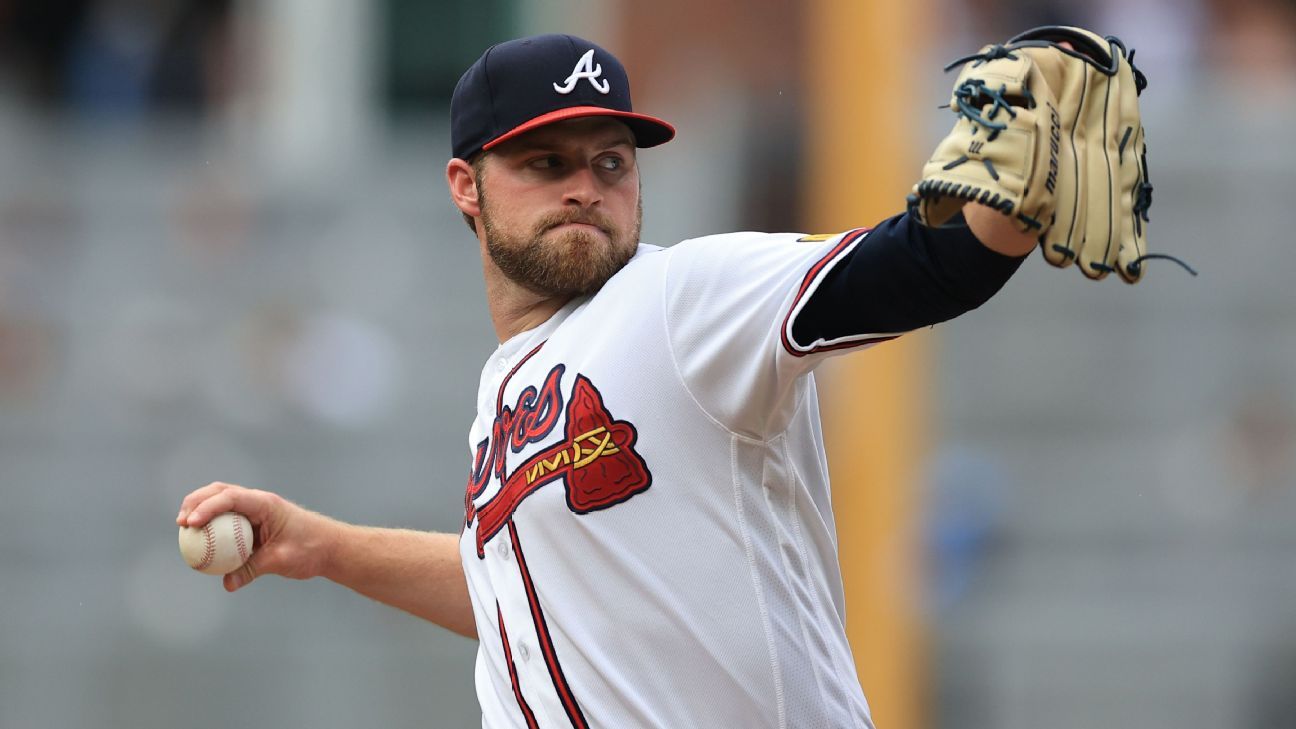
The Braves pitched themselves out of the trade deadline narrative in 24 hours. Bryce Elder threw one-hit baseball over seven innings Wednesday night, following Grant Holmes's six scoreless frames Tuesday, as Atlanta swept Miami and extended its win streak to seven. The victories punctuate a season in which the Braves chose not to chase marquee starting-pitcher rentals—a decision that drew scrutiny from observers expecting a first-place contender to bolster its rotation ahead of October. Instead, Atlanta is letting its young arms prove the front office right.
Elder's performance marked a sharp departure from his June struggles, when a 1-3 record and 8.10 ERA prompted legitimate questions about whether he belonged in the rotation. Since then, he has reassembled his arsenal: four consecutive quality starts, a 3-0 record, and just five runs allowed across 24 innings. The mechanics are simple but revealing. Elder relies on command over velocity—he lacks the triple-digit fastball that defines contemporary aces—which makes consistency essential to his viability. Over the past month, his changeup has become a weapon rather than a secondary option. Manager Walt Weiss noted Elder's command as perhaps his best in some time, a technical improvement that tracks with the recent run of results.
What matters for the betting market is recognizing the difference between variance and trend. Elder's June was an outlier—a one-month slump in a young pitcher's development arc—not a signal of declining ability. The subsequent four-start run carries more information because it's built on repeatable mechanics: improved changeup sequencing, better pitch location, and a pitcher who absorbs margin shrinkage without panic. That emotional stability is not quantifiable in a box score but shows up in decision-making under pressure. When Owen Caissie's walk and Jakob Marsee's double put runners in scoring position, Elder escaped on a groundout and a flyout. Poise in high-leverage moments correlates with sustained performance.
For prop bettors, this sequence reshapes how to price Elder's next start. The market likely overweighted the June disaster and underweighted the April-May stretch that earned him an All-Star selection in 2023. A pitcher who can generate swings-and-misses on his changeup while holding runners on base creates value in strikeout props if his line hasn't fully adjusted to the recent command spike. Atlanta's decision to stay patient with internal options also matters: Elder gets regular run support and the ballot confidence of his manager, which translates to deeper outings and fewer bullpen-heavy game scripts. Fade any Elder strikeout overs priced at pre-June levels; the market has likely already corrected, but if a book has lagged the adjustment, that's a fade candidate. Instead, lean into the idea that Elder's next start carries lower volatility than his recent volatility profile would suggest—a quality edge in totals betting when the underlying pitcher has stabilized his command.
The Braves' larger deadline gamble was organizational: trust that youth development and internal competition would outpace expensive veteran acquisitions. Two dominant starts don't prove the strategy for a full October run, but they do prove the front office wasn't reckless. In baseball, the teams that win trades are often the ones that don't make them.