Payton Tolle's Fastball Arsenal Reshapes Boston's Rotation Calculus—And K-Props With It
By Justin Erickson ·
The Red Sox rookie's elite extension and diversified fastball mix have produced a 2.20 xERA that rivals baseball's best, forcing sportsbooks to recalibrate strikeout pricing on a pitcher nobody expected to carry the rotation.
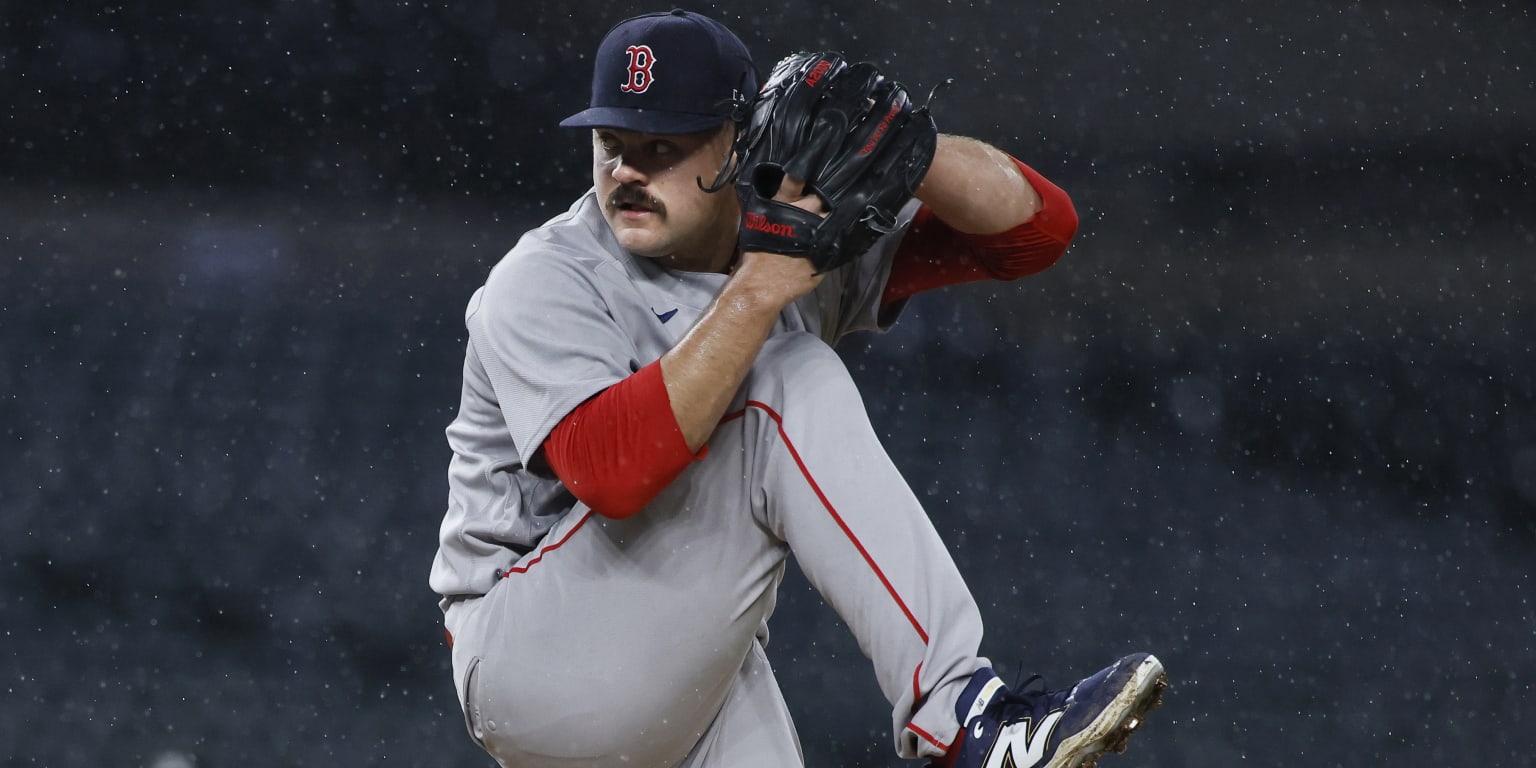
Payton Tolle made his 2026 debut on April 23 against the Yankees and struck out 11 in six innings. Six weeks later, he's the best starter Boston has deployed all season—not Ranger Suarez, not Sonny Gray, not Garrett Crochet, who's been shelved by injury. The 23-year-old left-hander arrived from Triple-A Worcester as a placeholder, a prospect insurance policy. He's become the rotation's anchor, posting a 2.61 ERA with 46 strikeouts in 41⅓ innings across seven starts. What matters more: his Statcast expected ERA sits at 2.20, second only to Jacob Misiorowski among qualified starters.
Tolle's dominance traces directly to a mechanical and strategic pivot that occurred the moment he signed with Boston. In college at TCU, his four-seamer sat 90-92 mph—respectable, but not special. Since entering the organization, velocity surged to 96.3 mph on average this season, amplified by elite extension (7.4 feet, 98th percentile) that makes his heaters appear to arrive faster than they actually do. But raw heat alone doesn't produce a 2.20 xERA. What does is intentional arsenal diversity. Tolle added a cutter last season (now 15.3% usage) and introduced a sinker in 2026 (24.8% usage), creating a three-fastball attack that dismantles hitters' timing. His four-seam usage dropped from 64.1% in his debut season to 46.9% in 2026—a deliberate distribution that prevents fastball-sitting approaches from working.
This multi-fastball framework echoes Crochet's rise to dominance and Skenes' pedigree. Tolle's arsenal is neither accident nor sophomore fluke; it's a repeatable, coached system. When opposing hitters face a 96+ fastball with elite extension followed by a sinker in the zone or a cutter off the edge, they're working against a pitcher whose contact quality—measured by hard-hit rate, barrel rate, exit velo—remains suppressed. That's why his xERA runs 0.41 below his actual ERA; the ball-park and sequencing luck will normalize, but the underlying batted-ball suppression is real and persistent.
For prop bettors, Tolle presents an asymmetric K opportunity in two windows. First, any games he takes the ball with strikeout props set at single-game totals (K+/K-) before the market fully prices his 11.2 K/9 rate—his strikeout volume sits in the 85th percentile for qualified starters. Second, seasonal K accumulator props may still offer value if books haven't adjusted for the fact that Tolle will absorb starter innings in a rotation that was supposed to be elite but has fractured. His teammates' injuries compound his playing time. If Crochet remains sidelined, Tolle's strikeout volume compounds. The real edge exists in overs on his K props in the next 2-3 weeks; once major sportsbooks recalibrate (likely within 72 hours of this emergence becoming national), the line will tighten and the edge evaporates. Single-game K overs are the tighter target—Tolle's three-pitch mix is durable, but single-game pricing often lags multi-game adjustments.