Tolle's Offseason Ramp Paid Off—Red Sox Have a Legitimate Rotation Piece
By Justin Erickson ·
Boston's 23-year-old left-hander has weaponized his secondary stuff in Triple-A and returned as a multi-pitch threat, not a fastball-first thrower.
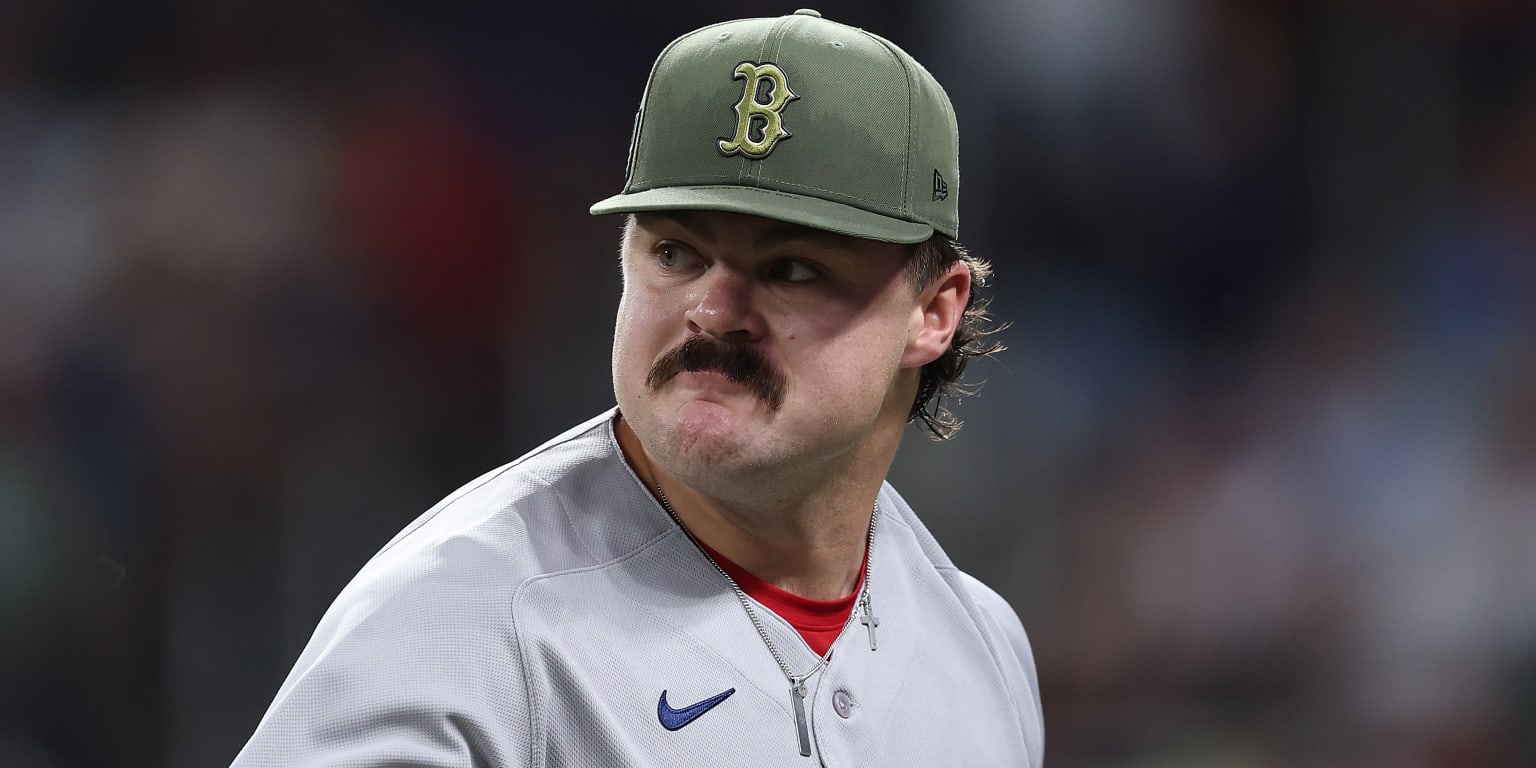
Payton Tolle made his return to Fenway on April 23 and dissected the Yankees with surgical precision: six innings, three hits, one run, 11 strikeouts. That outing looked nothing like the trial-by-fire call-up he endured last September, when Boston's injury-ravaged rotation forced the young left-hander into the major-league fire after just one professional season. This time, he was different. He was in control.
The difference traces directly to his spring training demotion to Triple-A Worcester. Rather than view the setback as a rejection—he'd lost the No. 5 starter job to Connelly Early—Tolle reframed the assignment as a workshop. Over four starts, he threw more offspeed pitches than he had in any stretch at the major-league level. His curveball gained precision. His changeup developed teeth. His high-90s fastball remained the bedrock, but now it had company. Pitching coach Andrew Bailey has been explicit about the design: attack relentlessly with the four-seamer and sinker as primary weapons, then deploy the secondary arsenal for counts and sequencing, not as a crutch when he falls behind.
Saturday's eight-inning effort against Atlanta crystallized the evolution. Tolle scattered two runs across 85 pitches while recording just three strikeouts—the opposite of the pure velocity narrative. He threw a pair of changeups that reset hitters' timing. He mixed in curveballs and cutters strategically. He worked ahead in counts and forced weak contact. The Braves made only six whiffs on 44 swings; Red Sox won 3-2. This wasn't a strikeout-heavy performance; it was command-based pitching from a pitcher who now understands the difference between throwing and pitching.
For prop bettors, Tolle's profile has hardened considerably. Early in his call-up, his strikeout totals carried high variance because his approach was raw: blow it by the opponent or walk him. Now, with secondary pitches legitimized, his strikeout floor has risen while his ceiling remains intact. Against lineups with poor eye discipline (teams bottom-10 in chase rate), his K rate will still spike; against patient hitters, his strikeouts normalize to high-7s, low-8s per game. The mechanism isn't mysterious: a pitcher who can work ahead with multiple effective offerings gets more favorable counts and more strikeouts per appearance. Over his five starts, Tolle has averaged 8.6 K/9; that production is now reproducible, not a lucky variance run.
The Red Sox, at 19-27, are searching for any positive signal. Tolle is a legitimate one. Monitor his next two starts closely—if he maintains command of all four pitches against beatable competition, his strikeout prop lines (likely set at 7.5-8.5 depending on opponent) will overcorrect upward within a week as the market recognizes his profile shift. Early prices reflect last year's fastball-only version; current Tolle is more complete and more durable.