Yankees Banking on Star Power Return Before Deadline Push—Here's the Betting Reality
By Justin Erickson ·
Aaron Boone's confidence in Judge, Stanton, and Bellinger's imminent returns shapes New York's trade strategy, but injury timelines remain opaque enough to risk bottom-line volatility.
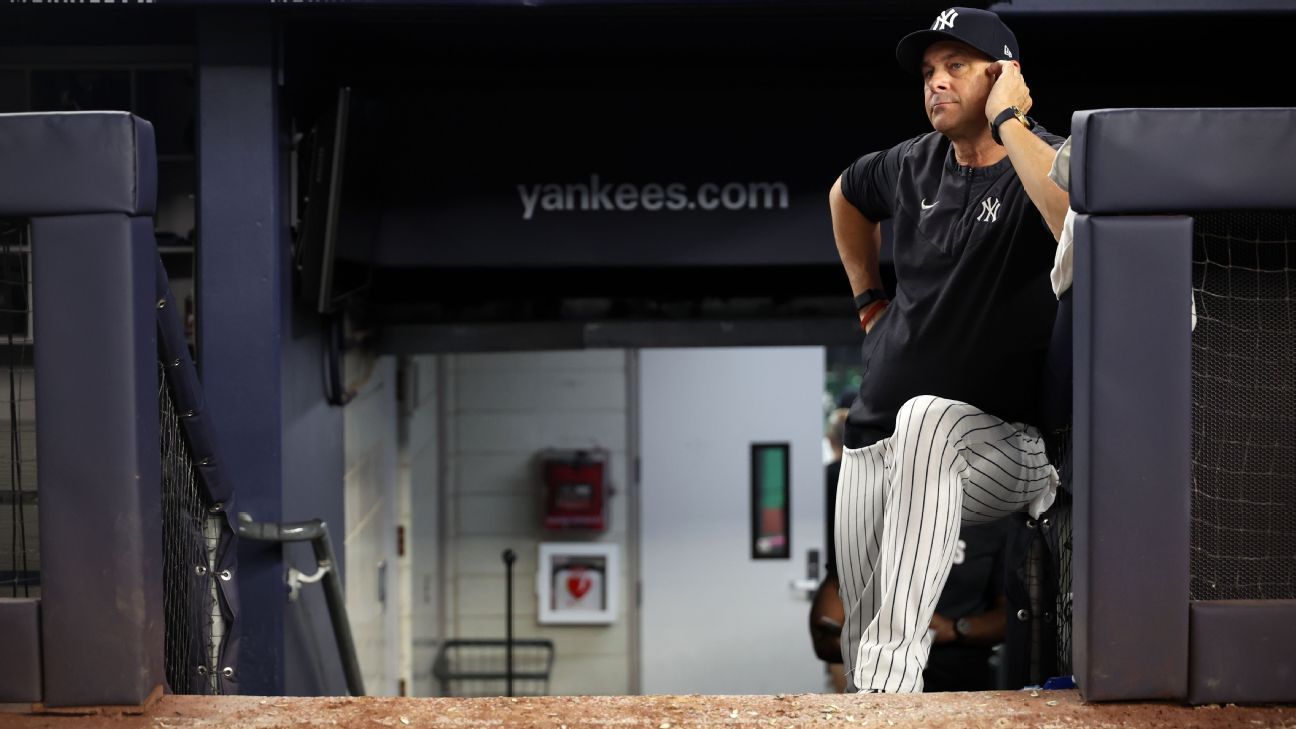
Aaron Boone is betting on reinforcements, not replacements. The Yankees manager told reporters Wednesday that he expects Aaron Judge (rib), Giancarlo Stanton (calf), and Cody Bellinger (hamstring) to return before season's end, even as the front office hunts for upgrades at catcher, bullpen depth, and another outfield bat ahead of Monday's trade deadline. Boone's framing matters: the front office is operating with the assumption that his injured stars come back healthy, not despite the risk they don't. That's a meaningful distinction for how New York calibrates its deadline acquisitions.
The machinery is clear. Four months into 2026, the Yankees have maintained their competitive window despite losing three significant offensive contributors. Judge carries the team's power ceiling; Stanton provides downside protection in the middle order; Bellinger, acquired to solidify the outfield depth chart, offers both contact and defensive upside. Each absence individually is manageable. All three simultaneously is the kind of roster stress that forces teams into panic-buy mode. Boone's public confidence—"I think we expect those guys back"—is not a guarantee. It's a betting position. The front office is signaling that internal medical timelines suggest return windows measured in weeks, not months. But without specific dates, the market can't price that certainty into team-total lines or win-total adjustments.
Here's the mechanism that matters for prop bettors: if even one of these three returns earlier than the market has priced into playoff-push narratives, the Yankees' run-production profile shifts sharply upward. Judge's absence alone costs the lineup roughly 0.4 runs per game in expected offensive value; Stanton chips in another 0.25 runs per game when healthy. A staggered return sequence—say, Judge within two weeks, then Stanton a week later—wouldn't create a single catalytic moment, but it would compound. By mid-August, the Yankees could field an lineup with materially higher offensive ceiling than July's iteration. Team totals set on the assumption that absences persist through August will be underwater fast.
Conversely, if the injury timelines slip and any of the three misses significant time into September, team totals that were priced on optimistic return scenarios will balloon. The Yankees' front office is already operating in that shadow. The deadline acquisitions being considered—depth at catcher and bullpen relief—are not moves that suggest an organization bracing for sustained offense drought. They're moves that suggest confidence in internal healing. That confidence gets baked into the line the moment the market sees the actual trades. Boone's public messaging is advance notice: he's already decided these guys are coming back. The deadline deals will reflect that belief.
For bettors, the edge lies in timing. Early September team totals for the Yankees are pricing in a blend of current-roster production and some recovery upside. If Boone's internal intel is accurate—and a manager doesn't volunteer this kind of public confidence without buy-in from the medical staff—those lines move within 72 hours of the first return. The problem is that injury returns cluster unpredictably; there's no such thing as a reliable three-day lead time on a major-league comeback. What's tradeable is the gap between the market's current skepticism and Boone's stated conviction. That gap is wider at sportsbooks that haven't yet recalibrated to the idea that New York's deadline additions will be layering offensive firepower on top of returning stars, not replacing them.