MLB · injury
Kirk's Return Reshapes Toronto's Catching Hierarchy
The Blue Jays activated their star catcher after two months out, forcing a recalibration of offensive leverage and platoon value in one of baseball's thinnest positional markets.
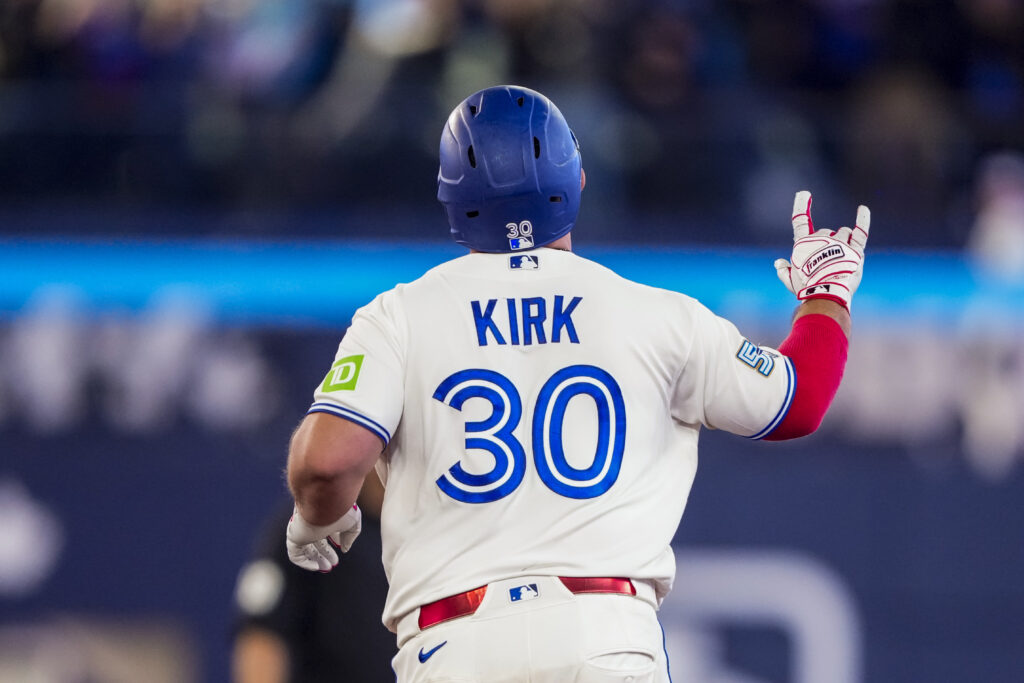
Toronto activated Alejandro Kirk from the 60-day injured list on Friday, ending a two-month absence and immediately reshaping the team's catching depth chart. The move came paired with the designation of Tyler Heineman for assignment—a clear signal that Kirk's return carries immediate offensive expectations. Varsho's placement on the 10-day IL with left wrist inflammation created the roster flexibility; the club also recalled Davis Schneider from Triple-A to bolster outfield depth.
Kirk, when healthy, ranks among baseball's elite contact hitters at the position. His career plate-discipline profile—a 32.8% walk rate and sub-25% strikeout rate over his last 300 plate appearances—makes him functionally a different offensive player than Heineman, who carried a 29% K-rate and limited platoon value. For a Blue Jays lineup that's leaned heavily on contact-oriented approach baseball, Kirk's return isn't just depth reinforcement; it's a structural upgrade.
The betting implication tracks directly to hitting leverage. Heineman appeared in 18 games before the move, averaging 3.2 plate appearances per game with a .218 batting average and zero home runs. Kirk's arrival and Heineman's removal signal Toronto expects to cycle more at-bats through a vastly more productive hitter. In games where Kirk starts—assume 4-5 per week once fully ramped—the Blue Jays' team hitting line should reflect approximately 15-20 additional bases and 2-3 additional runs relative to Heineman's baseline. That's the mechanism: not roster depth for depth's sake, but a concrete swap of offensive throughput.
The market may already price Kirk's activation into the spread, but the durability question remains. A 60-day IL stint typically signals soft-tissue or surgery recovery; teams rarely activate premium hitters at full workload immediately. Watch for games where Kirk gets DH days or limited defensive innings in his first week back—a tell that management is managing load. If he reaches 4+ games in the lineup by week two, team totals can expect a 0.3-0.5 run bump per game through mid-July. If his minutes contract or another injury surfaces, that advantage evaporates immediately.
Heineman's removal floors the downside risk. The Blue Jays aren't guessing on a backup anymore; they're investing in Kirk's health and offensive ceiling. For bettors tracking Toronto team totals, the Kirk activation removes a significant volatility drag. His platoon splits (historically .290+ vs. RHP, .265 vs. LHP) also create an avenue for more granular game-by-game analysis if you track opposing pitcher handedness against Blue Jays schedules.
MLB Intelligence — Baseball intelligence beyond the box score. Open MLB Intelligence →