MLB
Raleigh's Collapse From MVP Contender to Liability Narrows Seattle's Playoff Window
The Mariners catcher has regressed from .271 at this point last season to .159 today, and Seattle's offense can't absorb that kind of production loss while chasing a wild-card spot.
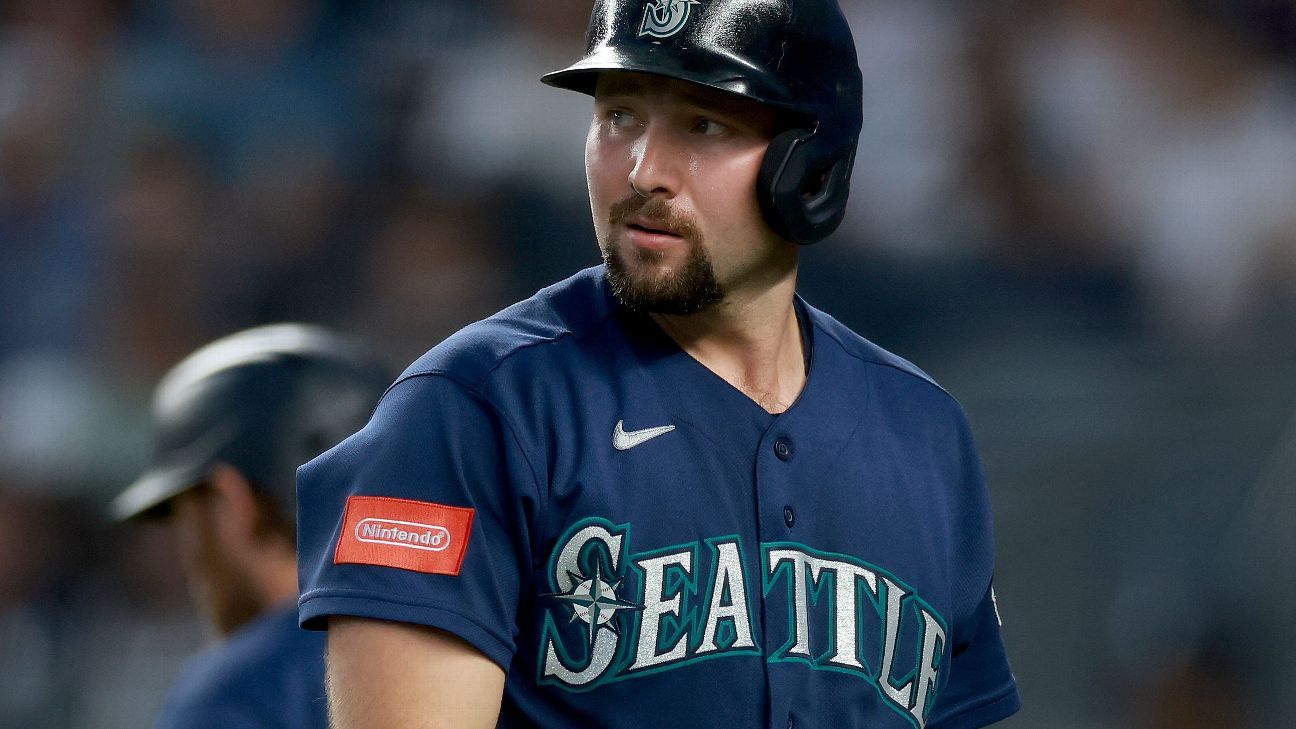
Cal Raleigh walked into the postgame interview after Tuesday's 4–1 loss to the Yankees already knowing the math. At 86 games into the 2026 season, he was hitting .159 with 12 homers and 43 RBIs. A year earlier, at the same checkpoint, he was batting .271 with 35 homers and 74 RBIs—on pace for an MVP-caliber season that would ultimately net him second place in AL voting, just 20 points behind Aaron Judge. The gap between those two timelines isn't variance. It's organizational freefall, and Raleigh, to his credit, didn't hide from it. "I'm awful," he said plainly, acknowledging that Seattle's fifth consecutive loss—their 14th setback in 19 games—started with him.
The Mariners are now eight games under .500 and clinging to wild-card relevance in a crowded field. That's the structural problem: Seattle's window doesn't have unlimited depth. The rotation has questions, and the supporting cast around Raleigh is thin enough that when the catcher disappears, the entire offense sinks. Raleigh himself seems to understand the feedback loop—he cited preparation, energy, and mental edge as the culprits, acknowledging that when confidence erodes, execution follows. But understanding the problem and fixing it are different animals, especially with roughly six weeks left in the regular season.
What's particularly sharp is the comparison to his prior-year self. Raleigh's 35 homers through 86 games last August wasn't a fluke; that's elite power production for a catcher. His current 12-homer pace at the same point suggests either a mechanical collapse, pitch recognition breakdown, or both. The Yankees' Tuesday win—built on Ryan Weathers' near-shutout performance and two-run singles from Ryan McMahon and Trent Grisham—showed what competent baseball looks like. Seattle's offense generated next to nothing.
For bettors, this creates a clear vector: Raleigh's strikeout rate and contact quality are the tell. If he's pressing—chasing out of the zone, expanding the strikezone—his K-prop will spike and his hits prop will compress further. The market has likely already priced in some regression from his MVP-pace performance, but the depth of this collapse (.159 is genuinely historically bad for a major league catcher 86 games in) suggests his strikeout line may still be undervaluing volatility. A catcher hitting .159 who also strikes out 28–30% of the time is in genuine freefall, not correction. Fade any over on his individual PA props until he shows a multi-game sequence of disciplined at-bats. Seattle's team total unders also sharpen considerably as long as Raleigh remains this unproductive—the offense lacks redundancy without him contributing.
The timeline matters here. With roughly 76 games left in the regular season, Raleigh has maybe 200–220 plate appearances to reverse this trend before playoff rosters lock. That's real, but it's also not a lot of runway for a hitter in genuine freefall. Seattle's window was never supposed to depend this heavily on one catcher's ability to snap out of a mental funk mid-August. The fact that it does is what makes them vulnerable in the wild-card picture.
MLB Intelligence — Baseball intelligence beyond the box score. Open MLB Intelligence →