Oakland's Civale Roster Purge Signals Pitching Overhaul Mid-Season
By Justin Erickson ·
The Athletics' designation of Aaron Civale ends a failed $6MM gamble and reshapes their bullpen architecture heading into the second half.
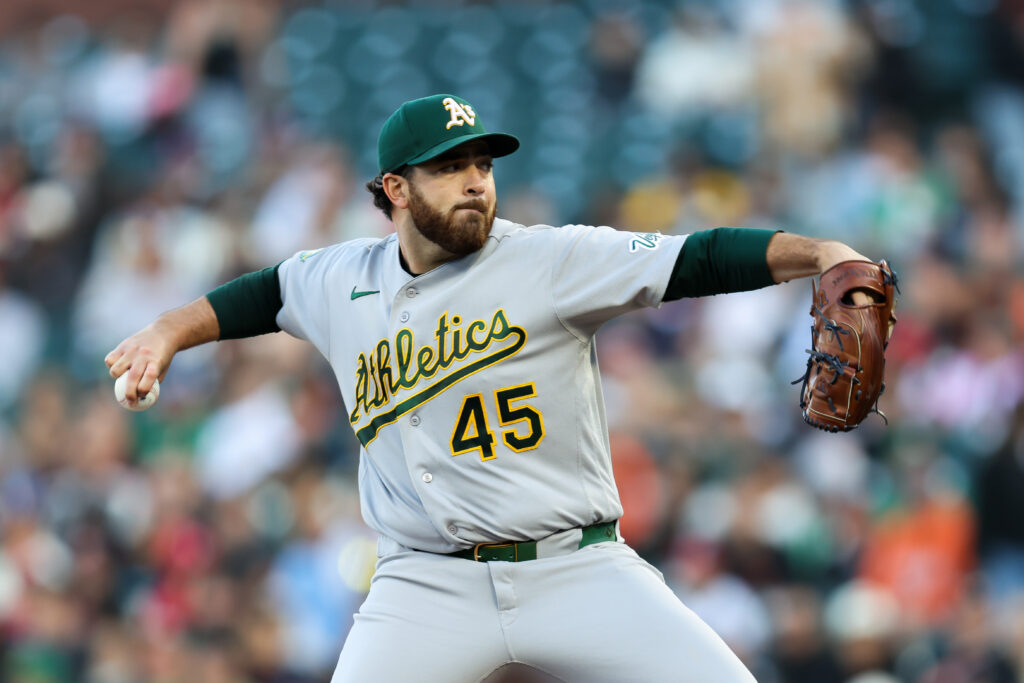
Oakland designated right-handed starter Aaron Civale for assignment on Wednesday, clearing roster space while promoting reliever Yunior Tur to the major league squad. The move also triggers a cascade of minor-league movements: Brady Basso and Donovan Walton enter the active roster, while Joey Meneses, Brian Serven, and Mason Barnett drop to Triple-A Las Vegas. The Athletics now face a decision on a final position-player opening for Friday's series opener against Washington.
Civale's departure represents a washout on a $6MM free agent contract signed to anchor Oakland's rotation. Over 16 starts and 74 2/3 innings, he compiled a 5.42 ERA—a number made worse by his post-injury collapse. After missing roughly a month with shoulder tendinitis (mid-May through June 17), Civale has lost all five of his return appearances, surrendering 19 earned runs in 20 innings. The shoulder issue didn't merely sideline him; it appears to have fundamentally compromised his mechanics or health status in a way that's not recoverable within Oakland's window. When a veteran starter cannot locate fastballs or miss bats upon return from inflammation—a red flag for structural integrity—teams stop waiting.
The promotion of Tur, a 26-year-old righty reliever without significant MLB track record, signals Oakland's pivot to youth and volatility in the bullpen rather than another proven starter acquisition. This isn't a statement that contention remains viable. It's a statement that the pitching model has fractured enough to justify stockpiling younger arms with upside rather than chasing back-of-rotation innings from veterans. The Athletics entered July already operating behind the playoff line; losing Civale's starts—however ineffective—tightens their margin for error in the rotation.
For bettors tracking Oakland's pitching workload, the absence of Civale creates a vacuum in starting assignments that will likely be filled by a mix of short-stints, bullpen games, or recalls that lack established track records. When a team loses a starter mid-season because of durability concerns, the replacement options rarely match the departed pitcher's baseline reliability, even when the departed pitcher is underperforming. The A's will lean harder on younger arms and piggyback strategies. This doesn't automatically move game totals or moneylines—it depends on who starts and the opponent—but it does increase variance in run prevention. Any model that relies on Civale's ERA or appearances in future projections is now obsolete.
Civale's removal also frees cap space for Oakland to pivot elsewhere, though the team's front office may simply absorb the relief into their payroll flexibility for a deadline acquisition or a promotion that addresses an acute need. The real prop impact sits with uncertainty: starting pitcher K totals, team totals, and over/unders on Oakland games feature less predictable inputs now that the rotation has formally shed its highest-salary starter. Monitor who gets the ball in Civale's next slot. If it's Basso or another prospect, lean toward unders on A's team totals until the replacement arm establishes a track record.