Burrows' Mechanics Meltdown Sends Him to Bullpen, Reshuffles Houston's Rotation Math
By Justin Erickson ·
The Astros demote their innings leader to the pen to reset his delivery, but his control problems won't vanish in one weekend.
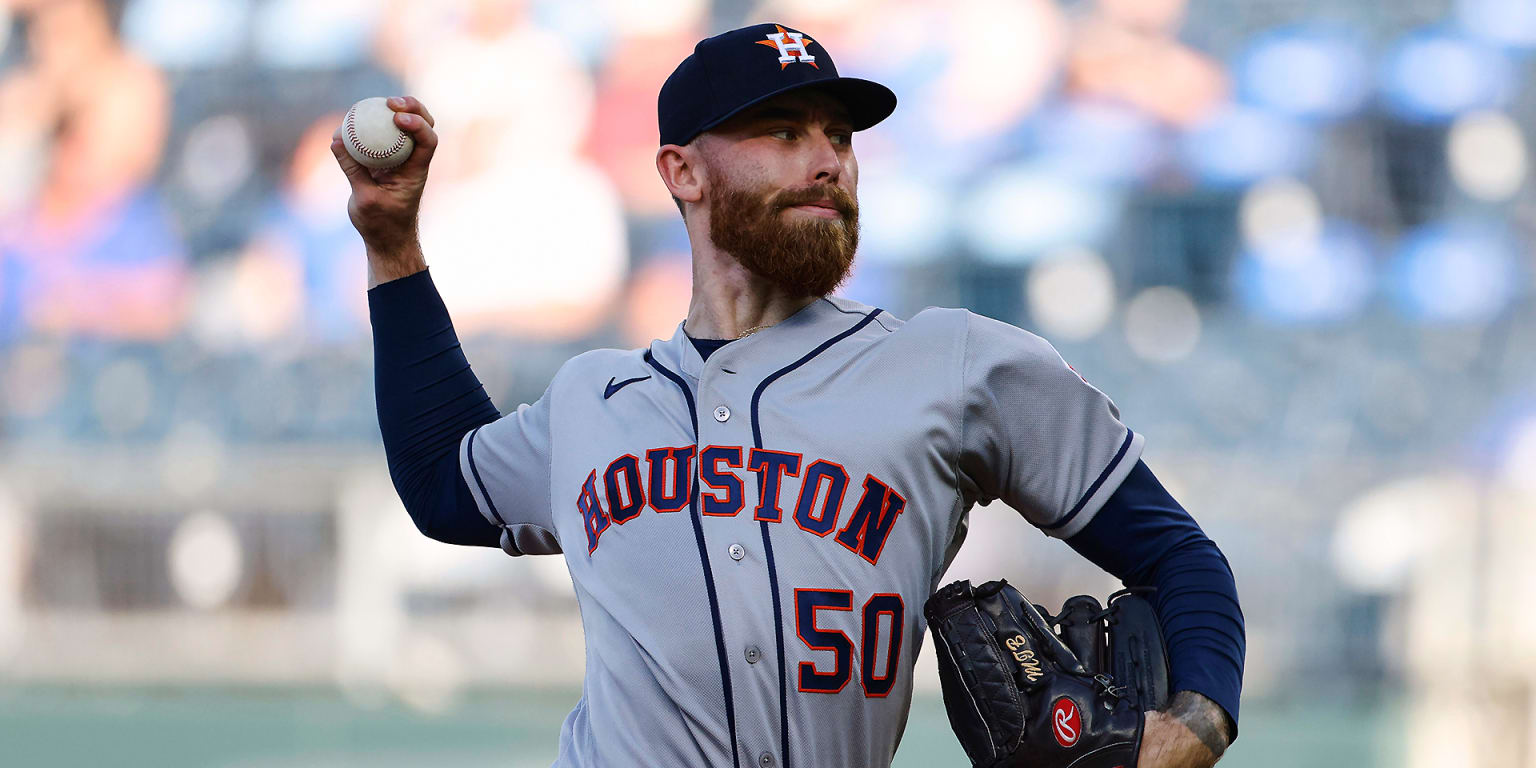
Mike Burrows is shelved from the rotation effective this Friday. The Astros right-hander, who leads the team in innings pitched and games started, is moving to the bullpen for the weekend series against Cleveland after a season-long struggle that has left him 3-8 with a 5.86 ERA and 1.58 WHIP across 78 1/3 innings. Hunter Brown's return from injury and a scheduled off-day Thursday created the window for the demotion, which Houston frames as mechanical recalibration rather than relegation.
Burrows' core problem is architectural. Pitching coach Josh Miller identified crossfire mechanics—Burrows throwing across his body with an arm slot that dropped too low—as the culprit. The issue traces to last season's addition of a two-seam fastball; when pitchers layer new pitches onto existing mechanics, slot drift often follows. Burrows' four-seam fastball, his most-used offering at 29 percent of his pitches, is bleeding damage: opponents are hitting .308 with a .744 slugging percentage against it, fifth-worst in baseball among fastballs thrown at least 50 times. His sinker fares worse (.362 average, fifth-worst) and his slider is nearly as exposed (.306 average, fourth-worst). Only his changeup remains functional—but he's thrown it too infrequently to lean on it as a primary strikeout tool.
The bullpen detour is meant to give Burrows space to groove mechanics without the pressure of a rotation slot. He'll piggyback with Tatsuya Imai on Friday and potentially rejoin the starting unit for next week's road trip to Toronto and Detroit. That's a tight window—five days of relief work to unwind mechanical habits forged over months. Burrows himself acknowledged the reality: correcting one flaw (his early upper-body rotation) overcompensated into another (the low slot), and dialing it back requires precision, not speed. The organization has high expectations for him; Houston acquired him in a three-team deal from Pittsburgh last December, signaling they bet on a turnaround. But first-half collapse—a 5.86 ERA versus his 3.94 mark last year with the Pirates—is a graver problem than a tweaked slot. Last year, Burrows posted a 2.97 ERA in his final 33 1/3 innings after laboring in the first half, which proves the blueprint is familiar. The question is execution.
For betting purposes, Burrows' demotion tilts risk toward caution on his strikeout and innings-pitched props for the remainder of June and early July. Any return to the rotation will come with depressed strikeout totals—bullpen work often masks velocity and sequencing issues—and his first start back figures to carry elevated volatility. More immediately, the Astros' rotation integrity fractured enough that Houston's pitching depth is now being stress-tested with four days notice. That pressure shows up in team-total unders; an offense asked to carry a watered-down rotation in a tight division race tends to operate with margin-compression. The Guardians are a contact-heavy team that makes Burrows' poor early-count fastball control a particular liability, and Cleveland's willingness to sit dead-red on fastballs means the mechanics reset is not just about feel—it's about survival.
Burrows' belief that "work correlates to where we're trying to get to" is faith, not fact. The Astros are betting that five days of bullpen quietness unlocks something mechanical that 78 1/3 innings of starting duty could not. If it doesn't, the cost is immeasurable: a rotation spot in June sacrificed for a long-shot reclamation that may not arrive before the All-Star break. Track his usage closely when he returns. Bullpen cameos followed by a 4.50+ ERA in a start-game slot is the table-setter for a deeper, uglier collapse.