Assad's Sinker Silences Dodgers as Cubs' Rotation Emerges as October Threat
By Justin Erickson ·
Chicago's pitching depth exposed Los Angeles' vulnerabilities in a 5-1 statement win that rewrites the NL Central power calculus.
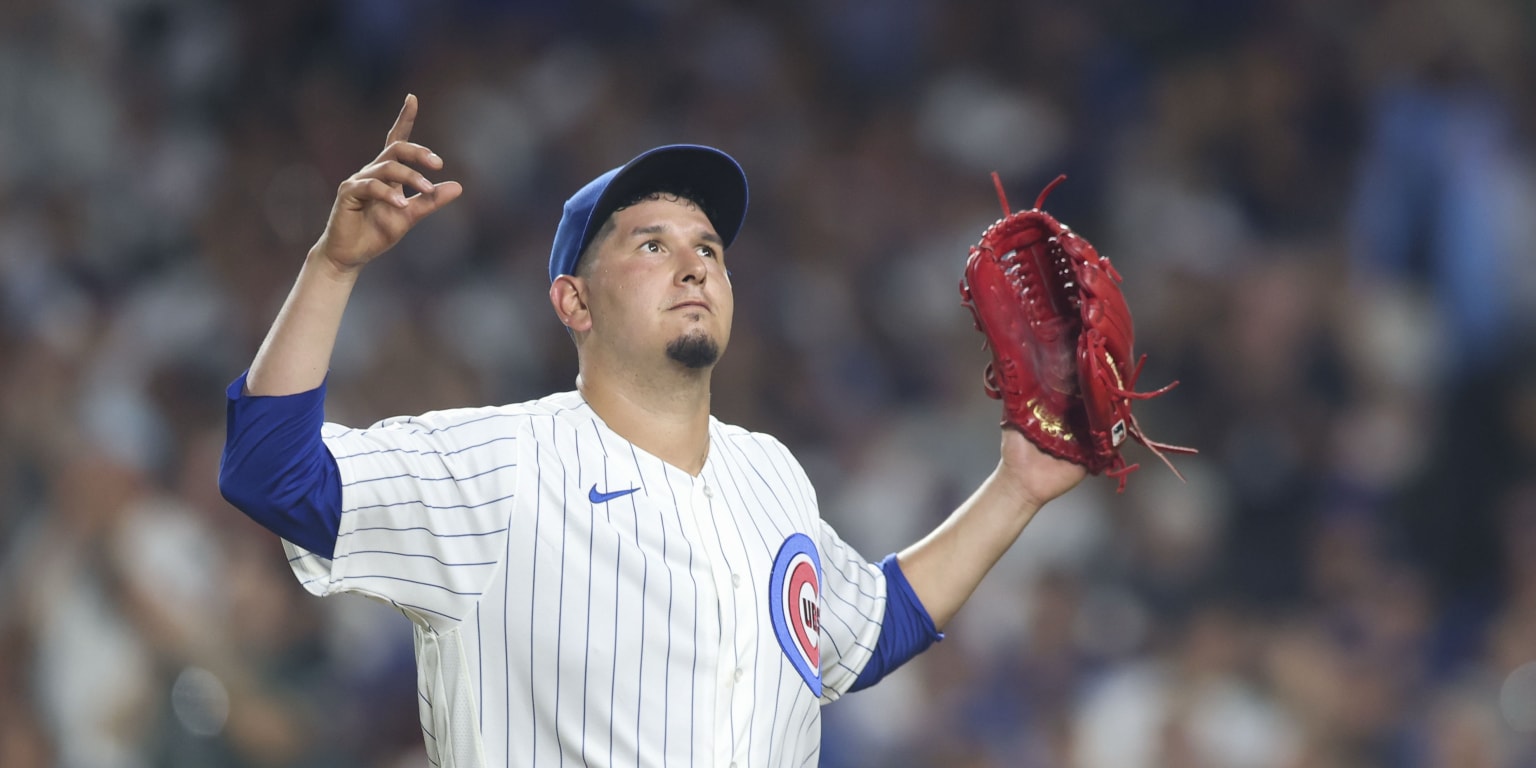
Tarik Skubal's Dodgers debut turned into a referendum on trade-deadline acquisitions, and it wasn't the one everyone expected to implode. Javier Assad, the Cubs' third-tier starter who works in the shadow of Matthew Boyd and Shota Imanaga, throttled Los Angeles through 5 2/3 innings—11 ground-ball outs, two double plays, a solo homer allowed to Kyle Tucker—while accumulating 88 pitches on an efficient sinker that induced weak contact all night. The Dodgers, back-to-back World Series champions, absorbed their fifth consecutive loss and discovered that their blockbuster mid-July addition couldn't offset Chicago's emerging pitching hierarchy.
The Cubs' lineup seized the moment when Dansby Swanson attacked Skubal's 96.6-mph fastball in the third inning, depositing it over left-center into the bleachers to spark a 5-1 demolition. What made the win consequential wasn't the individual at-bats but the sequence: Swanson's patience to hunt the elevated heater, followed by Nico Hoerner's infield chop that advanced the winning run in the sixth, then a three-run burst against the Los Angeles bullpen in the seventh and eighth. The Cubs' front office answered its manager's request for bench depth by adding Clay Holmes and Tyrone Taylor at the deadline, but the real organizational statement came from Assad—a pitcher who generates ground balls at a 59% rate and has posted a 2.24 ERA across 14 appearances (seven starts, seven relief) dating to May 1.
The Cubs' starting rotation—Assad included—has compiled a 2.85 ERA since July 4, a span that encompasses three All-Star-caliber arms and a fourth starter proving durable enough to silence a lineup built to chase October football. That consistency matters for bettors tracking team total movement and run-line exposure. Chicago's pitching staff now sits at an inflection point: the combination of Assad's ground-ball approach, Boyd and Imanaga's strikeout upside, and the pending arrivals of Kevin Gausman and Holmes creates a glut of low-walk, contact-management arms that suppress run production in ways Los Angeles—constructed around elevated strikeout rates—cannot adjust to mid-series.
The prop angle crystallizes around Cubs team totals in their remaining Dodgers matchups and broader NL Central exposures. Assad's effectiveness isn't an outlier born from one strong outing; his May-onward ERA of 2.24 reflects a pitcher who commands his sinker well enough to generate weak contact even against first-division lineups. When Assad takes the mound, the Cubs' implied team run total should trade lower than generic playoff-caliber matchups because his ground-ball dependency suppresses home run volume and long-inning slugfests. Conversely, when the Cubs face bullpens without the same ground-ball infrastructure—such as teams relying on fastball-heavy relievers—the team total unders become vulnerable as the ninth inning approaches. The Dodgers' bullpen wasn't equipped to handle late-inning run prevention against a lineup that executed small-ball sequences; that script repeats itself when the Cubs face innings-eating starters and relievers who lack the lateral movement to induce ground balls on a consistent basis.
The betting implication is durable across the next 14 days of Cubs baseball. Team totals under 4.5 carry elevated risk in matchups where Assad or Imanaga start, because the opposition's run environment compresses. Conversely, Cubs team totals over 4.5 gain value when facing bullpen-dependent opponents or starters who generate strikeouts and fly balls, creating longer at-bats and elevated exit velocities. This isn't a single-night overcorrection; it's the mathematical consequence of a rotation that now spans five legitimate arms and a front office that spent real capital to add Holmes—a name-brand closer—and Taylor—a depth piece built to hit southpaws. The Dodgers learned Tuesday night that depth alone doesn't win baseball games; the Cubs' rotation did.