Oakland Calls Up Gage Jump as Civale Heads to IL; Strikeout Upside Enters Thin Rotation
By Justin Erickson ·
A's prospect pipeline yields its third-ranked arm as Aaron Civale's injury opens a spot in a rotation badly needing velocity and swing-and-miss.
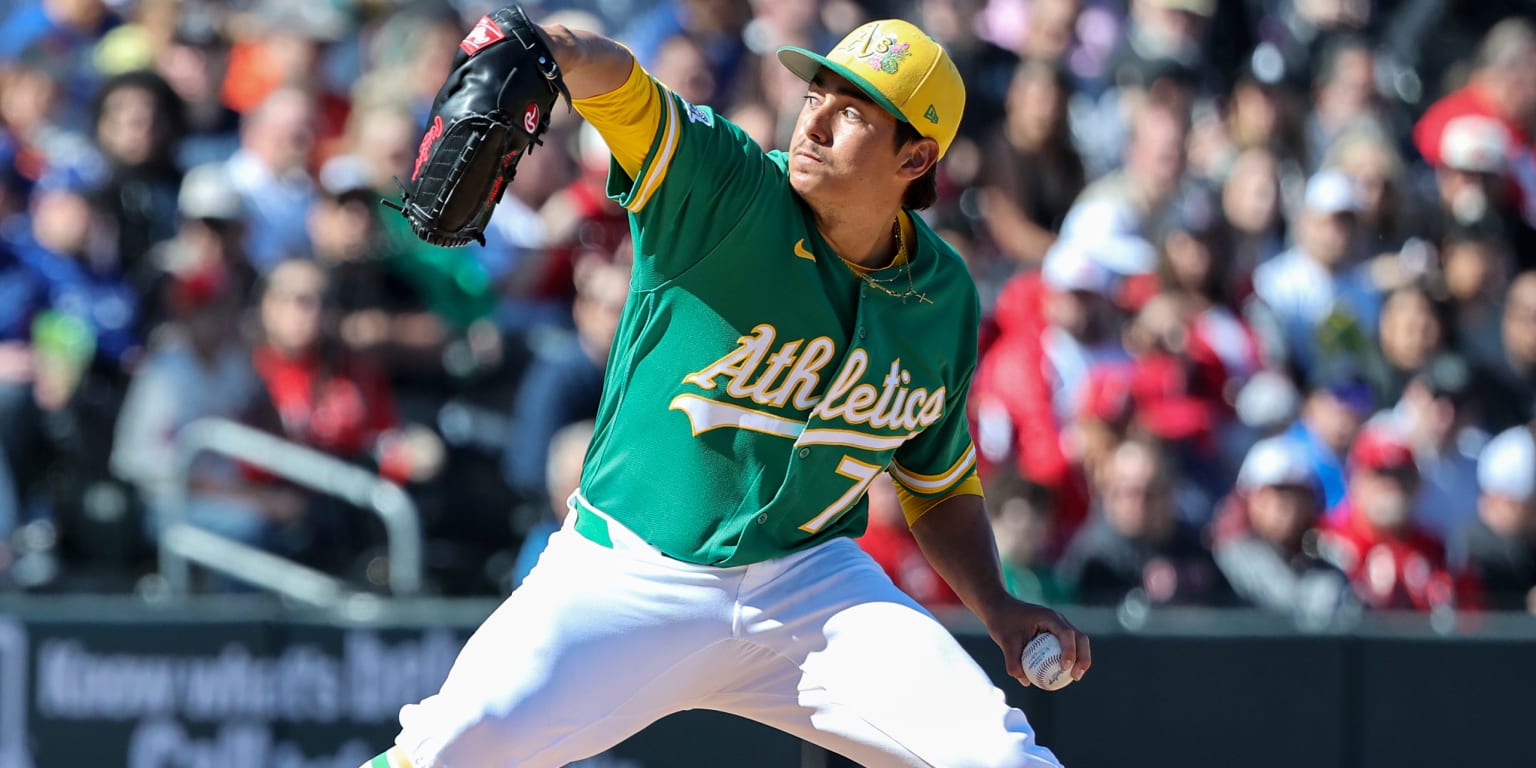
The Oakland A's are promoting left-hander Gage Jump to the major leagues, with right-hander Aaron Civale expected to land on the injured list, per a source with knowledge of the move. Jump, the 41st-ranked prospect on MLB Pipeline and Oakland's third-best prospect, was selected 73rd overall in the 2024 draft from LSU. The callup signals a rotation in transition—Civale's injury removes depth the club didn't have in abundance, and Jump represents both immediate necessity and organizational bet on high-octane stuff over track record.
Jump's minor-league arc reads like a classic high-ceiling, high-variance prospect profile. Through nine Triple-A starts this season, he's posted a 4.50 ERA across 38 innings, but buried in those numbers is a 56-strikeout rate (13.26 K/9) offset by 20 walks and 36 hits allowed. His 2025 campaign in affiliated ball—9-7, 3.28 ERA, 131 strikeouts in 112⅔ innings split between High-A and Double-A—suggests a thrower whose stuff (velocity, spin efficiency) outpaces his command and secondary offerings. That's typical of a 22-year-old LSU product making the first jump through the system. Command refinement and consistency remain unproven at the show.
For Oakland's pitching outlook, Jump's arrival doesn't immediately stabilize anything; it accelerates the timeline on which the franchise discovers whether its young arms can stick. The A's rotation has posted middling-to-poor results, and spot starters and injury fill-ins are inevitable across a long season. Jump's role will likely be pigeonholed initially—spot starts, perhaps long relief on short rest—unless he demonstrates the kind of inning-to-inning control that's eluded him so far. The upside is legitimate: a lefty with high-90s velocity and out-pitch potential plays in any rotation. The floor is equally clear: minor-league strikeout rates don't guarantee major-league effectiveness if the walk rate follows him up.
From a prop standpoint, Jump's debut creates an immediate strikeout angle in any start he receives. His K/9 rate at Triple-A (13.26) is elite in isolation, and facing an Oakland-adjacent schedule in the short term—opponents not yet armed with detailed scouting reports on a brand-new arm—Jump's strikeout total props (likely conservative openers given his lack of major-league track record) carry edge if books price him as a median arm rather than a high-velocity wild card. The risk is binary: if command falls further under major-league pressure, he gets yanked early, and strikeout volume collapses. But if even 40% of that Triple-A strikeout rate translates—and his velocity and stuff suggest it should—his K props will be underlaid on opening lines.
Civale's injury is secondary news here, but it matters for Vegas totals. Oakland's team pitching quality just declined in real time. Games Jump starts should carry slightly lower point totals than Civale games would have, all else equal, because the expectation is less innings pitched and more volatility. That depresses both overs (fewer innings = fewer baserunners, fewer runs) and undervalues any starting pitcher strikeout props tied to Jump's actual major-league debut, since the market will assume lower pitch volume than a typical starter. First start is always the highest-variance scenario, but the statistical edge leans toward strikeout upside if Jump hits the zone with even moderate consistency.