Athletics Call Up Morris as Pitching Depth Play; Market Still Pricing in Volatility
By Justin Erickson ·
Oakland's third-round acquisition from the Mets enters a crowded rotation depth chart at a moment when strikeout volatility and ERA risk define the A's pitching surface.
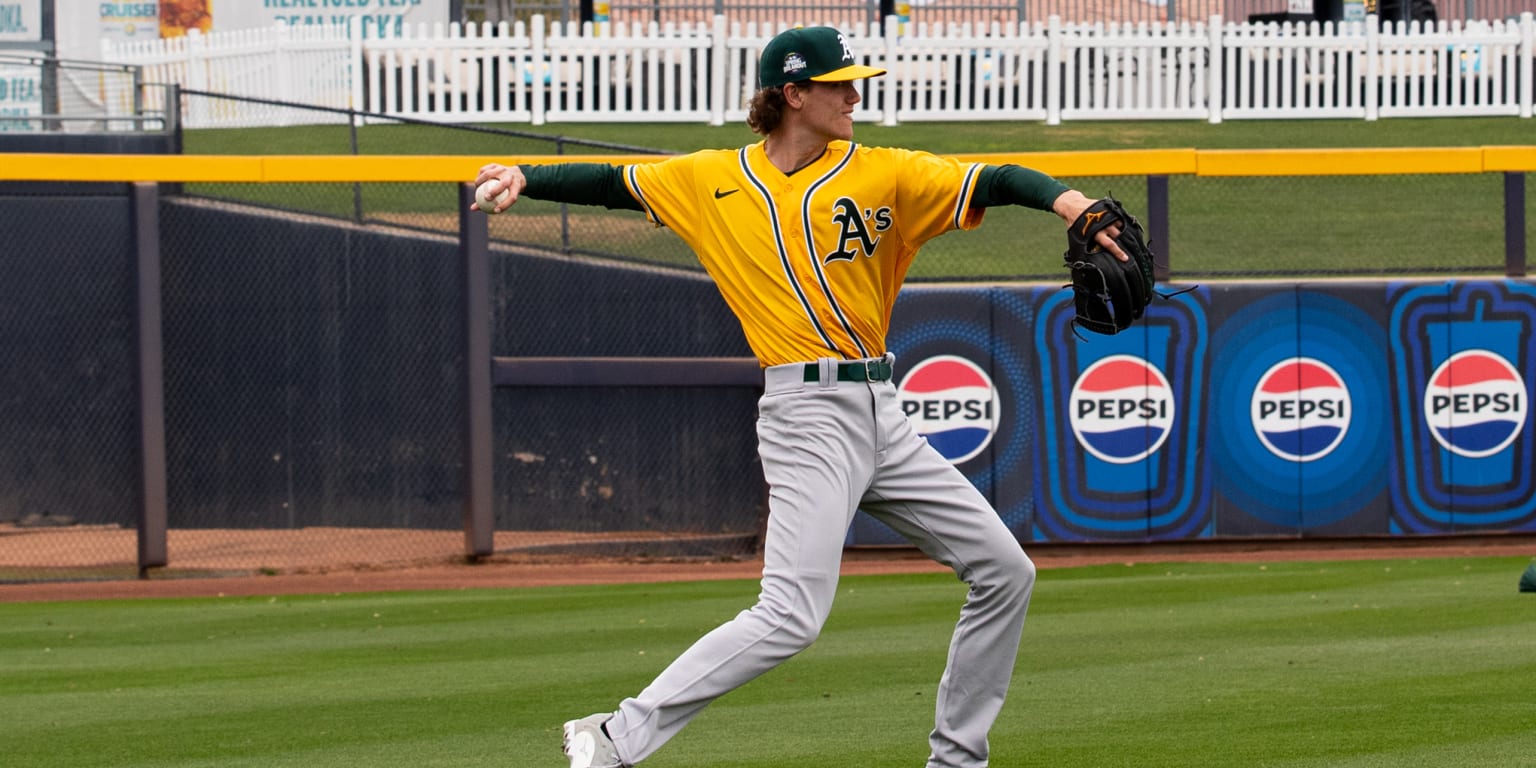
The Athletics promoted right-hander Kade Morris to the major-league roster Tuesday, completing the midseason arrival of a prospect acquired in last summer's Paul Blackburn trade with the Mets. Morris, ranked 12th in Oakland's prospect universe, arrives carrying a 4.45 ERA through 11 Triple-A starts—a stat line that captures both his ceiling (49 strikeouts in 60⅔ innings) and his command inconsistency (26 walks in the same span).
The 23-year-old's career minor-league ERA sits at 4.42 across 68 appearances, a mark that hints at a pitcher living at the margin between prospect intrigue and relief-arm volatility. His strikeout rate—7.28 K/9 across his pro career—suggests stuff sufficient for late-inning usage, but his walk rate (3.41 BB/9) and propensity for elevated home-run rates indicate he'll operate in high-leverage situations where margin for error vanishes. That profile slots him into Oakland's bullpen architecture rather than the rotation, a distinction that matters for bet construction. Relief pitchers with sub-3.50 command ratios typically see deployment in tight games; the betting surface for Morris props will hinge on whether he inherits leverage situations (inherited runners, one-run games, late innings) where strikeout upside compounds.
The mechanics of the callup deserve scrutiny. The A's optioned right-hander Michael Kelly and left-hander Jacob Lopez while simultaneously recalling Mason Barnett from Triple-A Las Vegas—a shuffle that signals no permanent rotation slot opened. Morris enters a crowded depth landscape where opportunity is gated by injury, inefficiency elsewhere, or a team decision to lean on youth over veteran arms. In Oakland's current win-trajectory posture, innings limits and bullpen allocation often defer to development timelines. For bettors, that means Morris's first 5-10 appearances will likely come in defined bullpen windows, not spot-starts. His strikeout prop—if available—will reflect that shortened sample. Early lines pricing Morris at 4.5 strikeouts per appearance are overvaluing a pitcher likely to see 1-2 innings of work in middle-relief spots; demand in the market tends to treat callups as immediate contributors, but Oakland's roster construction suggests Morris is a depth option, not a lever.
The betting angle cuts in two directions. First, strikeout props on Morris carry hidden risk because sample size in early callups is noisy—a pitcher who posts 7+ K/9 over 68 innings can still deliver a 0-strikeout outing in a two-inning relief window. Fade aggressive overs on his K line until he establishes a usage pattern of at least 3 innings per outing; the variance is too wide relative to line pricing. Second, team total unders on Athletics games where Morris enters carry slight value if he's the primary middle-relief arm and the opponent has a proven track record of contact-heavy at-bats. Morris's walk rate combined with his home-run susceptibility means a jam situation (bases loaded, two outs) edges toward run-scoring risk that the market may not yet have priced into game totals. Watch his first three outings to establish whether Oakland uses him in high-leverage or mop-up windows—that context shapes which prop angles survive.