Arrighetti's Triple-A Detour Becomes Catalyst for Astros Rotation Overhaul
By Justin Erickson ·
A demotion that stung morphed into a breakthrough, as Spencer Arrighetti's 7⅓ no-hit innings signal the Astros may have found a stabilizing arm in the middle of their rotation.
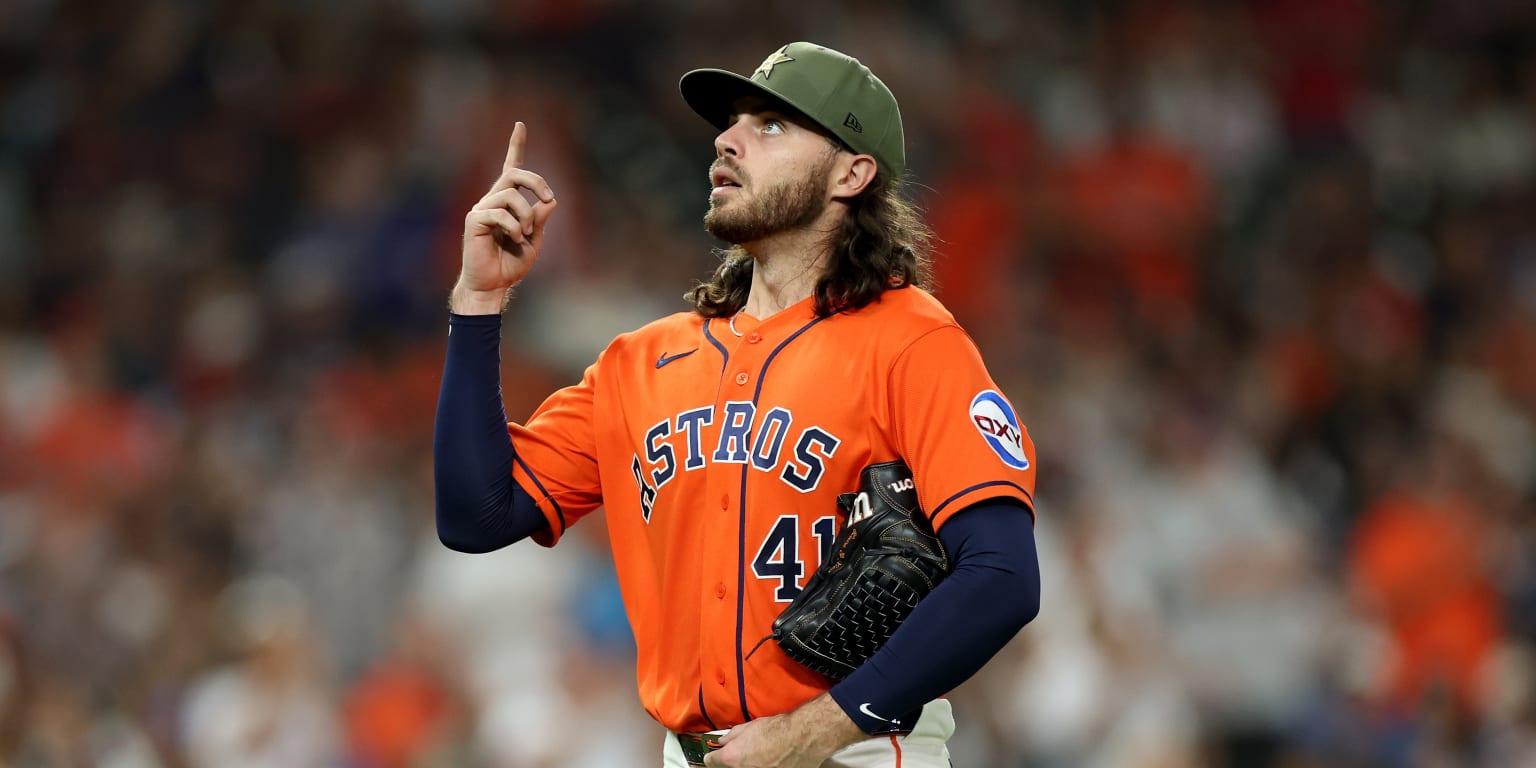
Spencer Arrighetti carried a no-hitter into the eighth inning Friday night against Texas, surrendering just one hit over 7⅓ innings as Houston defeated the Rangers 2-0. The right-hander, who opened the season in Triple-A Sugar Land before his April 15 callup, has transformed that demotion into fuel: he's now 5-1 with a 1.50 ERA across six starts, with four of those outings allowing one earned run or fewer. The performance capped a week where Arrighetti lowered his season ERA and demonstrated the kind of command-and-compete mentality that separates flash from sustainability.
What makes Arrighetti's resurgence worth parsing is the precision of his recent mechanics. Against the Rangers, he threw 102 pitches—a season high—leaning heavily on a four-seam fastball (44 throws) and curveball (35), a narrow arsenal that he's learned to locate with surgical consistency. His curveball generated six whiffs; the fastball accounted for four more. That dual-weapon approach has closed off the damage: across six starts, Arrighetti has yet to allow more than three runs in any single outing. The Astros' pitching staff has been hammered early in 2024, and the team sits at 18-28, making Arrighetti's emergence from organizational purgatory functionally urgent.
For bettors, Arrighetti's trajectory hinges on a core question: are we watching a genuinely reformed pitcher or a hot streak built on favorable early competition? The durability signals lean toward the former. A 1.50 ERA is noise if it's built on soft competition, but four starts allowing one or fewer earned runs across 18+ innings represents pattern, not variance. His strikeout rate (5 K in 7⅓ innings Friday) has climbed since the callup; his walk rate, while elevated at times, has stabilized. Manager Joe Espada explicitly flagged Arrighetti's curveball as a consistently available strike weapon—that's a repeatable mechanism, not a lucky streak.
The betting consequence is straightforward: Arrighetti's strikeout prop should tighten. Bettors who backed K overs when he was unknown in early April have already locked in value; sportsbooks will compress those lines as the pattern solidifies. More actionable is the inverse: fade strikeout unders on Arrighetti in his next two starts against teams he hasn't faced. The Rangers offense struck out 5 times against him despite the no-hit bid (low barrel rate on weak contact), and Texas struggles against elevated fastballs. If Arrighetti's next opponent doesn't have the same weakness—say, a team with a top-five fastball xwOBA—the strikeout total may spike above his recent norms, making an under play vulnerable.
The Astros' team total, however, does not move meaningfully higher on Arrighetti alone. Friday's 2-0 win was offense-constrained by design (no-hit bid, dominant pitcher), and Isaac Paredes' solo homer was the margin of victory. Arrighetti's excellence is a ceiling raiser, not a run-production guarantee. Treat his starts as more durable bullpen-preservation opportunities; expect lower team totals (4-5 range) to remain playable as long as the Astros' lineup stays inconsistent. His personal strikeout props will compress as the market learns; team totals will stagnate until the offense itself improves.