Anthopoulos Won't Bank on Injured Stars; Braves Pivoting to Trade-Deadline Urgency
By Justin Erickson ·
Atlanta's GM signals aggressive shopping for front-line pitching as IL returns remain uncertain and the Phillies close the East gap.
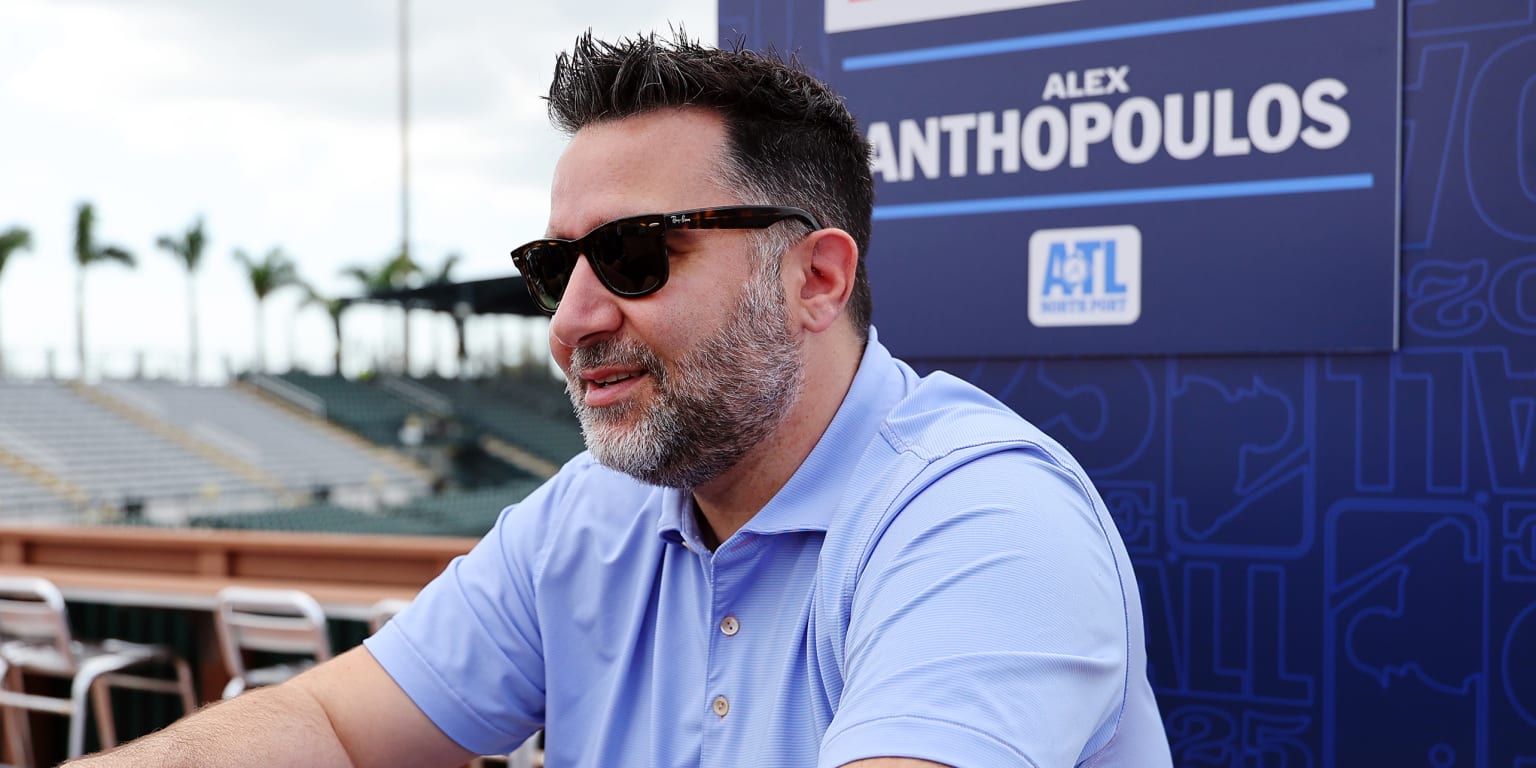
Alex Anthopoulos delivered a clear message on Sunday: the Braves will not gamble their season on a timetable for injured roster staples. Speaking on MLB Network Radio, the team's president of baseball operations acknowledged that Ronald Acuña Jr., Spencer Schwellenbach, and AJ Smith-Shawver represent hope—but not a plan. With the trade deadline 15 days away (August 3), that calculus has forced Atlanta into the open market, and Anthopoulos is hunting for immediate help at the top of his rotation.
The Braves entered Sunday with the ninth-best ERA among all clubs (3.96), a number that masks a sharper problem: since June 9, Atlanta's starters have carried a 5.53 ERA across 31 games. That degradation arrives exactly when the Phillies have carved Philadelphia into contention—trailing by as many as 10-plus games earlier in the season, the gap has compressed enough that every rotation start now carries divisional weight. Schwellenbach is still weeks away after February elbow surgery (loose bodies removal) and is currently working up pitch counts in extended spring settings in Florida. Smith-Shawver, who underwent UCL repair in June 2025, is closer—he threw 4⅓ scoreless innings on Saturday in a rehab assignment—but a mid-August return remains optimistic. Acuña could return before the current homestand concludes, but hamstring strains and their sequelae introduce risk that a veteran buyer like Anthopoulos correctly refuses to lean on.
The seller's market has thickened with frustration. Detroit and Boston—teams that looked ready to blow it apart weeks ago—have resurfaced with Tarik Skubal, Casey Mize, Sonny Gray, and Aroldis Chapman still on their rosters. Neither organization has shifted into seller mode yet, which tightens the available pool of impact arms and inflates acquisition cost precisely when Anthopoulos is trying to move. His stated threshold is unambiguous: "If there's a playoff-caliber starter out there, we would jump at that." The specificity matters. Anthopoulos is not negotiating inward; he's announcing to the market that Atlanta will overpay for reliability rather than wait.
For betting purposes, this repositioning opens a direct line into Atlanta's near-term pitching output and reliability. The Braves' rotation ERA at 3.96 reflects a starting lineup that has delivered the volume—call it respectable—but the recent 5.53 ERA in June and July indicates wear or inconsistency that could persist through the deadline window. If Anthopoulos secures a genuine playoff-grade starter, team total unders should compress as Atlanta's aggregate run prevention settles into more durable territory. Conversely, any delay in a trade (or a marginal addition) leaves the rotation's volatility exposed. Atlanta's team totals should trade in a range of 4.0 to 4.25 runs for the next two weeks; that spread reflects the binary outcomes—trade boost or status quo. Sharps are likely waiting for clarification before committing to overs, which means early pricing has embedded a mild under-edge for games before August 3. The risk, of course, is that Acuña's return tightens that gap, but Anthopoulos's own language suggests he's not counting on it.
The Braves are positioned between urgency and prudence. They have time to move, but not comfort. That tension is exactly where the markets tend to misprice, favoring the hope of IL returns over the immediate reality of a thinning staff.