Trout's Hamstring Setback Reshuffles Angels Center Field and Mid-Season Betting Calculus
By Justin Erickson ·
Mike Trout hits the injured list mid-June, forcing Los Angeles to lean on spare parts while a franchise cornerstone ages into vulnerability.
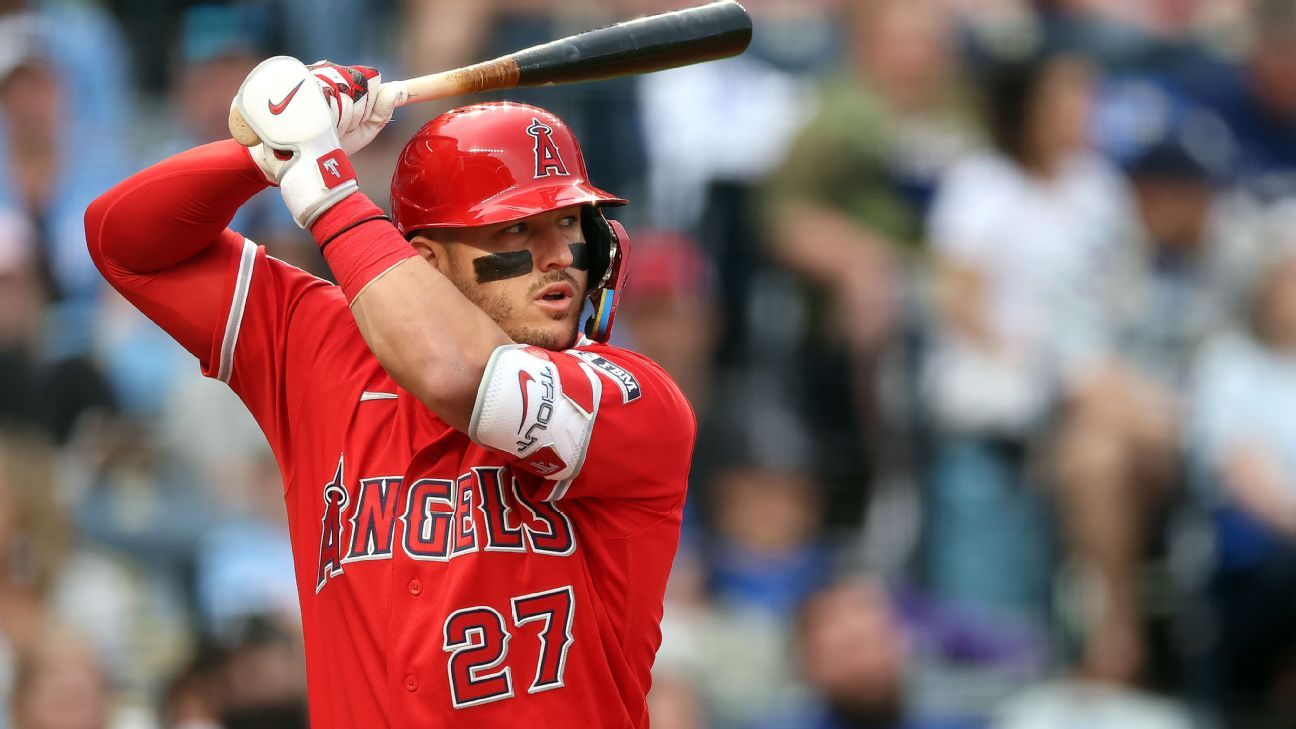
Mike Trout was placed on the 10-day injured list Thursday with a right hamstring strain sustained while running to first base during Wednesday's win over Arizona. The 34-year-old three-time AL MVP did not disclose a return timeline but signaled optimism to reporters, noting the injury felt considerably better after rest and air travel. That cautious framing—"I'm not overly concerned about it"—masks a deeper organizational reality: Trout, who hasn't logged 130+ games in a season since 2019, is now injury-dependent in a way that changes how the Angels construct their playoff odds and lineup projections for the remainder of June and July.
Trout's offensive profile this season has already been subdued. He is hitting .234 with 17 home runs and 36 RBIs, a pace that would land him below his career norms in both power and run production. A hamstring strain doesn't vanish in ten days for a player in his mid-thirties; the Angels are likely managing inflammation and re-injury risk rather than true recovery. Even when he returns, expect a measured ramp-up—limited games off the bench, DH availability, or day-games-only sequencing. The franchise faces a calculus: push Trout back too quickly and risk a more severe tear, or lose his presence in the lineup when the team sits five games under .500 and the trade deadline approaches in six weeks.
Jose Siri inherits center field during this absence. Siri is a replacement-level defender with occasional pop but a .211 batting average this season—not a defensive liability, but an offensive black hole in the middle of the lineup. The Angels also called up Christian Moore from Triple-A Salt Lake, a prospect hitting .333 with nine home runs and 45 RBIs in the minors, to handle bench depth. Moore's ceiling-level Triple-A numbers do not guarantee major-league timing or pitch recognition, so the Angels are gambling on upside while Trout sits. The net effect: Los Angeles loses both run creation and defensive security in center field simultaneously.
For bettors, the practical edge lies in Angels team totals and over-unders for the next ten games. Removing Trout from the lineup erases approximately 0.4-0.5 runs per game from a team that was already marginal offensively. Siri will bat eighth or ninth, occupying a slot that previously generated consistent barrel contact. Oddsmakers will adjust Angels totals downward, but the adjustment lags perception. If the Angels opened at 4.0 team runs before news broke, expect consensus to land at 3.75-3.85 within 24 hours. That corrects sharply because the market recognizes Trout's absence as permanent for this window, not ambiguous. However, the durability question—whether Trout actually returns in ten days or stretches to 14-21 days—creates volatility in props tied to Angels cumulative run production over June and early July. If you can secure Angels unders at 4.0+ before the line fully recalibrates, the edge exists in the next 6-8 hours, not longer. This is a single-event dislocation, not a persistent pattern; other teams will bid the line down sharply once the public digests the IL move.
The All-Star implications are secondary but worth noting: Trout was second among AL outfielders in fan voting, trailing Aaron Judge (who is also on the IL). If Trout remains sidelined through the July 15 All-Star break, fan voting becomes irrelevant and Trout's selection falls to the commissioner's discretion. That narrative won't move betting markets, but it underscores how fragile Trout's 2026 season has become—a star player in decline, battling the calendar and his own body.