MLB
Alonso's Two-Homer Outbreak Signals Orioles' Offensive Threshold in Pennant Push
Pete Alonso's first multihomer game as an Oriole snaps Baltimore's skid and reestablishes him as the franchise's power anchor—a critical data point as teams recalibrate his September pricing.
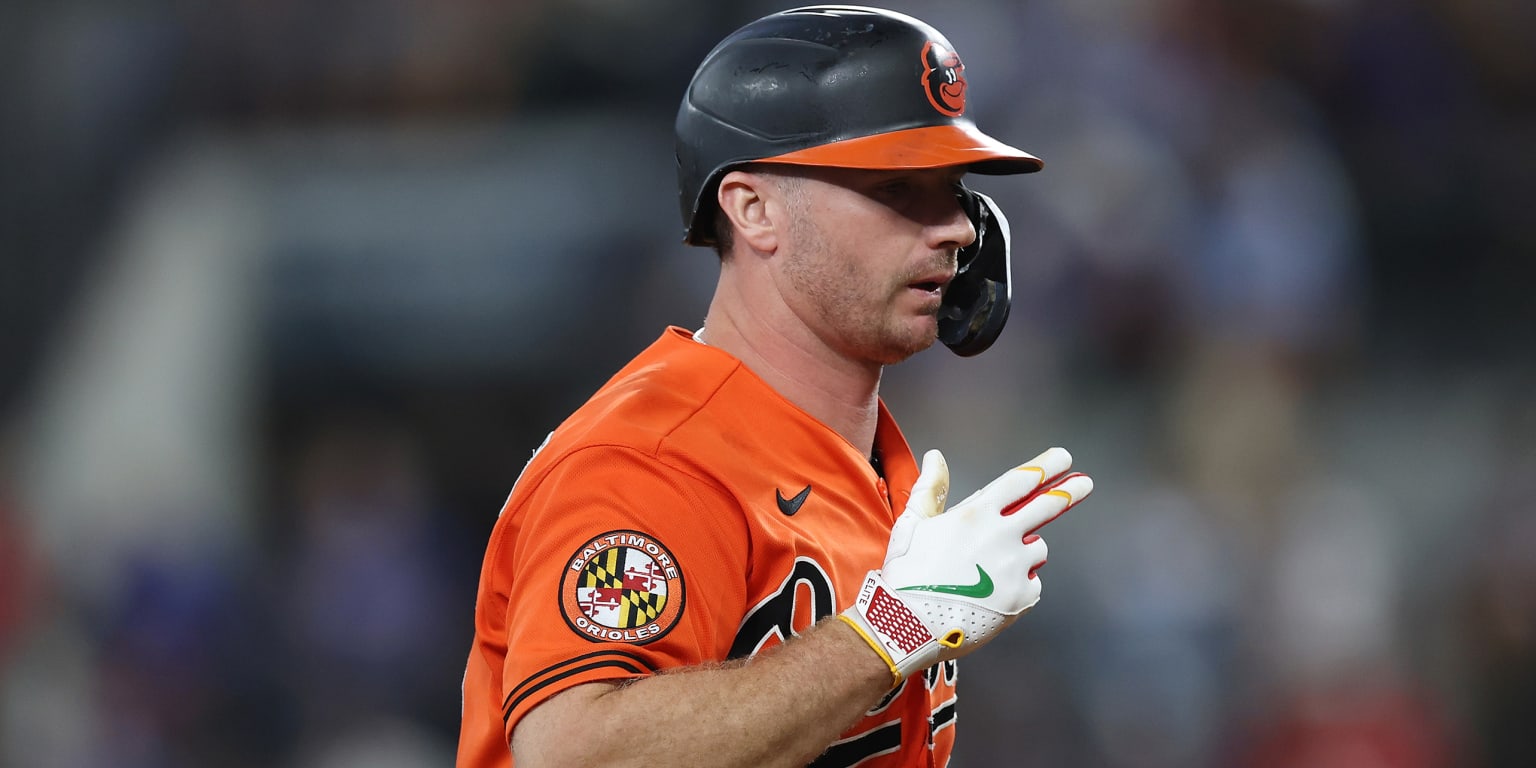
Pete Alonso went 3-for-3 with two walks, two two-run homers, and four RBIs Sunday to lead the Orioles past the Rangers 10-5 and halt a three-game losing streak in Arlington. The first blast—a 393-footer off Kumar Rocker's slider in the second—came on the heels of an aggressive baserunning display that set the table early. The second, a 404-foot full-count bomb off Jordan Montgomery in the fourth, landed in Baltimore's bullpen and essentially locked down the win. It was Alonso's first multihomer outing since signing his five-year, $155 million deal with Baltimore last December, arriving as both a vocal leader and a power floor the franchise hadn't reliably anchored in years.
Alonso now owns 27 career multihomer games—third among active players behind Aaron Judge (40) and Kyle Schwarber (35)—and has reached 25 homers for the seventh time in his eight-year career. The consistency of that production matters as much as the headline number. Even in the abbreviated 2020 season, he hit 16 in 57 games, a 46-homer pace over a full slate. What Sunday's outing underscores is not a breakthrough or a correction; it's a confirmation that Alonso's power floor remains intact despite any mid-season noise around strikeout rates or contact quality. He walked twice in the same game, a detail that speaks to his aggression at the plate—willing to chase but not desperate.
The Orioles' rotation situation makes Alonso's performance relevant beyond the box score. Spot starter Cade Povich imploded in the third inning, allowing three runs and likely heading to the minors upon Chris Bassitt's return from the injured list. That volatility in the pitching staff means Baltimore's margin for error in tight games narrows. A walk-off homer or a four-RBI night becomes the difference between salvaging a series and heading into the next stretch bleeding momentum. With the calendar now at August 9, the Orioles are 45 days from the regular season's end, and the home-run equity Alonso provides—reliable, high-leverage, and contractually guaranteed to be in the lineup—is not fungible.
From a prop perspective, Alonso's pricing on home-run totals and RBI props heading into September likely reflected some discount for his strikeout profile and the middle-of-August narrative around the team's pitching depth. A two-homer, four-RBI night forces a revaluation. Books will tighten his single-game HR line (likely from 1.5 to -110/-110 or steeper) and may nudge his season-long totals upward, but the real edge sits in spotting games where the Orioles face bullpen-dependent opponents or relievers Alonso has crushed historically. His multihomer frequency—27 in 1,000+ games, roughly 2.7 percent—is above the median for power hitters of his tier, and that clustering often occurs against fastball-heavy relief corps that reward his aggressive middle-of-the-order approach. The next week's matchups against teams with thin bullpen depth are the leverage points.
Baltimore's divisional standing and wild-card positioning mean every series win in August carries outsized value in the September odds market. Alonso just illustrated, in concrete fashion, why the Orioles' front office deemed him worth $155 million: he can single-handedly flip the script in a game that appeared to be slipping. That's not narrative. That's asset allocation at work.
MLB Intelligence — Baseball intelligence beyond the box score. Open MLB Intelligence →