Carrigg's Power Show at Coors Masks the Rookie Early-Game Trap
By Justin Erickson ·
The Rockies' fresh prospect delivered a 418-foot homer in his third game, but single sparks in small samples are the surest path to chasing overpriced prop lines.
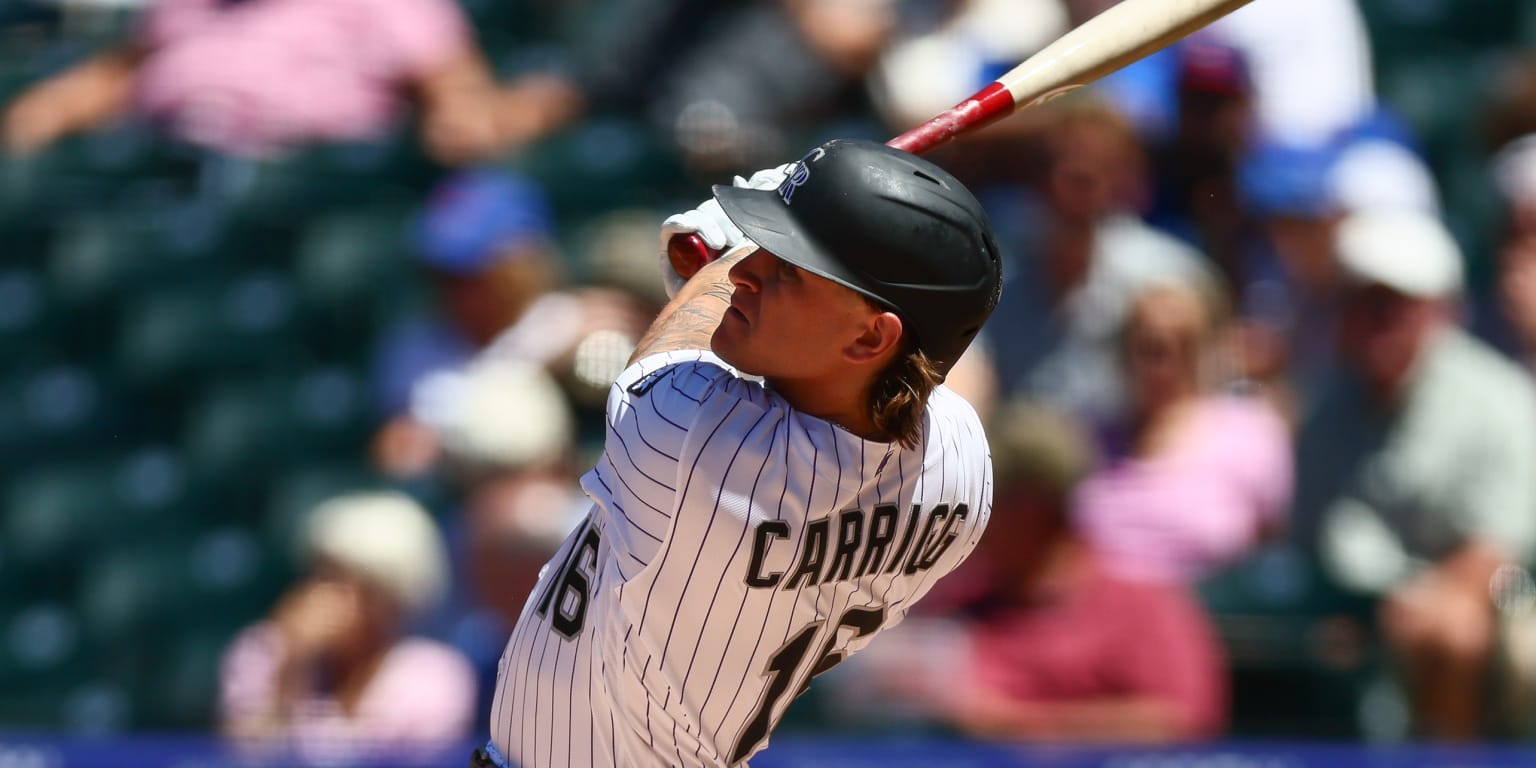
Cole Carrigg's first Major League home run arrived Thursday at Coors Field, a 418-foot bomb into the right-field bullpen off Edward Cabrera in the fourth inning. The Rockies' No. 6 prospect, called up from Triple-A Albuquerque on Tuesday when Tyler Freeman landed on the concussion list, has now logged three career games—a triple in his debut, then this power display. The narrative writes itself: young speedster, immediate production, Coors Field elevation. Books will price props accordingly.
But three games is not a sample. Before his callup, Carrigg slashed .338/.414/.529 with six home runs across 57 games at Albuquerque—a legitimate minor-league line that suggests plus bat-to-ball skills and gap awareness. He's a 24-year-old with starter reps in center field who's getting real opportunities. That part is real. What's not real is that one dinger at altitude into a bullpen in left field should reshape his single-game home run or slugging props.
The market will likely overcorrect to Carrigg's immediate MLB success. Books may shade his next home-run prop or team total slugging lines slightly tighter in the short term, accounting for a "sparkplug" rookie momentum narrative. Conversely, props betting against him (unders on his hit total, strikeout overs) may have already compressed by Friday's action. The efficiency test: did the Cubs' Seiya Suzuki—who hit a grand slam off Ryan Feltner in that same fourth inning—move his props meaningfully after one at-bat? Likely not. Carrigg should receive the same market skepticism, even if his team is now celebrating him as the second Rockie ever to record a triple for his first hit (Ryan Ritter did it June 6, 2025). The real edge on Carrigg props emerges only when and if he sustains his .338 minor-league average over 50+ MLB plate appearances, or when his strikeout rate stabilizes. Until then, his props are noise masquerading as signal.