Ohtani's Selective Return Tests Dodgers' Load Management Calculus
By Justin Erickson ·
Back from a day off to nurse left knee soreness, Ohtani delivers a go-ahead two-run homer in the fifth inning—but the Dodgers face a scheduling dilemma that will reshape his prop value for the rest of the season.
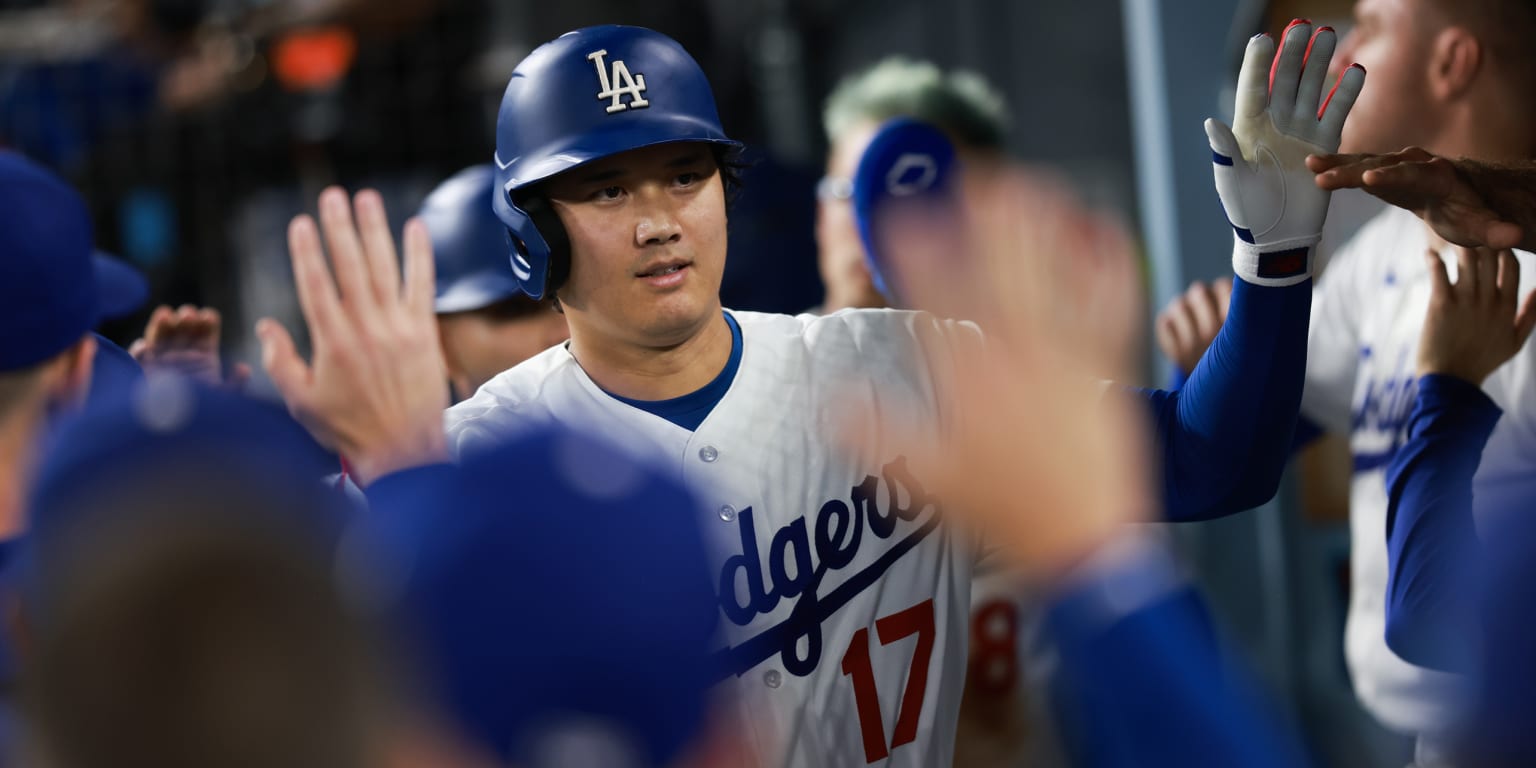
Shohei Ohtani returned to the Dodgers' lineup Friday night against Boston after sitting out Thursday with nagging left knee soreness, and he announced his presence with a 112.1 mph two-run blast off Jovani Morán in the fifth inning—his 24th home run of the season. The timing mattered: the Dodgers had trailed 3-0 and were grinding through a bullpen game, and Ohtani's blast provided the go-ahead cushion in what became a midgame comeback. That display of power on a knee that forced a day off raises a practical question about what the Dodgers intend to do with their franchise centerpiece for the remainder of July and into October.
The knee issue is the real story here, not the homer. Ohtani has been managing left knee soreness since his return to pitching was shelved indefinitely earlier this season; Thursday's flare-up—classified as renewed soreness during treatment—was significant enough to warrant a full game off. That he could still impact the lineup as a hitter suggests the injury is containable within his two-way role, but the Dodgers' medical staff is clearly threading a needle. The team has also logged a lingering right biceps issue on the same player. Combined, these create a scenario where load management, not talent, becomes the constraining variable on Ohtani's output for the remainder of the season.
The Dodgers have signaled they may become "more proactive" with Ohtani's workload going forward—a euphemism for strategic rest days that could arrive on short notice. That flexibility is a luxury of a dominant roster gunning for a World Series three-peat, but it fundamentally changes how bettors should price Ohtani props. His 24 homers in what appears to be an incomplete season pace (based on rest days creeping into the schedule) means his seasonal power trajectory is now contingent on games played, not at-bats. A player hitting .300 with 35 power over 600 PA is one prop profile; the same player hitting .300 with 35 power over 500 PA because of load management is a different bet entirely.
For prop players, the mechanics are straightforward: any Ohtani line that prices him as a full-time player will carry embedded overvalue in the near term. His HR total for multi-game slates or series props should reflect that the Dodgers may sit him in low-leverage or back-to-back scenarios. Over his first three seasons with Los Angeles, he's hit 133 homers—a pace that trails only McGwire (Cardinals, 159), Rodriguez (Rangers, 156), and Ruth (Yankees, 148) over equivalent windows. That's historic production, but historic production on managed minutes is worth less in the prop markets. The market may price his next three games as if he's guaranteed to play all of them; the Dodgers' load-management signal suggests otherwise.
The knee issue also floors his upside in stolen-base and speed-dependent props. On the basepaths Friday night, Ohtani moved with visible caution—the source noted he "didn't look particularly comfortable"—and the Dodgers seem intent to limit the stress his left leg absorbs in non-hitting contexts. That narrows his value to power and batting-average props, where the edge now lies in understanding that the Dodgers will manage reps, not talent.