Misiorowski's Velocity Dominance Is Real, But His Strikeout Props Need Efficiency Context
By Justin Erickson ·
Jacob Misiorowski has posted one of the most dominant pitching seasons on record, but the market's strikeout pricing may not fully account for the velocity-to-K conversion efficiency gap that separates him from historical comps.
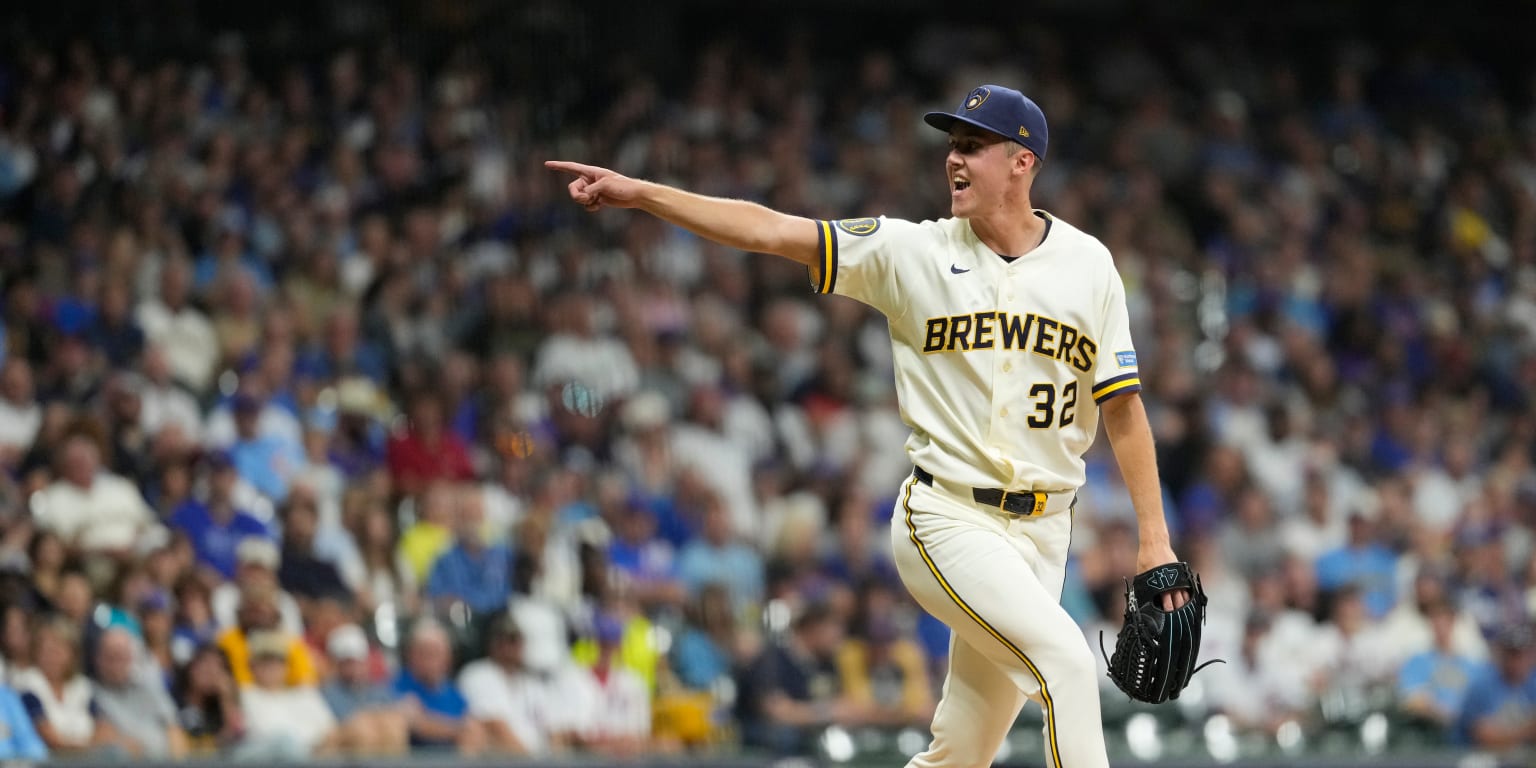
Jacob Misiorowski is having a season that belongs in the conversation with Sandy Koufax, J.R. Richard, and Pedro Martínez. The 24-year-old Brewers starter leads MLB in strikeouts (243), ERA (1.89), and opponents' batting average (.160)—a trifecta not accomplished since Mike Scott in 1986. The statistical foundation is genuine: he's allowed opponents to hit just .160, which would stand as the lowest qualified mark in the Live Ball Era, surpassing Martínez's .167 from his 2000 campaign. His 0.81 WHIP ranks fourth all-time in that same span. The excellence is distributed across command, movement, and results, not built on a single anomaly.
But the Misiorowski narrative that dominates betting boards centers on one thing: velocity. He has thrown 1,053 pitches at 100+ mph this season—nearly 400 more than Jordan Hicks's previous record from 2018—and he owns the top 41 fastest strikeouts by a starter under pitch tracking. He has seven strikeouts on 104+ mph pitches alone. The velocity is real and, by historical measure, unprecedented for a starter. The energy and raw stuff are as advertised.
Here's where the betting edge emerges: strikeout prop markets have likely priced Misiorowski's velocity profile as a direct multiplier on his K rate, when the actual conversion mechanism is far more nuanced. Velocity without precision is bullpen noise. Misiorowski throws 100+ mph because he can command it as a put-away pitch inside the zone—not as a high-chaos fastball designed to overpower. His 0.81 WHIP and .160 opponents' AVG reflect that efficiency. When books price his strikeout lines, they anchor on his 243 Ks and his velocity pedigree, but they may not fully adjust for the fact that sustained triple-digit heat at this volume is metabolically unsustainable in a single season. As the calendar turns toward October—with less than two weeks remaining in the regular season as of mid-September—fatigue wear on a 24-year-old's arm, even one with exceptional durability, becomes a legitimate consideration. His strikeout rate could compress slightly in a compressed stretch run, not from mechanical failure but from the natural decay of peak performance over a 162-game grind.
The broader implication: Misiorowski's strikeout totals in the final stretch are likely to be priced with a volatility premium that reflects his season-long dominance but may not reflect the fatigue risk specific to the volume and intensity he's logged. If he's been used heavily in consecutive outings or is being stretched in leverage situations late in close games, the next-start strikeout line could flatten relative to his season average. Conversely, if Milwaukee manages his workload with the postseason in mind, he could remain elite. The angle is not that his strikeouts will collapse—they won't—but that single-start overs on his K prop in the final stretch are pricing a full-season-form pitcher when a fatigued-but-still-dominant version is more likely. That gap is where value surfaces.
The historical comp matters here too. Martínez in 2000 threw 217 innings and posted a 284 strikeout season over 37 starts. Misiorowski is tracking toward a similar workload—he's pitched deep into September with high strikeout volume and elite efficiency. But unlike Martínez, who was 28 and in his prime recovery years, Misiorowski is 24. His arm recovery between starts matters more. Watch the spacing of his starts and the innings pitched in each outing over the final 10 days of the season. If he's getting extended rest or is being managed down, his single-start strikeout prop could offer value on unders as the market assumes full-form output. If he's being pushed hard in playoff-clinching scenarios, overs could hold.