De La Cruz's 457-Foot Myth: What a Disputed Blast Reveals About the Reds' Offensive Tether
By Justin Erickson ·
Elly De La Cruz launches a stadium-clearing blast and immediately disputes its measurement—a moment that crystallizes both his individual dominance and Cincinnati's broader offensive fragility.
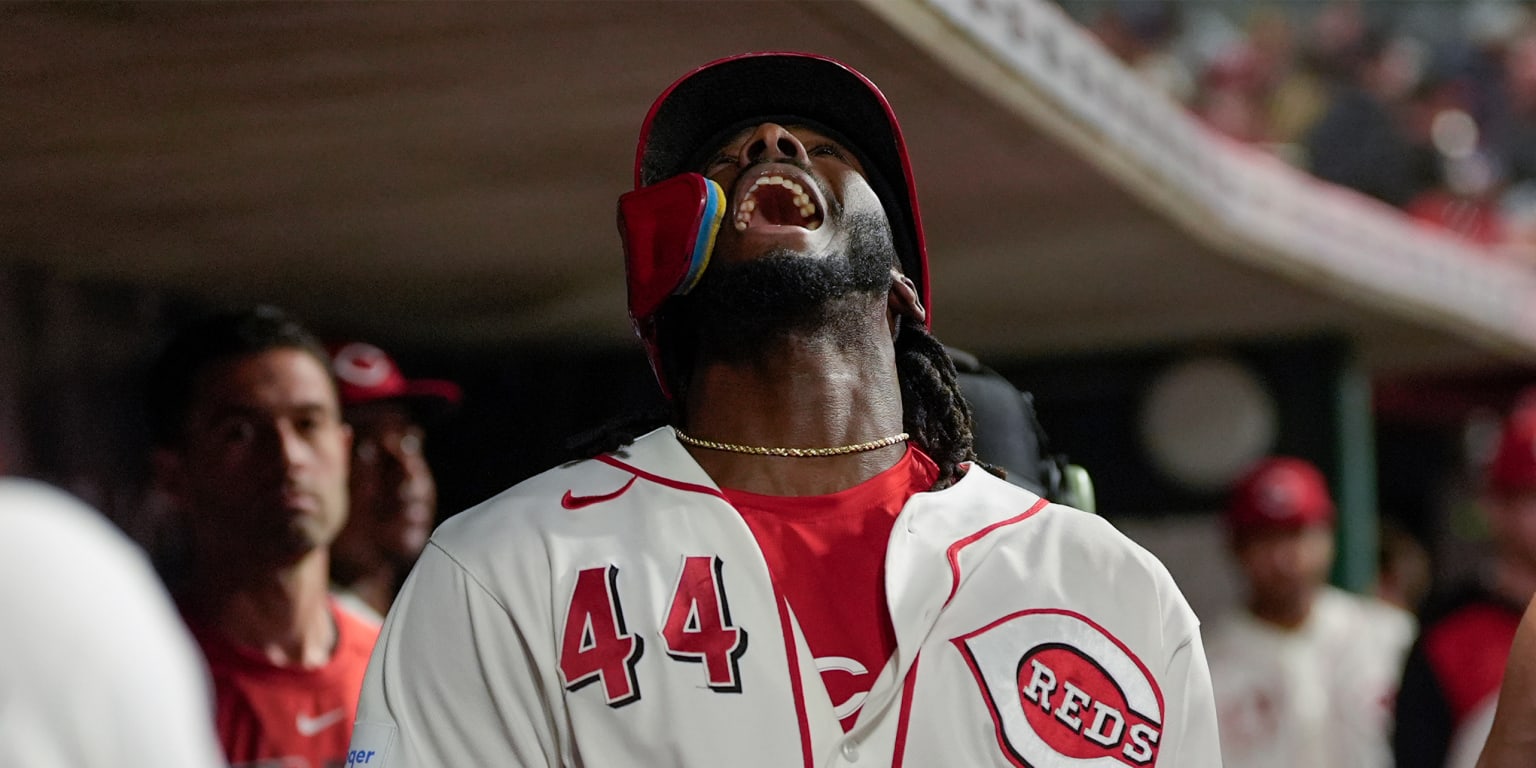
Elly De La Cruz left little doubt about the distance of Monday night's ninth-inning home run at Great American Ball Park. The ball cleared the stadium entirely, bounced off the outer concourse, and landed on Mehring Way. Statcast clocked it at 457 feet. De La Cruz, unhappy with the estimate, pushed back: "I think that's wrong. If the ball left the stadium, I think it's farther than that." His skepticism has weight. His career long-ball record is 467 feet (Cleveland, September 2023), and he's already launched two other stadium-clearing or near-stadium shots in the 458-foot range. A 457-foot measurement for a ball that cleared the entire structure suggests either a conservative estimate or a De La Cruz whose power has reached a level that standard projection models underestimate.
What makes the moment notable extends beyond the tape-measure distance. De La Cruz went 2-for-3 with two walks against the Dodgers on Tuesday night—the only Cincinnati player generating consistent offensive momentum in a 4-0 loss. The Reds fell to 70-81, 11 games below .500, and have now absorbed 17 shutout defeats, the most in Major League Baseball this season. De La Cruz's individual excellence—he's riding a 22-game on-base streak dating back to August 22, slashing .427/.480/.775 with seven homers and 17 extra-base hits during that span—stands in harsh contrast to an organization that can't piece together run support. Against the Dodgers specifically, his career numbers glow: .301 average, .965 OPS, six home runs across 24 games. He thrives on the biggest stage. Everyone else in a Reds uniform seems to shrink.
The offensive disparity also manifests in team-construction terms. De La Cruz continues to earn his way toward free agency (eligible after 2029), and the Dodgers—with their championship pedigree and spending appetite—are already circling. Manager Dave Roberts didn't hide it: "There's a lot of willing takers for that person and talent." The Dodgers are winning games. The Reds are losing them. That gap matters not just in the standings but in how De La Cruz's value compounds across the market. A 24-year-old five-tool shortstop who mashes 457-foot homers and performs at an MVP clip against pennant contenders becomes exponentially more valuable when his team can't win. In three years, that contract negotiation will reflect both his individual metrics and the fact that he never had a meaningful postseason experience in Cincinnati.
From a betting perspective, De La Cruz's individual prop lines have almost certainly adjusted upward in the wake of his recent tear. His home-run rate over the last 22 games (7 in 88 plate appearances, or roughly 5.1 per 162) is unsustainable, but his underlying barrels and exit-velocity percentiles suggest he's not in a mirage—he's genuinely making harder contact and finding barrels at an elevated frequency. The edge, if one exists, isn't on his raw power props (those lines will have moved), but on his on-base and run-scoring totals. So long as he's batting leadoff or in the two-hole for a Reds offense desperate for table-setters, his walks and singles accumulate at a clip that outpaces his season average. His 22-game on-base streak is real and traceable to improved selectivity (.480 OBP in that window vs. .356 for the season). The Dodgers pitch around him. Lesser arms struggle to attack him cleanly. Until Cincinnati builds a competent lineup around him, De La Cruz becomes a recurring bet on individual excellence divorced from team context—a volatility play masquerading as a skill play.