Leo Bernal's Hot Start Forces Cardinals Into Immediate Roster Reckoning
By Justin Erickson ·
The catcher's 13-game debut has redrawn St. Louis's position depth chart and left Ivan Herrera scrambling for a role.
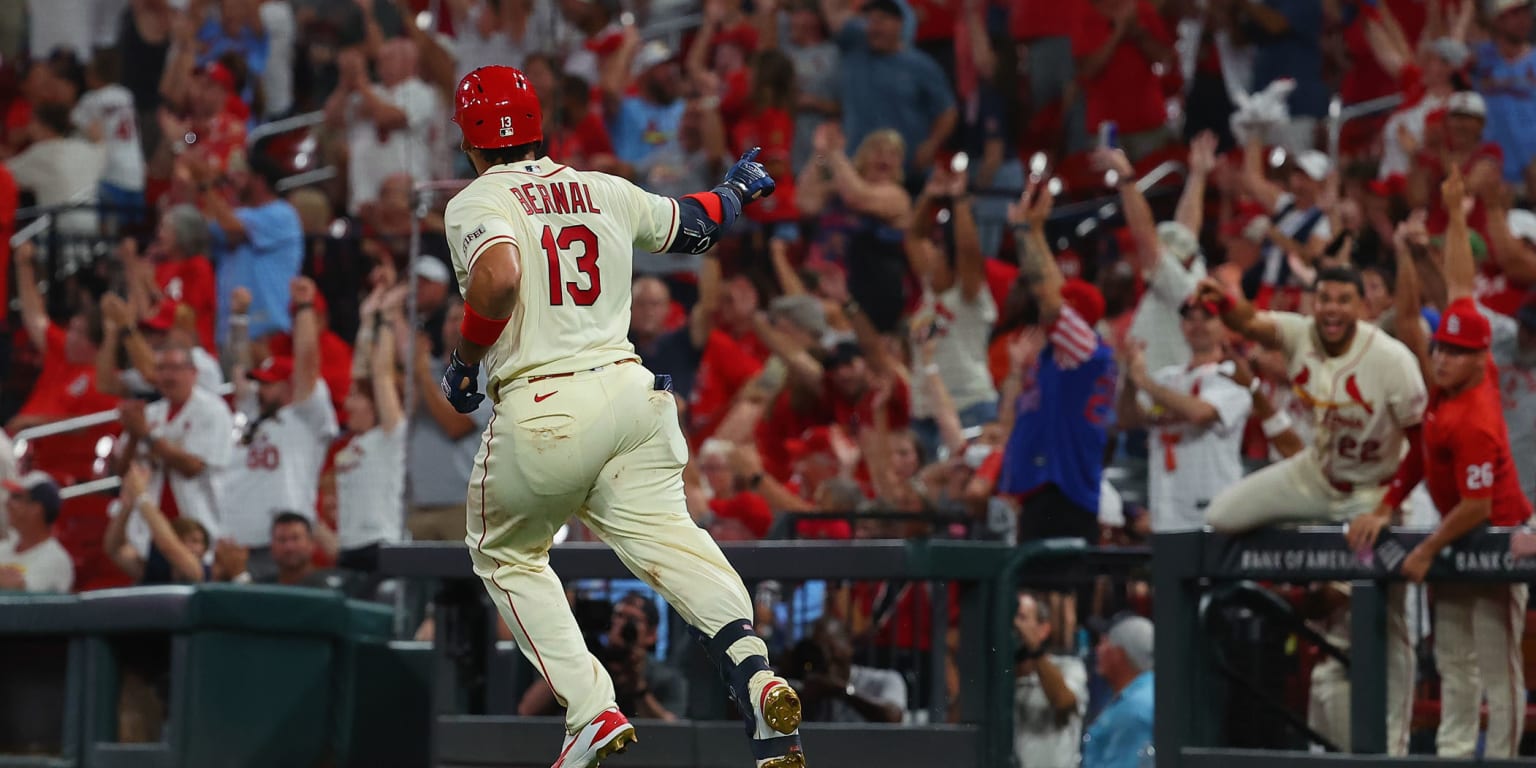
Leo Bernal arrived in St. Louis on September 1 and has wasted no time reshaping the Cardinals' offensive picture. Through his first 13 games, the rookie catcher has posted a .933 OPS—the team's best mark in that span—with three home runs and 14 RBIs. His Savant page reads like a highlight reel: exit velocity, barrel rate, and approach consistency that suggest this isn't a small-sample mirage. Behind the plate, he's shown the dexterity and arm strength scouts promised from his minor-league work. Cardinals manager Oliver Marmol has been explicit about what he's seeing: a young player who arrives mentally prepared, executes his game plan, and moves with the composure of a veteran.
The timing of Bernal's call-up carried symbolic weight—Yadier Molina's Hall of Fame induction happened just days later, a passing of the torch at a franchise position. But symbolism matters less than roster construction. Bernal's immediate productivity forces a cascade of decisions down the depth chart, particularly for Ivan Herrera, who was supposed to anchor the catching position after years of organizational patience with his raw power.
Herrera's 2026 campaign tells a story of regression masking as stability. He opened strong—.391 OBP and .822 OPS through May—then watched his offensive profile compress as summer wore on. His OBP remains respectable at .356, but the power drought is real: despite playing 43 more games than last season, he has three fewer home runs. More damaging is that Herrera's defensive limitations at catcher (a throwing arm issue that has persisted) made him a partial player even before Bernal arrived. With the rookie claiming primary duties behind the plate, Herrera's pathway to consistent at-bats narrows to a part-time DH role, a role the Cardinals have shown little willingness to commit to beyond a short-term platoon.
From a betting standpoint, Herrera's prop lines face immediate repricing. His strikeout rate has ticked up as pitchers have grown comfortable attacking him, and his contact quality has deteriorated—a sign that regression is mechanical, not random. Look for his RBI totals to compress sharply over the final two weeks of the season as his plate appearances dwindle. Any overs on Herrera's individual prop lines (runs, hits, RBIs) that were priced assuming 120+ games of playing time are now overvalued; the market hasn't yet internalized that his role has shifted from starter to occasional bat. The Cardinals' willingness to keep him in the lineup at all hinges on whether they believe he can generate value in limited at-bats, and early returns suggest they don't. Fade overs on Herrera's rate-based props while the old pricing remains.
Rainiel Rodriguez, the club's top prospect (No. 17 on Baseball America's Top 100), looms as the next domino. He remains in Double-A Springfield and has been knocking around the league looking for movement. If Bernal's role stabilizes and Herrera's role shrinks further, the Cardinals may accelerate Rodriguez's timeline—not to catch, but to fill the offensive void created by Herrera's decline. That decision compresses the remaining window for any Herrera bounce-back narrative. The clock is ticking, and it's audible.