Peterson's Cubs Arrival Isn't About Stuff—It's About Defense
By Justin Erickson ·
David Peterson trades a historically poor infield for the game's best one, and the numbers suggest his ERA relief will be substantial.
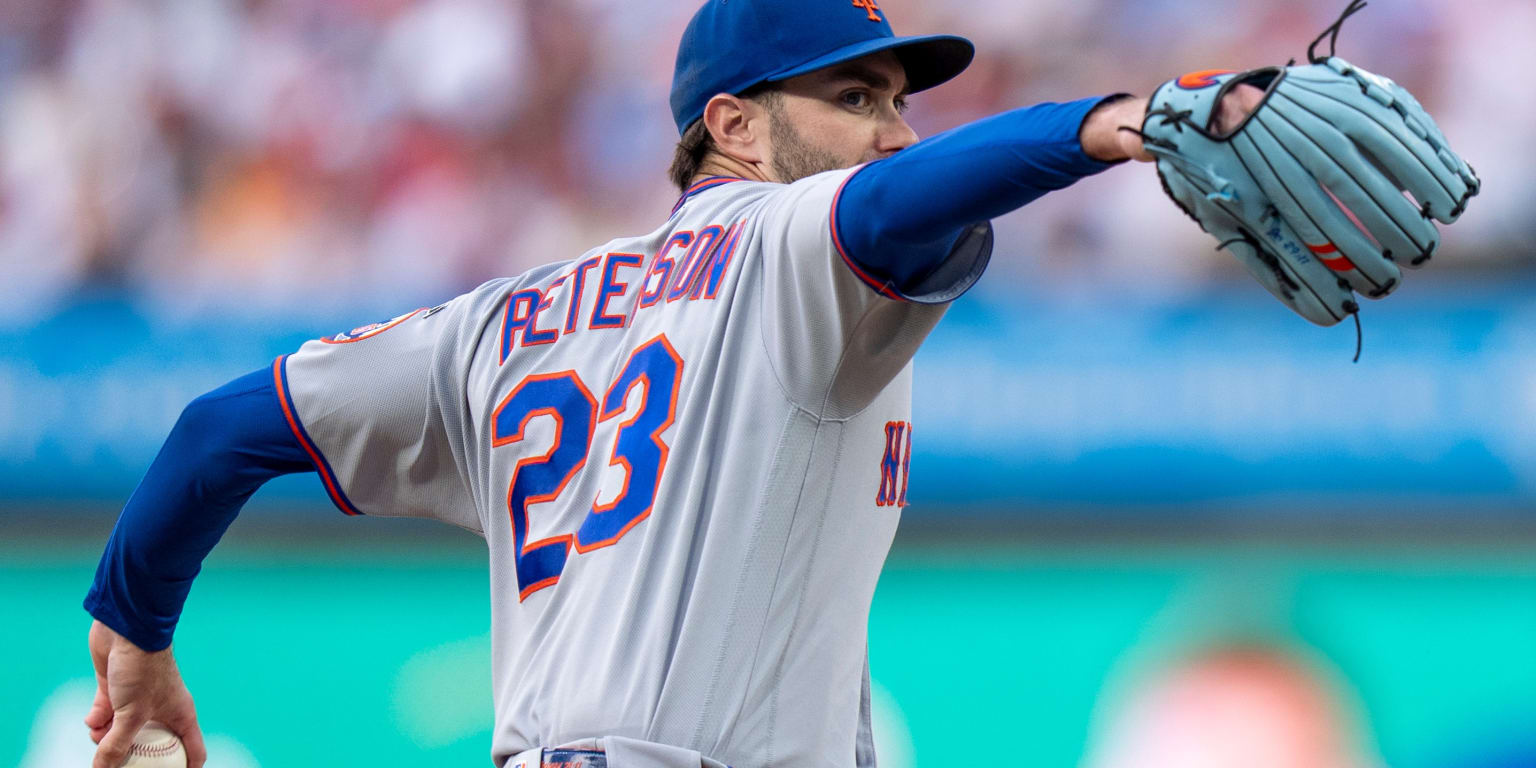
The Cubs acquired left-handed pitcher David Peterson from the Mets on Thursday in exchange for minor-league prospect Cole Mathis. It's a modest midseason deal born from desperation—Chicago has five rotation arms on the injured list, and Peterson carries a 6.09 ERA across 16 appearances with the Mets after losing his starting job. At 30 years old and set to become a free agent after the season, he represents a lottery ticket, not a headline trade. But the underlying mechanics of this swap offer concrete reasons to believe Peterson's arrival in Chicago resets his season trajectory.
Peterson throws a ground-ball pitcher's arsenal: he's induced ground balls at a 52.9% rate this season, which ranks in the 89th percentile, and has maintained a 52.3% ground-ball rate across his seven-year career. The problem in New York was industrial. The Mets infield grades among baseball's weakest, ranking 26th in Fielding Runs Above Average (FRV at minus-11) and 24th in Outs Above Average (OAA at minus-11). Forty percent of Peterson's 82 hits allowed this season came on the ground—exactly the type of contact a sinker-slider pitcher wants, except the Mets couldn't convert them into outs. A six-error performance in Wednesday's doubleheader against the Cubs (the very team acquiring Peterson 24 hours later) made the point viscerally. The Cubs, by contrast, field the best defense in baseball by both metrics: 33 FRV, 10 ahead of second place, and 38 OAA, comfortably clearing the Dodgers' 23. Their infield is first in OAA (22) and tied for first in FRV (19). Gold Glove infrastructure includes shortstop Dansby Swanson, second baseman Nico Hoerner, third baseman Alex Bregman, and first baseman Michael Busch (who leads the position in both FRV and OAA). The gap between Met and Cub infield competence is not subtle—it's a 30-point swing in organizational defense.
There is secondary evidence of durability here. Peterson's ERA sits at 6.09, but his FIP—which isolates strikeout, walk, hit-by-pitch, and home-run rates—lands at 3.85, a metric that carries more reliability for future ERA prediction than current raw results. His FIP has lived in the mid-threes across the past three seasons, suggesting his 2026 ERA inflation is an artifact of his environment rather than a fundamental loss of control. A dominant defense erases weak contact before it registers as a hit; Peterson's FIP implies he's been throwing well enough to match his peer group, even if the scoreboard hasn't reflected that.
From a prop perspective, the betting markets have already begun pricing in Peterson's relief. His innings-pitched totals in Cubs starts will initially offer volume advantages—bettors expecting positive ERA regression will lean overs on strikeout props if sportsbooks haven't fully adjusted his implied run prevention. The real edge, however, sits in team unders for Chicago games where Peterson starts. His FIP suggests he'll surrender fewer earned runs than his previous rate, but more critically, the quality of ground-ball defense behind him means more double-play potential and fewer runners advancing on weak contact. If Peterson starts within the next week, before sharp money has fully priced the defensive advantage, lean unders on Cubs team totals in the 3.5–4.2 range on those dates. This edge has multi-week durability because it's built on organizational defense quality, not a single outlier performance.
The irony of Peterson's move—he pitched against the Cubs in that disastrous doubleheader just 24 hours before joining them—underscores the randomness of mid-June trades. But the economics are real. The Mets couldn't fix Peterson's ERA with rope and duct tape. Chicago's infield can.