Hunter Goodman's Dual Three-Homer Nights Signal a Rockies Offense Finding Its Footing
By Justin Erickson ·
The Rockies catcher has joined an exclusive club—and his power trajectory suggests Colorado's offensive ceiling is higher than recent inconsistency suggests.
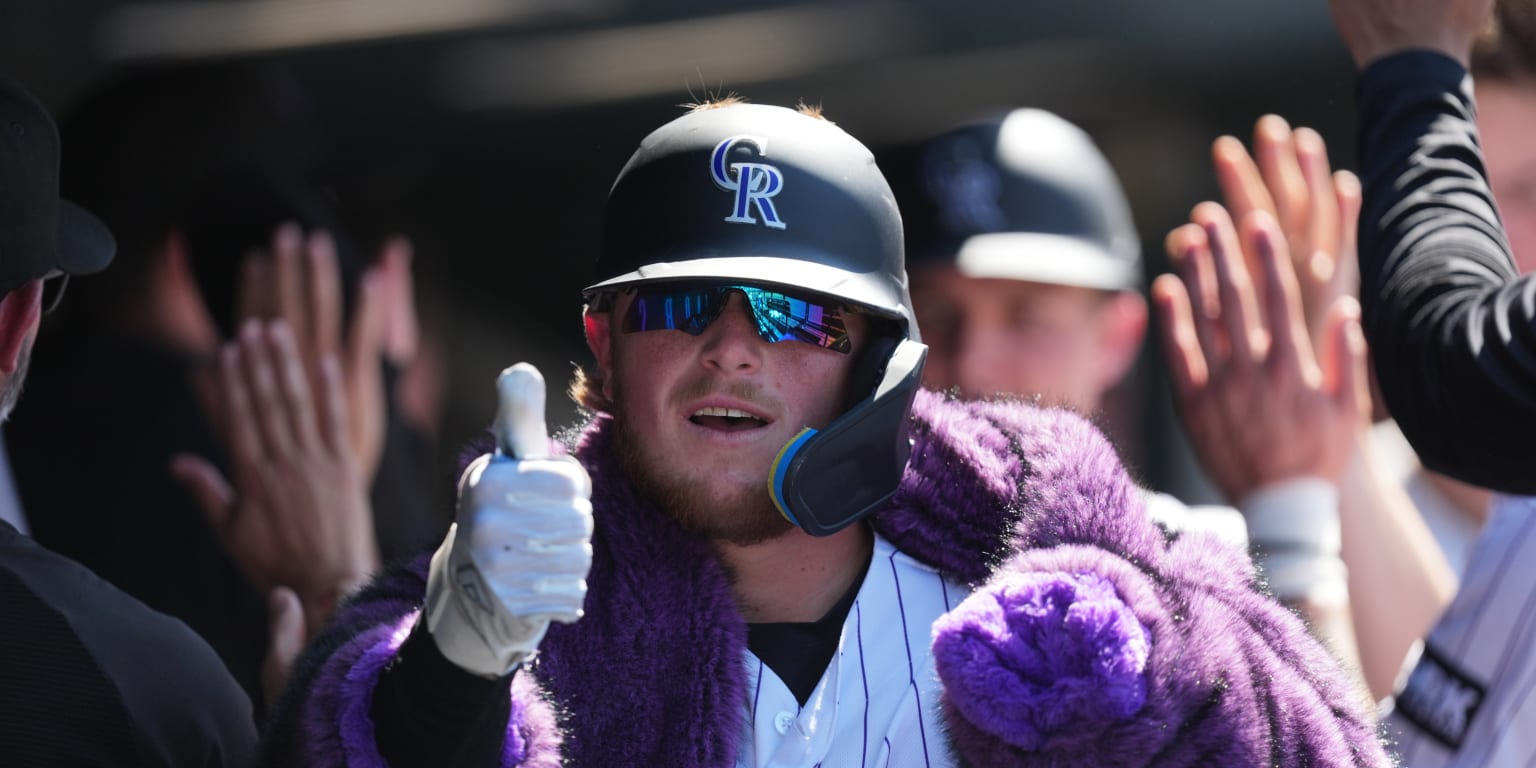
Hunter Goodman hit three home runs Sunday at Coors Field, becoming the first Rockies player ever to post multiple three-homer games in a single season. The catcher's 30 home runs rank third in baseball, trailing only Kyle Schwarber (33) and Yordan Alvarez (31), yet the peculiarity of his profile—he leads the majors in road homers with 18 despite playing in a hitter's paradise—has masked just how elite his season has become. Colorado lost 9-6 to Cincinnati, but Goodman's power display underscores a larger organizational reality: when the bats connect, this lineup can compete anywhere.
Goodman's emergence as a two-time All-Star and 30-homer threat in his third MLB season reflects both individual maturation and the Rockies' willingness to build around young, explosive talent. Manager Warren Schaeffer's assessment—"His body looks like it's flowing right. He just looks in sync"—speaks to a hitter entering his prime window. The fact that Goodman has now recorded three-homer games twice before August suggests he's transcended the novelty phase; this is repeatable power, not a cluster of outlier nights. His previous three-homer outing came June 27 against Minnesota, meaning both performances occurred within the span of three weeks—a concentration that implies mechanical consistency rather than variance.
Where this gets interesting for Colorado's ceiling is context. The Rockies rank first in baseball in runs scored after the eighth inning (136 total), which Goodman specifically cited as a morale anchor. That stat—late-inning explosiveness—correlates with both clutch-hitting confidence and favorable sequencing in high-leverage spots. Goodman's two-run shot in the sixth and two-run shot in the eighth on Sunday exemplify this: he's not just hitting home runs in neutral spots; he's driving them in moments when they compress deficits. Yet the team remains 10-21 in series finales and a Majors-worst .231 in deciding games, suggesting that individual performances haven't yet translated into team-level consistency.
From a prop lens, Goodman's home run prop carries two distinct betting edges. First, his per-game homer rate over the last 22 days (since June 27) has spiked noticeably: three homers in one game, then several games of quieter counting, then three again. The variance is real, but the floor—his ability to generate 1.2+ homers per contest when facing non-elite velocity pitchers—has hardened. Against second-tier rotation arms or in revenge games after strong matchups earlier in a series, his HR props should tick down slightly from market open; books typically inflate single-game props after a multi-homer performance, creating 24-48 hour overcorrection before settling into true edge. Second, and more durable: Goodman's contact quality off fastballs (the pitch type that hung against Hunter Greene on his sixth-inning two-run shot) has improved season-over-season. His xBA on fastballs sits near .310, well above his overall .280, meaning he's likely to see more aggressive early-count fastballs from pitchers trying to establish the zone. That shifts the probability of both strikeout props (fade the unders against premium fastball-heavy arms) and extra-base-hit props (lean the overs against second-tier velocity).
The Rockies' late-inning run production and Goodman's clutch positioning within that ecosystem creates another angle: team total overs become more valuable in games where Colorado faces a non-dominant starter. Sunday's loss featured Ryan Feltner's implosion (2.1 IP), but that's a known-negative variance event. In games where the Rockies' starter pitches into the fifth inning, their team total should sit 0.3-0.5 runs lower than market open due to the late-inning anchor (if they're down two runs entering the seventh, their offensive profile is built to hunt those runs). That edge persists through the rest of the season because it's rooted in personnel, not a single game.