Misiorowski's Velocity Spike Is a Mirage—His Real Edge Is Timing
By Justin Erickson ·
The 2026 All-Star has doubled his miss distance on breaking balls, but his fastball velocity is only half the story.
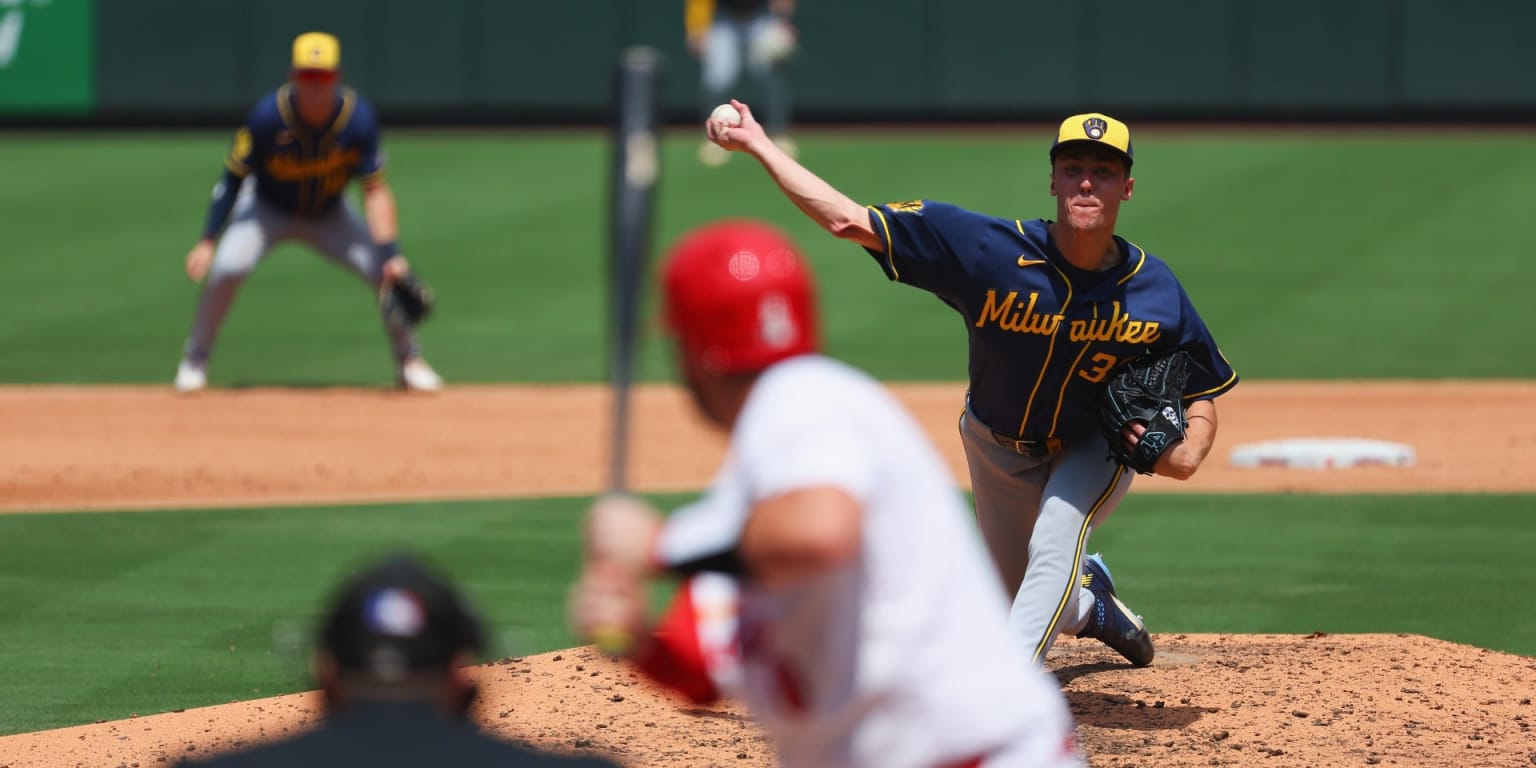
Jacob Misiorowski is in a different stratosphere than he was a year ago. At the All-Star break, he's posted a 39% strikeout rate and a 38% swing-and-miss rate—both tops in baseball—while racking up 173 total strikeouts. The leap from last season's promising rookie to this year's potential Cy Young winner isn't just statistical inflation; it's a genuine reprogramming of how opposing hitters approach him. The mechanics of that reprogram, however, are more subtle than the headline numbers suggest.
Misiorowski's average fastball velocity has climbed from 99.3 mph to 100.5 mph, and his max velocity now touches 105.5 mph compared to 102.6 mph last season. The proliferation of 100-plus mph heaters has nearly doubled—from 33% of his fastballs to 64%. That added heat matters in one specific way: it's destroying hitter timing on every other pitch he throws. But the fastball itself isn't producing dramatically larger miss distances. The average miss distance on his four-seam fastball remains essentially flat year-over-year (1.3 inches vs. 1.2 inches in 2025). What's changed is the setup game. Hitters are so desperate to catch up to the fastball that when Misiorowski flips in his slider or curveball, they're helpless.
The data tells the story. His slider miss distance has exploded from 1.7 inches to 4.4 inches—a 159% jump. His curveball, already a strong weapon, has gone from 4.3 inches to 5.6 inches. These aren't small tweaks. A bat missing by 4.4 inches on a slider versus 1.7 inches represents a fundamental shift in how hitters are being fooled. The fastball, in other words, is a timing disruptor; the breaking balls are the executioners. Misiorowski is operating with a classic heat-and-break setup, but the velocity has compressed his opponents' ability to stay balanced long enough to catch the secondary stuff.
From a betting standpoint, this distinction matters enormously. Misiorowski's strikeout prop—currently trading around 11.5 to 12.5 depending on opponent—remains a lean-over play, but not because the fastball velocity is creating the edge by itself. The edge exists because opposing pitching coaches still haven't solved the timing problem created by his fastball velocity combined with league-leading break shapes. As long as his repertoire remains healthy and opponents haven't adapted to sitting fastball (a rarity at the major-league level), his K-per-9 should continue to exceed his line. The risk: a smart opponent that attacks early in counts or lays off the slider entirely could compress his whiff rate. That hasn't happened yet. Watch for a spike in three-true-outcome outcomes (strikeouts, walks, home runs) against him; if his strikeout rate stays at or above 38% while his walk rate remains sub-8%, the over on his K prop survives the adjustment.
Second-half regression is possible—no pitcher sustains a 39% K rate forever—but the mechanism underlying his dominance is architectural, not luck-based. The fastball velocity is real, the miss distances on breaking balls are repeatable, and the timing disruption it creates is measurable. Misiorowski isn't due for a sudden collapse because his edge isn't built on unsustainable whiff percentages; it's built on sequencing and stuff quality that the rest of baseball hasn't yet cracked.