Karlsson's Work Below the Offensive Line is Unlocking Marner's Cup Final Form
By PropBetEdge Editorial Team ·
Vegas's depth up the middle is letting Marner operate as a finisher rather than a puck-retriever, fundamentally reshaping his assist and point generation in the Stanley Cup Final.
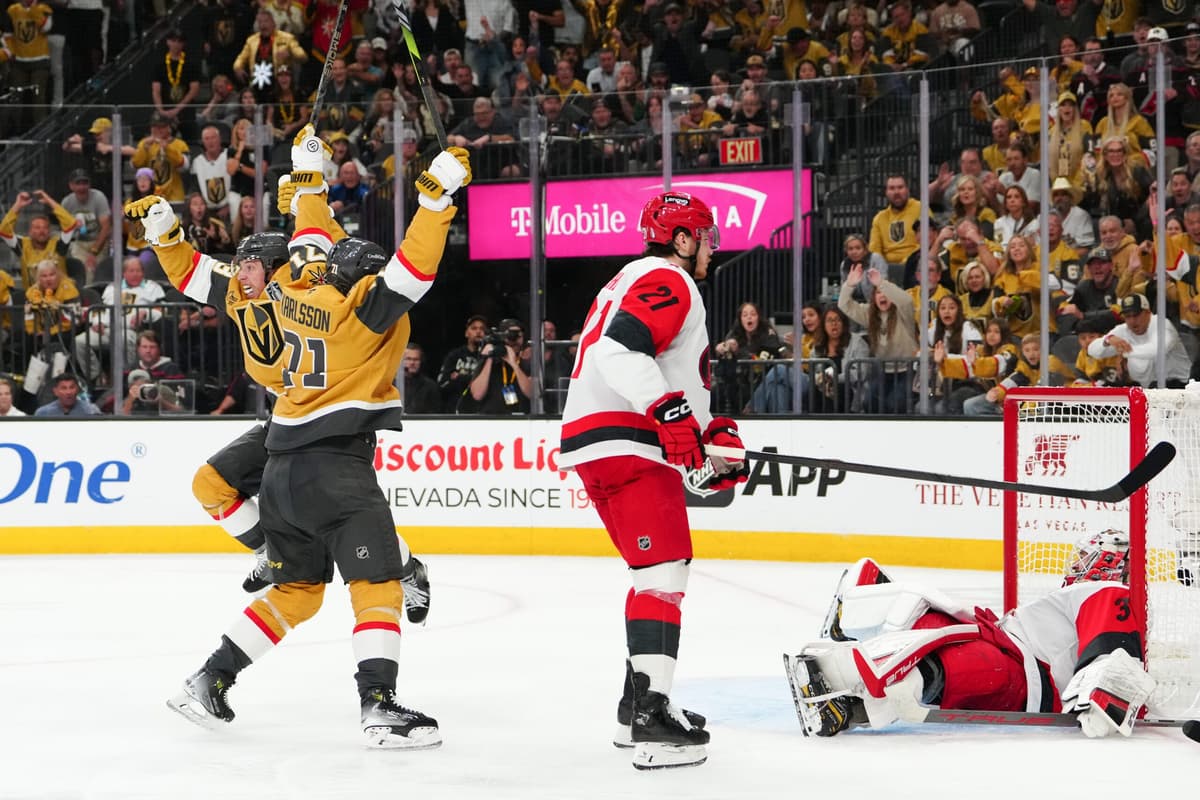
The Stanley Cup Final between Vegas and Carolina stands level at 2-2 heading into Game 5 on Thursday night, but one subplot has quietly reshaped how the Golden Knights' middle six—and specifically Mitch Marner—are performing under playoff pressure. Marner's trajectory in this series has inverted the narrative that haunted his Toronto tenure: instead of being tasked as a possession driver who chased down loose pucks for a static finisher, he's now operating in an ecosystem where William Karlsson and Brett Howden handle the grunt work. That operational shift is not cosmetic. It's a direct function of line construction and role assignment.
In his final seasons with the Maple Leafs, Marner carried an inordinate portion of the playmaking load from the cycle. He'd retrieve pucks in the corners, initiate entries, and facilitate from the perimeter—essentially serving as a secondary forward who created space for Auston Matthews. The criticism wasn't unfounded: when your best player spends 40% of his shifts chasing rather than positioning, assist rates flatten and high-leverage scoring opportunities dry up. Vegas made a different calculation. Karlsson, a 200-foot winger with legitimate net-front grit, absorbs those retrieval responsibilities. Howden plays a similar north-south game. The result: Marner's touches come in higher-leverage situations—transition passes, slot-side threading, decisions with defenders already retreating. That's why his production in this Final has felt qualitatively different from his first-round form or his Toronto playoff history.
The Golden Knights' roster construction has essentially removed two tiers of friction from Marner's offensive chain. He doesn't need to win 50-50 pucks; Karlsson is winning them. He doesn't need to initiate breakouts from the defensive zone; the line is exiting clean. What remains is pure shot creation and playmaking—the parts of his game that rank among the league's elite. This explains the production spike in a seven-game series where possession, not pace, determines outcome. When Marner gets clean ice in transition or operates from a set position, his assist rate and points-per-60 behave like a top-line player. The market hasn't fully adjusted to this role clarity yet.
From a prop standpoint, Marner's assist line carries value on the over in games where Vegas maintains consistent ice time for the Karlsson-Howden-Marner trio. If that line plays 16+ minutes and logs 55%+ in expected goals, his assist floor moves up by half a point relative to his season average. Carolina's defense rotates slowly on lateral passes, and they've been vulnerable to high-slot threading in the first two periods of each game. The mechanism here is durable: it isn't tied to a single hot streak but rather to a structural role that persists regardless of short-term variance. Marner's assists in Games 1 and 3 (both Vegas wins) came when line chemistry and deployment minutes aligned. That pattern should resurface in the remaining contests.