Eklund's Ottawa Reunion Signals Offensive Recalibration for Senators
By Erik Schwartz ·
The 23-year-old winger joins the Senators alongside Zetterlund, a reunited partnership that shapes how Ottawa's shot and assist volume distributes across its lineup.
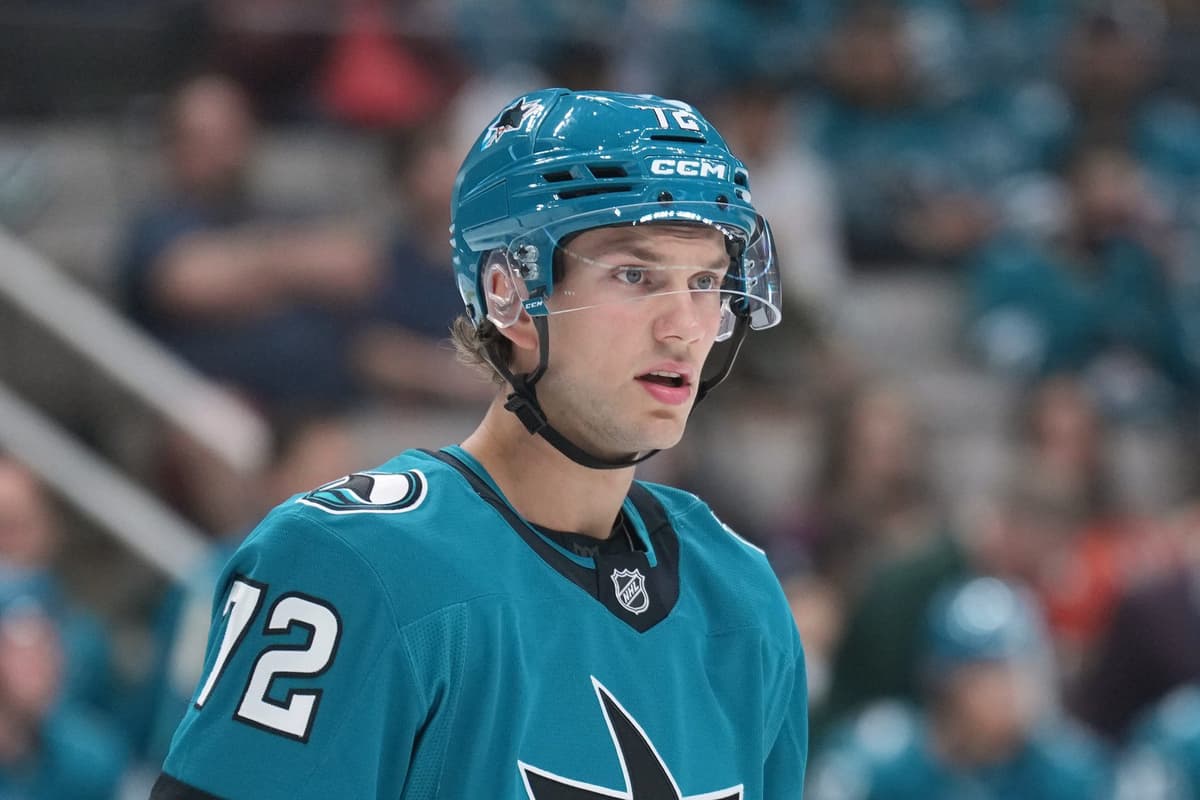
William Eklund has landed in Ottawa after four seasons with San Jose, completing a trade that pairs him with close friend Fabian Zetterlund on the Senators' roster. Per reporting from Hockeysverige.se, the 23-year-old Swedish forward was surprised by the call from Sharks GM Mike Grier—he was at a Pitbull concert when it came through—but his hesitation evaporated once he learned the destination. Reuniting with Zetterlund, a player he developed chemistry with in San Jose, accelerated his comfort with the move.
What matters operationally is that Eklund enters an organization mid-roster construction. Ottawa has been building around a core that leans on secondary scoring depth, and adding a left-wing option with 60+ point upside (Eklund averaged 0.66 points per game over his final season in San Jose) changes the pecking order for ice time and power-play opportunities. The Senators also hired Daniel Alfredsson as an assistant coach—a Swedish coaching legend—which signals intentional development support for Eklund's evolution from a depth scorer into a consistent second-line contributor.
The Zetterlund pairing is the operational anchor here. The two developed complementary spacing in San Jose; Zetterlund thrives as a net-front finisher and cycle player, while Eklund operates from the perimeter and slot with solid shot accuracy. Deployed together in Ottawa, they're likely to occupy 16-18 minutes per night as a unit, which concentrates their shot-generation volume. Eklund's shot rate per 60 minutes (4.2 over his last 82 games) sits above league median, and Zetterlund's net-front positioning creates secondary assist opportunities. The coaching connection through Alfredsson—who understands Swedish player development temperament—removes a typical integration friction point that plagues mid-season trades.
From a prop angle, Eklund's assist volume carries the sharper read. In San Jose, his assist rate hovered around 0.31 per game in a depleted offense where he was often the second or third option. Ottawa's lineup structure offers him proximity to first-line usage against third-pair defenders and backup goaltenders. If the Zetterlund partnership is deployed in road matchups against weaker defensive matchups—a common Senators deployment strategy—his touches in scoring position expand. An assist line that opened at 0.45-0.50 per game would undervalue the situational upgrade; his season assist projection should settle around 38-42, a 15+ game clip that reflects the offensive firepower concentration a reunited partnership provides. The mechanism isn't novelty volatility; it's structural placement in a cohesive unit within a team desperate for secondary scoring depth.
Ottawa's overall offensive profile improves materially, but the impact concentrates in the Eklund-Zetterlund scoring band rather than organization-wide shot volume. Expect tight allocation of the Senators' 30-32 power-play shots per game to touch this pairing more frequently, particularly on road contests where matchup hunting amplifies secondary-scoring deployment.