Game 1's Nine-Goal Barrage Likely a Series Outlier—Goalie Adjustments Already Underway
By Erik Schwartz ·
Vegas and Carolina's 5-4 opener was a mismatch in execution, not a blueprint for the rest of the Stanley Cup Final.
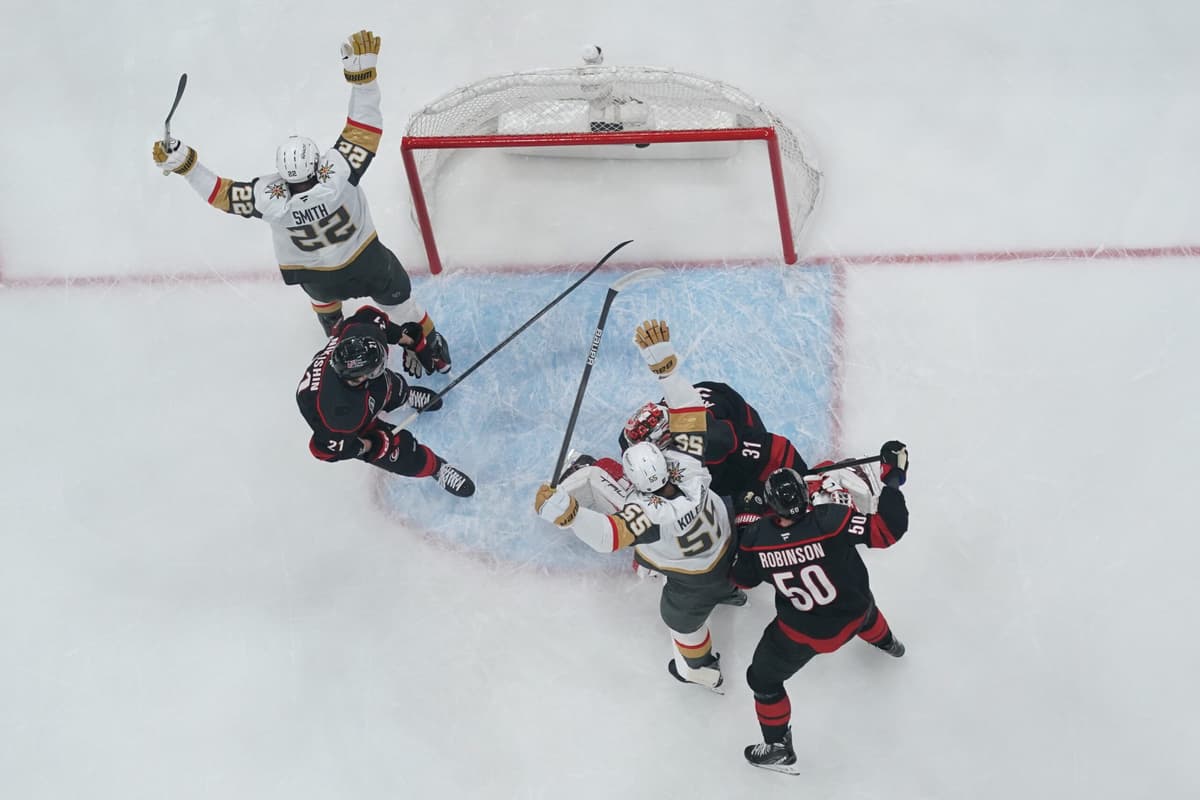
The Vegas Golden Knights and Carolina Hurricanes combined for nine goals in Game 1 of the 2026 Stanley Cup Final, with Vegas stealing a 5-4 road win after trailing 2-0 early. It was a landmark moment—the first time an NHL team has rallied from a multi-goal deficit to win the opening game of the Finals on enemy ice. But the volatility masked a deeper story: both goaltenders made critical in-game adjustments that are already reshaping how this series will be played going forward.
Frederik Andersen struggled with puck tracking in heavy traffic early, a departure from his disciplined play throughout the playoffs. Vegas's forecheck, particularly through Jack Eichel's net-front chaos (he hit the post three times in the second period alone), created high-danger chances off offensive-zone rebound traffic rather than through sustained possession. Carter Hart made a key save late in the contest that signaled a shift in his read-and-react positioning. These aren't coaching adjustments that take days to implement—goalies process floor positioning between periods. By Game 2, expect both Hart and Andersen to tighten their gaps, trust their defensemen more in transition, and reduce the number of second-chance opportunities generated from within five feet of the net.
Historically, opening games of playoff series that feature offensive fireworks—particularly high-goal totals on the back of goalie execution lapses rather than structured offensive design—rarely sustain that pace. Carolina's first-round series against Montreal opened at a similar temperature before cooling dramatically. The pattern holds across this year's playoffs: initial defensive breakdowns, whether mental or positional, get corrected faster in Finals hockey because teams have scouted each structure exhaustively and the pressure to perform compounds the adjustment speed. Vegas will tighten its slot coverage to limit Andersen's scramble situations. Carolina will push its forecheck deeper to prevent Eichel from establishing position in the crease.
For bettors, the implications are concrete. Game 1's total of 9 goals sits well above the historical median for Cup Final contests (typically 5-6 combined). If Vegas and Carolina traded nine-goal games throughout a seven-game series, we'd be looking at 63 total goals—a statistical impossibility given playoff hockey's defensive intensity in later rounds. The market has already begun pricing this reality: Game 2 totals have tightened, and series totals reflect an expectation that Games 3-7 will trend toward 4-5 combined goals per night. Volatility is not velocity. A single outlier game, even one this explosive, doesn't predict the series trajectory once both coaching staffs and goaltenders recalibrate.
The sharper play is to treat Game 1's nine goals as a one-time execution failure rather than a new normal. Series totals lean unders, Game 2 totals lean unders, and any line movement suggesting elevated offensive output across the next two weeks should be faded aggressively. Vegas and Carolina don't have bad defenses—they have goalies who will play differently knowing exactly what adjustments the opposing offense is targeting.