Draft Week Dominoes: Tuch's Free Agent Standoff Could Reshape Buffalo's Summer
By Erik Schwartz ·
With the Sabres unwilling to meet Tuch's contract demands ahead of Friday's draft, expect a cascading wave of trades that will thin rosters and compress playoff odds before July 1.
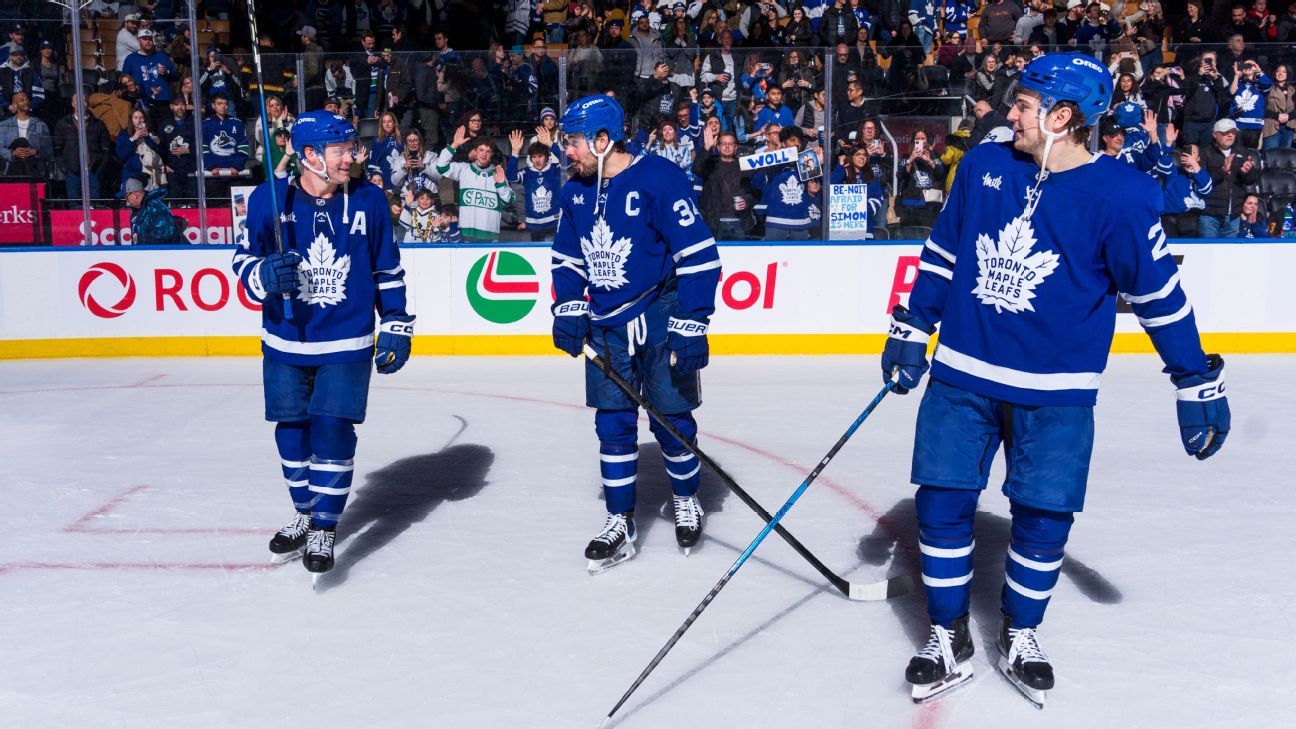
The 2026 NHL offseason is moving at a velocity that catches most observers flat-footed. Carolina lifted the Stanley Cup nine days ago, and already the Maple Leafs have signed a major free agent, the Panthers have mortgaged three first-rounders for Brady Tkachuk, and the Red Wings are fielding trade calls for Dylan Larkin. The market isn't waiting for July 1. It's happening now—in the final 72 hours before the draft, while contenders are still assembling their war rooms and cap sheets are still malleable.
The pivot point is Alex Tuch and the Buffalo Sabres' inability to bridge a contract gap. Tuch, 30, remains the most sought-after unrestricted free agent on the board: size, speed, playoff experience, and the ability to play both wings and center in any lineup. The hitch is an eighth year. Tuch's camp wants the length; Buffalo hasn't committed to it. That standoff matters because it signals desperation across the league—Seattle has already signaled massive money on the table, and if the Sabres walk away, Tuch hits the market as an unrestricted free agent in eight days. Teams cutting in line (as Tampa Bay did to land Raddysh cheaply) are calculating that a fifth-round pick now beats an open auction later, when every contender is bidding.
Buffalo's position on Byram compounds the pressure. A 23-year-old defenseman coveted as a potential No. 1 play-driver, Byram is exploring a trade to secure the minutes and role he believes he's earned. The Sabres could cash out here—get futures back—before he hits free agency next year and walks. Two foundational pieces in motion simultaneously suggests a front office at a crossroads, not a team confident in its next chapter. The draft begins Friday. By Saturday night, several of these dominoes will have fallen.
For prop bettors, this creates a compressed information advantage over the next 48 hours. Teams that acquire veteran role players (whether it's Tuch, Byram, or secondary names caught in the spillover) will see immediate lineup reshuffling that Vegas hasn't yet fully priced. A Tuch arrival in a contender's top-six instantly lifts that team's projected offensive output—a player averaging north of 50 points across his career suddenly appears in a more potent context. Similarly, teams that trade away depth will have thinner benches and reduced lineup flexibility, which shows up immediately in shot volume, team totals, and moneyline odds. If Byram moves and Buffalo loses defensive stability, their penalty kill numbers could deteriorate within 2–3 games. If Seattle or another acquiring team gets Tuch by Friday evening, his personal shot and point props reset upward because the data hasn't caught up to the roster construction.
The real edge is identifying which team lands Tuch and which prospect-laden squad gets Byram before the public consensus hardens. Take snapshots of team totals and player props on Friday morning—before any trades are announced—and track how they shift by game time. The teams that add without subtracting will overperform early preseason projections. The teams that shed to acquire will underperform. Most sportsbooks won't recalibrate those lines until the rosters are official. That gap is where value lives for the next eight days.