Schaefer's Unanimous Calder Opens a Valuation Gap for Islanders Props
By Erik Schwartz ·
At 18, Matthew Schaefer became the youngest and first unanimous Calder winner since 1992—but his rookie dominance has just begun to price into the market.
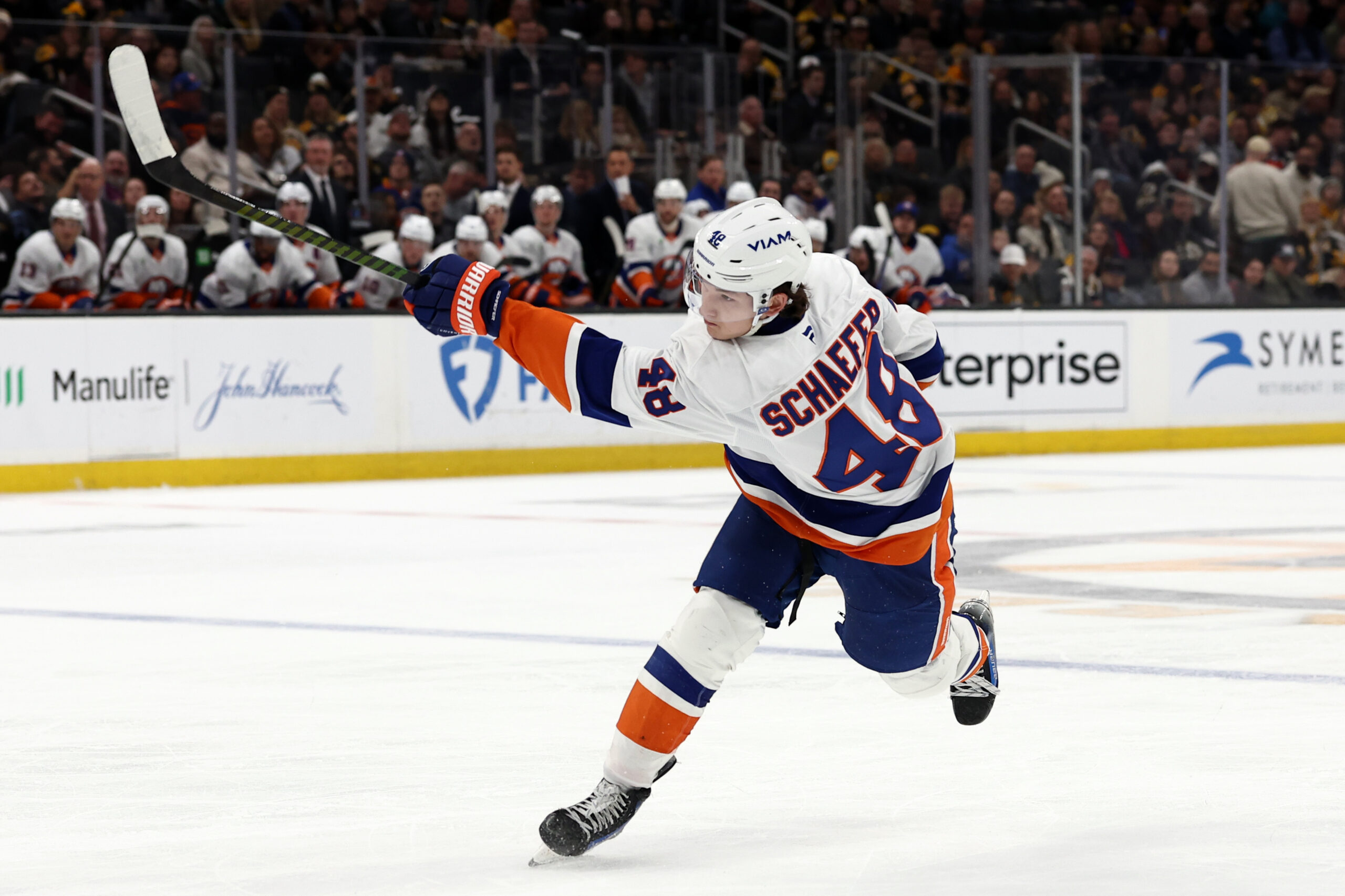
Matthew Schaefer won the Calder Trophy at 18 years old, becoming the youngest recipient in NHL history and the first unanimous winner since Teemu Selanne in 1992-93. All 198 voters agreed. The New York Islanders defenseman played all 82 games, posted 23 goals and 59 points, averaged 24:41 of ice time, and finished plus-13—numbers that defy what teenage defensemen are supposed to do in Year One. The statistical floor is already historic. The betting market, however, may not have fully adjusted for what comes next.
Schaefer's season wasn't built on sheltered minutes or favorable matchups. He played heavy, drove play through his own puck-carrying and offensive instincts, and recovered with elite skating when plays broke down. The Islanders were a different team when he was on the ice—more confident, more tilted in their direction. That's the signature of a player who isn't just padding counting stats but reshaping his team's competitive structure. The question for prop bettors isn't whether he was the best rookie; it's whether his scoring and playmaking lines for the coming season already reflect a player operating at a Norris-caliber trajectory.
The market pricing for Schaefer's 2026-27 season will likely treat his rookie totals as a ceiling, not a floor. That's the standard reflexive move: a young player explodes, odds compress, expectations reset downward. But Schaefer's edge isn't a spike from luck or favorable matchups—it's structural. He has room to refine shot selection, manage his workload smarter, and lean harder into offensive moments without the learning curve that typically attaches to 18-year-old rookies. The Islanders are already building the team around him: acquiring depth on the blue line, stabilizing the power play, and giving him linemates who can finish. Those are material changes that unlock his assist rate further.
For prop purposes, Schaefer's assists line carries particular value. His rookie campaign generated 36 assists across 82 games (0.44 per game), but that came while he was still discovering range and timing from the blue line. As the Islanders build offensive depth and the power play improves from its current inefficiency, his setup rate should spike. A defenseman who broke Phil Housley's record for points by an 18-year-old and drove play the way Schaefer did isn't likely to regress into a 55-60 point second season—he's more likely to tick toward 65-75 as efficiency compounds with opportunity.
The betting angle is straightforward: Schaefer's season-long assists total, when released, will likely be priced as if his rookie season was an outlier. It wasn't. It was the beginning of a sustained elite run. Early-window bets on his assists over 45+ or points over 68+ will hold value before the market calibrates to a defenseman playing 24+ minutes a night in Year Two, with a cleaner power play and a team built to maximize his touches. The Calder Trophy was a milestone. The next wave of props is where the real edge sits.