Wild's Center Void and Blue-Line Collapse Exposed Colorado's Speed Advantage
By Ty Whitney ·
Minnesota's second-round exit reveals how injury, depth mismatches, and defensive pace disparity compound into playoff elimination.
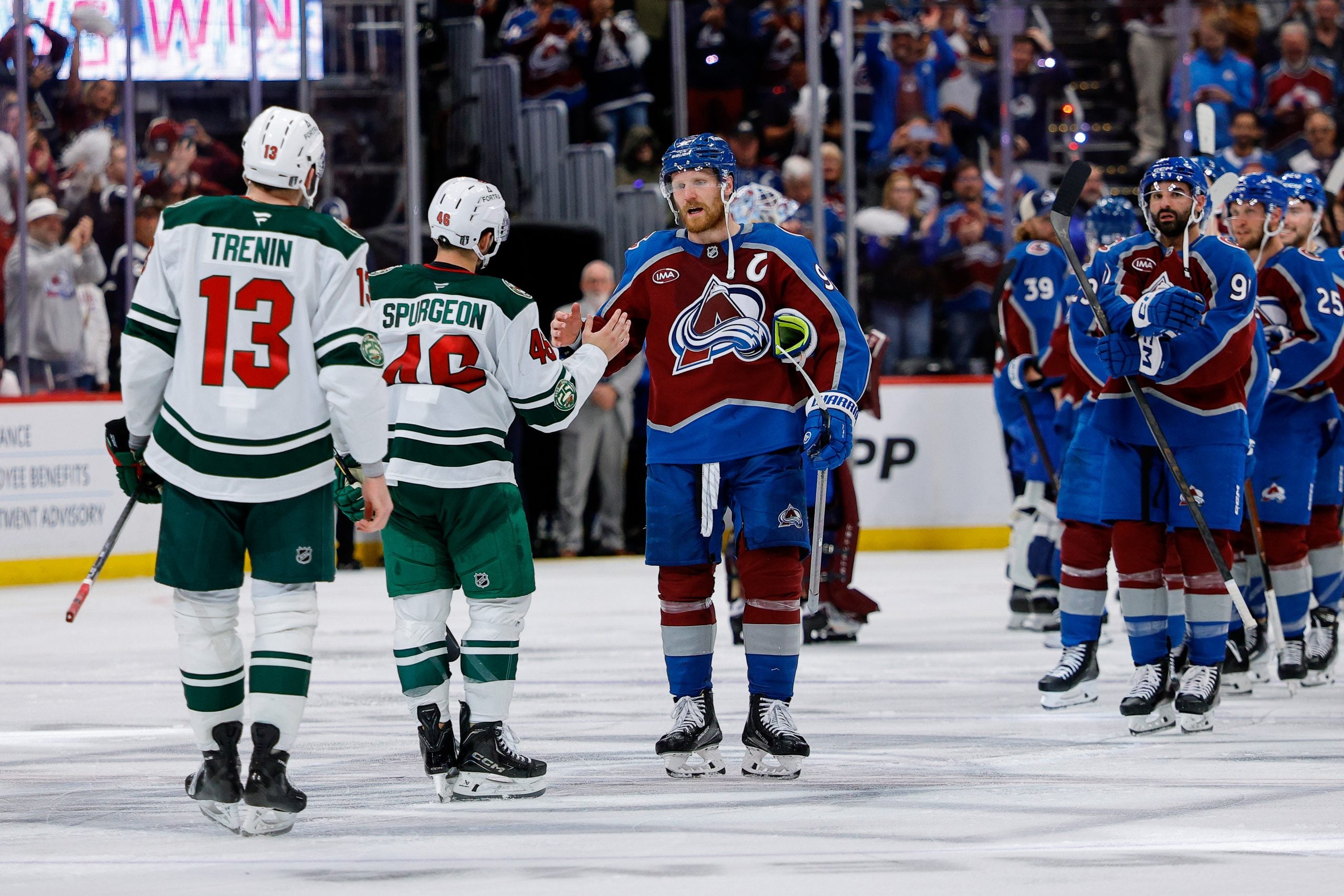
The Minnesota Wild's five-game exit to Colorado in the second round wasn't decided by a single breakdown—it was a cascade of structural vulnerabilities that the Avalanche's elite pace of play systematized into a series victory. Joel Eriksson Ek's absence left the Wild's forward core undermanned at the position that controls offensive flow and defensive support through the neutral zone. Michael McCarron and Danila Yurov, thrust into roles neither had earned through regular-season performance, became liability targets in a series where Colorado's speed demanded seamless center-ice management.
The defensive picture deteriorated further. Jonas Brodin's injury forced the Wild into a blue-line partnership that lacked both mobility and processing speed. Jake Middleton's 41.17 expected goals for percentage and Zach Bogosian's 40.83 xGF% weren't statistical noise—they were signatures of defenders overwhelmed by transition tempo. Middleton was on the ice for three straight Colorado goals in the decisive Game 5, including the overtime winner, his positioning consistently a half-step behind MacKinnon and Necas. At 35 years old, Bogosian simply lacked the lateral recovery to defend the perimeter at Colorado's skating velocity. A coach forced to limit bottom-pair minutes in a playoff series has already lost the matchup.
Colorado's superiority in pure skating velocity provided the underlying advantage. Per NHL Edge data, the Avalanche logged 19 additional 22-plus mph speed bursts and 44 more 20-22 mph bursts than Minnesota across the series. That difference compounds across five games and forty-plus minutes per night. Colorado generated offense on the rush consistently because the Wild couldn't compress the ice fast enough to prevent it; their defensive structure, thin at center and unsteady on the perimeter, had no answer for sustained high-speed forecheck and transition creation.
The playoff-betting implication centers on how structural injuries reshape playoff matchup odds in real time. When facing teams with elite skating infrastructure—and the Avalanche sit among the NHL's elite—missing a first-line or second-line center isn't a marginal loss; it's a fundamental asymmetry in how the game is played. Wild moneyline props and series odds should have reflected deeper probability of elimination once Eriksson Ek's absence was confirmed and Brodin's injury status became clear. Books likely priced those injuries conservatively, but the compounding effect—thin center depth meeting a speed-dominant opponent while defensive depth contracted—created a wider edge than single-injury adjustments typically capture. Going forward, any team missing both a top center and a top defenseman against Colorado or teams with similar pace profiles faces elimination probability north of what raw seed positioning suggests.