Kyrou's Defensive Floor, Offensive Ceiling, and the Trade Market Bet
By Erik Schwartz ·
Jordan Kyrou's 46-point downturn masks his elite two-way play, but a new GM and full no-trade clause create offseason uncertainty that will ripple through prop markets once a destination emerges.
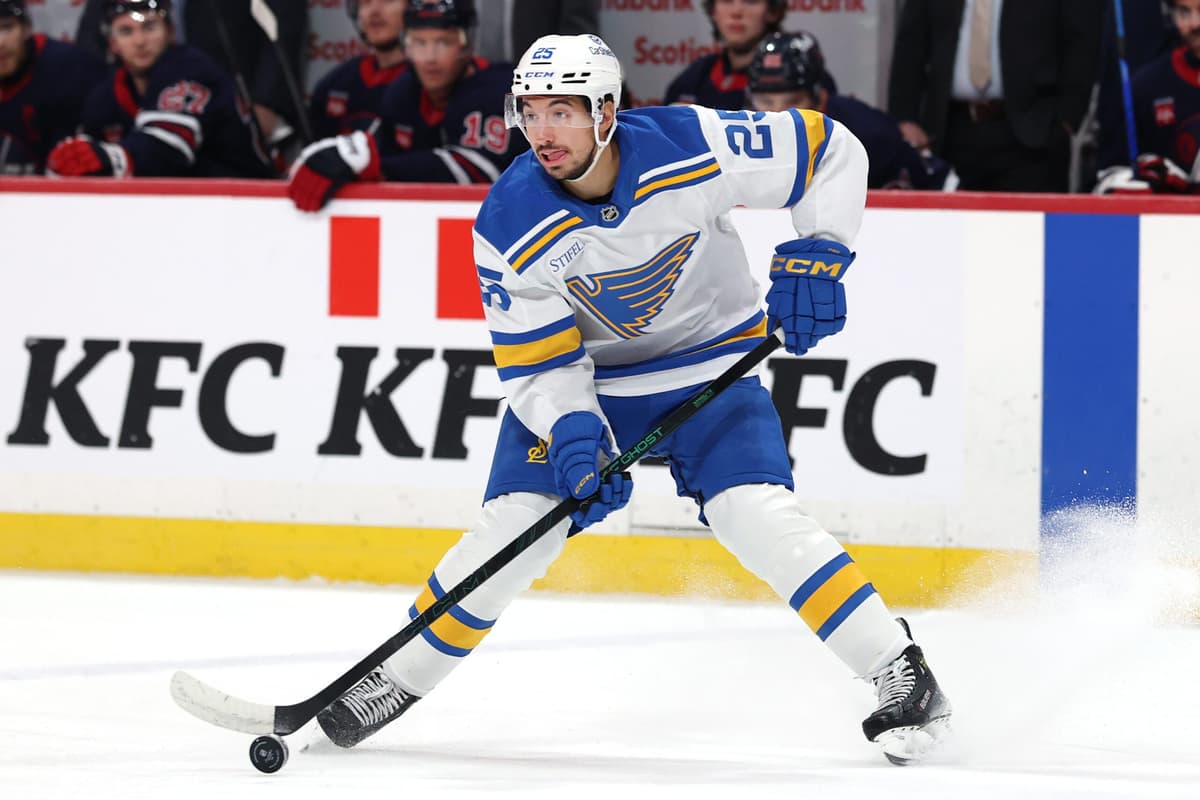
The St. Louis Blues face a roster inflection point with Alex Steen taking over as general manager from Doug Armstrong, and Jordan Kyrou sits at the center of that uncertainty. Kyrou's 46 points in 72 games represents a sharp decline from his prior three seasons—all of which crossed the 67-point threshold—but the headline drop obscures what actually happened: his defensive metrics remained elite, while his offensive touch evaporated and team chemistry frayed visibly (he was healthy scratched multiple times and drew boos from his own crowd as recently as last season). The question is no longer whether Steen will reshape the roster; it's whether Kyrou will choose to be part of that rebuild, given his full no-trade clause provides him veto power over any deal.
The contract structure matters because it flips conventional trade leverage. Kyrou cannot be moved without his consent, which typically dampens market heat. But the underlying talent remains; before this season, he ranked top-20 in goals over a three-year span and tied Adrian Kempe in cumulative output. That production floor, combined with elite defensive positioning and neutral-zone work, means teams will call—particularly fit-based matches like Edmonton, where a change of environment could unlock career-best production. The Blues' offensive system and coaching dynamics may have suppressed his ceiling, not eliminated it.
For prop bettors, the trade angle creates a timing and valuation asymmetry. If Kyrou remains in St. Louis under Steen's direction, his prop lines (assists, shots, points) will likely reset lower given the offensive regression and team instability. If he moves to a contender with a cleaner offensive structure, his assist and point projections could spike 8–12% once a new market opens. The no-trade clause means this decision unfolds over weeks, not days—markets will price uncertainty initially, then compress once a destination clarifies. Early-season props on Kyrou are unreliable until the trade status resolves; the smart move is to monitor announcement timing and strike on post-trade lines when his new team's offensive context becomes concrete.
Robert Thomas's reduced likelihood of departure (per reporting from Andy Strickland) also signals Steen's preference to build around him rather than blow up the core. That incremental stability actually increases the probability Kyrou seeks a fresh start, because pairing him with Thomas long-term in an underperforming system feels mutually limiting. Steen, as a former player who understands culture and chemistry, may not fight hard to retain a player whose own fanbase has turned. The trade market whispers are already real; the timing is the only variable. Season-opening props on Kyrou should be avoided until his destination is confirmed.