Carlson's Eastern Homecoming Reshapes the Defenseman Market
By Erik Schwartz ·
With Raddysh off the board and Carlson hitting free agency, the market for impact righthanded defensemen just compressed—and it opens a path for contenders to lock in a late-career power-play specialist before the bidding escalates.
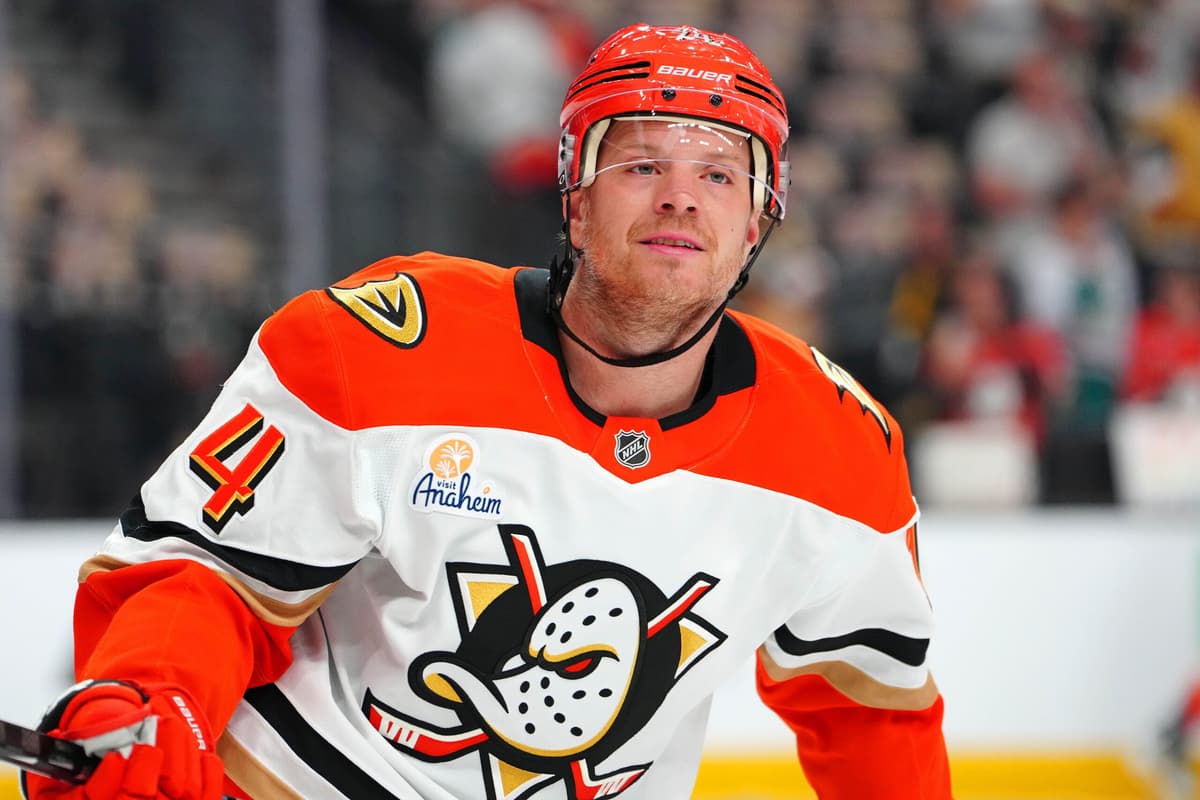
John Carlson is leaving Anaheim and heading to market as an unrestricted free agent, with a clear preference to return to the Eastern Conference and be closer to his family. The Washington Capitals dealt him away in what remains one of the franchise's more bewildering moves—shipping out their most productive defenseman in franchise history for draft compensation while still in playoff contention—but Carlson has already signaled he won't be waiting on a Capitals reunion. At 36 years old and coming off 20 points in 28 games across the regular season and playoffs with the Ducks, he remains a functional offensive driver, particularly on the power play.
The removal of Darren Raddysh from the UFA market—Toronto snagged him on a sign-and-trade earlier today—fundamentally alters the leverage position for teams hunting rightside depth. Raddysh was the consensus top defenseman available, and his departure narrows the field of elite options. That leaves Carlson and Rasmus Andersson as the tier-one blueliners still on the market, though Andersson's position is murkier: he struggled after Vegas acquired him mid-season but stabilized later in the year, particularly on even strength. The Golden Knights, cap-crunched and with Pavel Dorofeyev absorbing offensive output, may struggle to retain him. If Andersson opts elsewhere or if Vegas can't fit the contract, Carlson becomes the default choice for contenders with rightside urgency.
Carlson's market timing is instructive for the betting angles at play. His power-play pedigree and late-season offensive surge (20 points in 28 games is a 58-point pace over a full season) will attract offers from Eastern clubs. However, his age and the shortened term he'll likely accept (teams will front-load AAV over years to manage cap hit) mean his open-market bidding will be aggressive but brief. Any team signing him to a one- or two-year deal at $5M-$6.5M AAV is banking on his special-teams production—and specifically on his quarterback role on the power play—to deliver edge in playoff depth scoring.
For prop purposes, the Carlson signing becomes relevant when he lands, which should occur within the next seven to ten days as teams file offers. His destination matters acutely for power-play point totals: a move to a top-six offense (Toronto, Boston, New York Rangers, or Tampa Bay) would elevate his assist volume because those teams operate higher-zone entries and generate more shooting opportunities on the man advantage. Conversely, a landing spot with a weaker power play or transition offense (like Buffalo, if they remain interested after the Tuch standoff) would suppress his secondary scoring despite his skill. Right now, the market doesn't yet know his destination, so any power-play assist prop lines tied to Carlson's 2026-27 season haven't crystallized. Once his team is announced, expect immediate correction. The angle exists in the 48-hour window between signing and line adjustment, when early books may price his power-play floor based on his Anaheim usage rate rather than his true destination offense.
What's less obvious but more durable: Carlson's defensive positioning in the first pairing for whichever Eastern team claims him will shape correlated props for his linemates. If he signs with Toronto, he pairs with whoever the Leafs slot as their left-side anchor (likely Morgan Rielly or a new acquisition). That pairing's combined possession rate, shot-blocking volume, and even-strength defensive pressure will all shift based on Carlson's mobility and stick work. He's not a shutdown defender—break-even at best—but his ability to retrieve pucks and initiate transition play means teams will use him to push pace on the blue line. Any bet tied to first-pairing shot-volume or hits for Carlson's new partner should account for his elevated support in transition, which would increase offensive-zone exits and reset shot volume downward relative to a more defensive partner.