Max Domi's Failed Physical and the Surgeon Rift That Signals Toronto's Availability Risk
By Ty Whitney ·
The Maple Leafs' unusual phrasing around Domi's postoperative status—combined with reporting of a medical disagreement—flags real uncertainty about his training-camp and season-opening readiness.
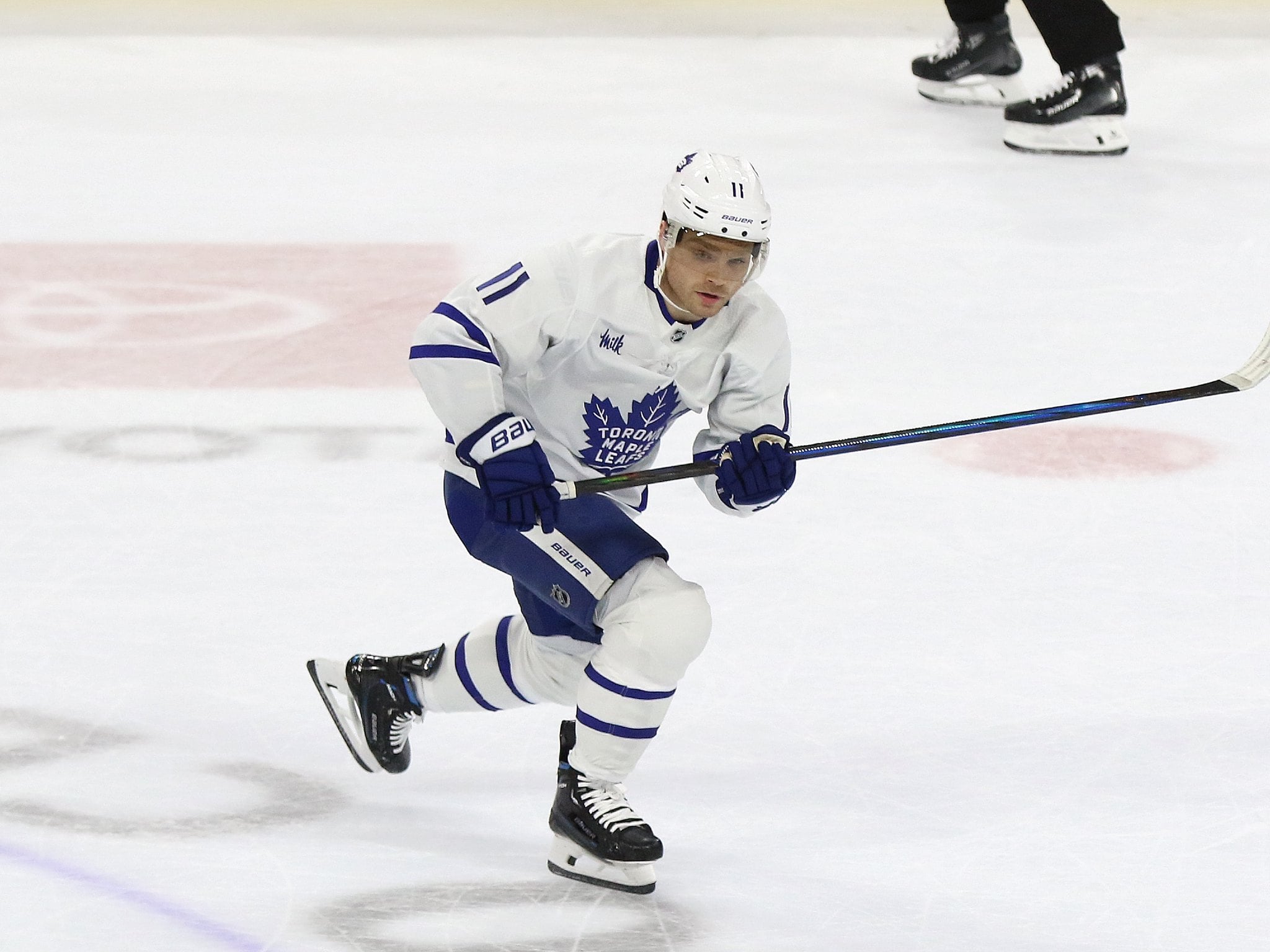
Max Domi will not skate with the Toronto Maple Leafs at training camp this fall. The team announced he 'failed his physical' after undergoing offseason surgery for an undisclosed injury sustained last season. That word choice matters more than a routine injury update might suggest. There is a material difference between saying a player hasn't yet cleared medical evaluation and announcing he has failed a physical—the latter carries the implication of a threshold unmet, a standard not satisfied. In professional hockey, 'failed' is the language you hear when a prospect doesn't pass a pre-draft exam, when a trade candidate's medical workup derails a deal, when a player's body can't meet organizational benchmarks. It is not the language typically used to describe routine post-surgical progression.
Context sharpens the picture. The Toronto Sun reported in May 2026 that Domi, rather than using the Maple Leafs' preferred surgeon, retained his own physician for the procedure. That reporting remains unconfirmed and does not necessarily signal medical disagreement—elite athletes routinely seek second opinions on significant injuries. But the sequence is worth parsing: Domi elects his own surgeon. Surgery occurs. The organization announces complications have emerged. Months pass. The GM does not describe continued rehabilitation; he announces a failed physical. And Domi, not the team, is expected to provide explanation. That is not a routine arc.
The betting consequence is stark. If Domi was a reliable contributor before the injury—and he was, a 50-point threat across 82 games—his absence or limited role creates cascading line adjustments for Toronto. The Maple Leafs' depth production, their ability to manufacture secondary scoring behind Matthews and Marner, depends on Domi's availability and effectiveness. A player who fails his physical in mid-September facing weeks or months of remedial work is not simply 'day-to-day.' He is a structural question mark. The team's win-total and playoff equity pricing already incorporates baseline roster assumptions. A prolonged Domi absence—or worse, a season-opening unavailability that bleeds into October—forces recalibration of Toronto's offensive depth and fourth-line stability.
For prop bettors, the angle sits in team totals and win projections. If Domi misses material game-time early, the Leafs' ability to sustain offensive volume without him becomes the actual variable, not the theoretical one. Toronto's depth line assists, secondary scoring props, and team point totals all carry embedded assumptions about Domi's mid-season contribution. A failed physical that extends into the regular season collapses those assumptions. The market has not fully repriced for a Domi absence lasting beyond training camp. Early-season Toronto team totals and spreads may still reflect a roster at full strength rather than one navigating month-long depth-scoring deficits. Bettors fading Toronto in the first two weeks—before the team has a chance to find alternative scoring patterns or before Domi returns—are betting against a team operating without a significant piece.
The linguistic precision of 'failed physical' and the reported surgeon disagreement are not noise. They are signals of organizational friction and legitimate injury complexity. The market's line on Toronto is built on hope that this resolves quickly. The physics of postoperative complications and physician differences suggest it may not.