NHL · transaction
Vladar's Extension Math: Flyers Face a Backup Goalie Valuation Problem
Philadelphia has a star backup on its hands, but bridging the gap between what Vladar wants and what makes sense for a non-starter carries real implications for the team's depth and playoff reliability.
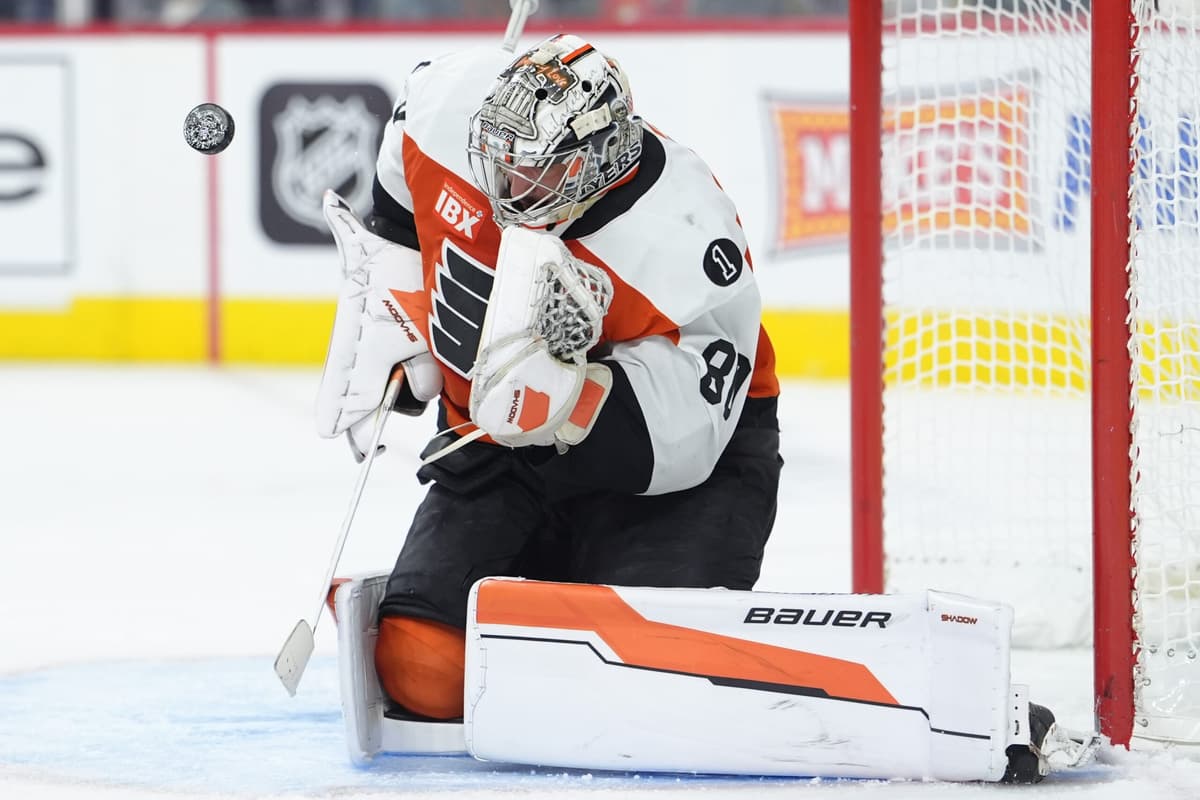
Dan Vladar has leveraged a breakout 2025-26 season into serious leverage in his own contract talks. The 28-year-old posted a .906 save percentage as the Flyers' primary starter—a stunning turnaround for a career backup who'd never played more than 30 games in a season before Philadelphia signed him last July to a two-year, $6.7 million deal. He's now eligible for an extension this summer, and per team sources, the Flyers want to lock him in long-term if the money makes sense.
The problem is structural, not tactical. Vladar's one elite season has created a valuation trap. Compare him to recent comparable extensions: Filip Gustavsson inked a five-year, $6.8 million AAV deal with Minnesota at age 27 with a .904 SV%, nearly identical to Vladar's profile. Thatcher Demko got $8.5 million AAV on three years in Vancouver. Lukas Dostal signed for five years at $6.5 million AAV in Anaheim. The market for starting-caliber goaltenders with one year of elite performance is hot, and agents know it. Vladar will point to his .906 and playoff performance and ask for the top-shelf money. The Flyers, however, hold a negotiating edge: Vladar has never sustained starter-level volume, and they have younger options (Carson Bjarnason, Yegor Zavragin) in the pipeline who could displace him.
Team sources indicate the Flyers' comfort zone sits around $5.75 million AAV on a five-year term—roughly a million dollars south of the Gustavsson comp. If Vladar pushes for $7 million or closer, a shorter three-year deal becomes the fallback. A three-year contract kicking in at age 29 gives him another shot at a big payday at 32, rather than aging into his 34-year-old free agency with the tag of a long-term backup. That's the sales pitch the organization will make, and it's mathematically sound for both sides if Vladar's agent accepts that one breakout season doesn't guarantee another one.
Where this matters for bettors: Vladar's contract status directly shapes Philadelphia's goalie depth metrics heading into next season. If the Flyers lock him in on a five-year deal in the $5.75M range, it signals confidence in his durability and performance stability—a vote that will influence team construction, playoff depth betting, and any goalie-adjacent props tied to save percentage floors or starter workload. If negotiations stall and the Flyers pivot toward Toronto's Joseph Woll (a .906 career SV% goalie at lower cost), the team's approach to games and rotation patterns could shift. Vladar's extension amount also affects the salary cap flexibility available for other roster moves, which indirectly influences team-total over/under volatility throughout the season. A five-year deal at $5.75M locks in predictable cost; a shorter, richer deal at $7M+ creates cap risk that bleeds into game-planning decisions and mid-season trade posture.
The betting edge here isn't a direct goalie prop—it's organizational signal. If Vladar signs the five-year, sub-$6M deal in the next 30 days, it's a bullish indicator that the Flyers' front office believes in his repeatability and is willing to invest long-term. That confidence typically shows up in preseason line adjustments and team-total expectations. If contract talks drag into July or negotiations break down, the uncertainty itself becomes a fade signal: teams don't build rosters with optimism when their goaltending depth is unresolved.
NHL Intelligence — Hockey intelligence beyond the scoreboard. Open NHL Intelligence →