Dallas Dumps Young Forward Depth as Cap Crunch Tightens
By PropBetEdge Editorial Team ·
The Stars trade Mavrik Bourque and Ilya Lyubushkin to Nashville, signaling they're cashing in youth to manage salary constraints while their RFA negotiations stall.
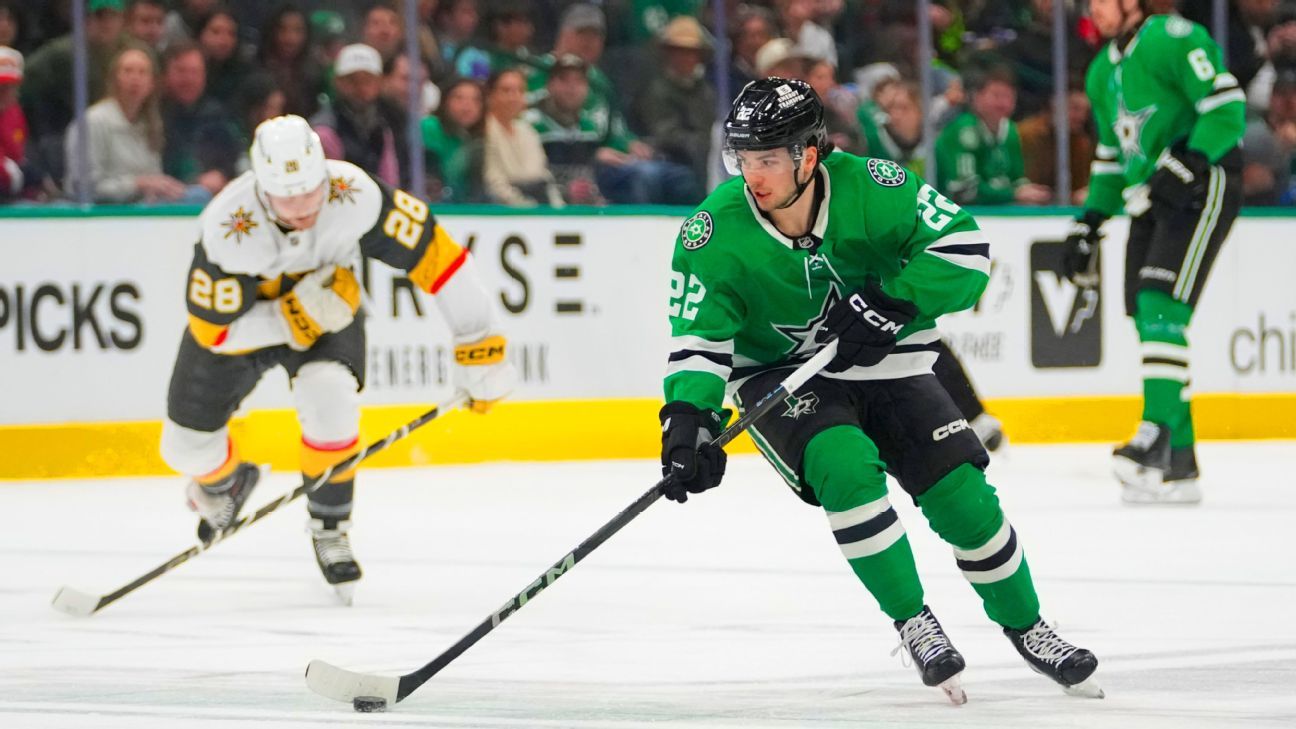
The Dallas Stars shipped restricted free agent Mavrik Bourque and veteran defenseman Ilya Lyubushkin to the Nashville Predators on Wednesday, collecting a 2027 second-round pick and 2028 third-rounder in return. On the surface, it reads like a GM clearing cap space and shedding arbitration risk. The deeper read is darker: GM Jim Nill is systematically liquidating young forward assets because the team's window doesn't have room for both sustainability and star retention.
Bourque is 24 and entering his third full NHL season having posted 20 goals and 21 assists over 82 games in 2025-26, averaging north of 15 minutes of ice time. He's arbitration eligible and carries no long-term salary commitment—exactly the type of controlled, cost-efficient depth forward teams build around. Yet Dallas couldn't find space for him, which traces directly to the Jason Robertson impasse. The two-time 30-goal winger remains unsigned and has already rejected a trade to Seattle; there's a material gap between what Robertson wants and what Dallas can offer under the cap. Lyubushkin's $3.25 million deal expires after next season, so shipping him out clears immediate runway but costs a veteran blue-line presence the team still needs.
This isn't an isolated move. Dallas previously traded away Logan Stankoven to Carolina in the Rantanen deal, another young center lost to cap pressure. The pattern shows a team trying to jam three Stanley Cup contenders into a single salary structure—a math problem that doesn't solve itself. MacFarland, Nashville's new GM, inherited Colorado's salary-cap discipline and is now pilfering Dallas's depth at a steep discount. A second-round pick in 2027 is lottery-adjacent asset in today's draft market; a third-rounder two years out is nearly worthless. Nashville is basically buying two years of financial flexibility and roster stability from a franchise in panic mode.
For prop purposes, this gutting of depth carries two direct implications. First, Dallas's remaining forwards face elevated workload risk. Whoever fills that 15-minute slot will absorb more ice time, meaning higher floor on shots and touches but also higher injury variance—fatigue compounds. Second, the Stars' forward group becomes more top-heavy and less adaptable to matchups. In games where the top-six faces unfavorable deployment, there's less depth to exploit via secondary scoring props. Lean toward overs on Dallas's top-three forwards' individual totals (Pavelski, Seguin, Robertson if he signs) in the opening month, when that workload reallocation is steepest and books haven't fully repriced it. The downside: if Robertson's contract dispute lingers into October, Dallas's offense contracts across the board, and that edge evaporates. Watch the Robertson signing closely before placing those bets.