Sharks Lock Celebrini, Now Chase Smith Extension Before Market Inflates His Ask
By Erik Schwartz ·
San Jose's aggressive extension strategy with its two young cornerstones signals confidence—and urgency—as salary cap pressures mount and restricted free agency approaches.
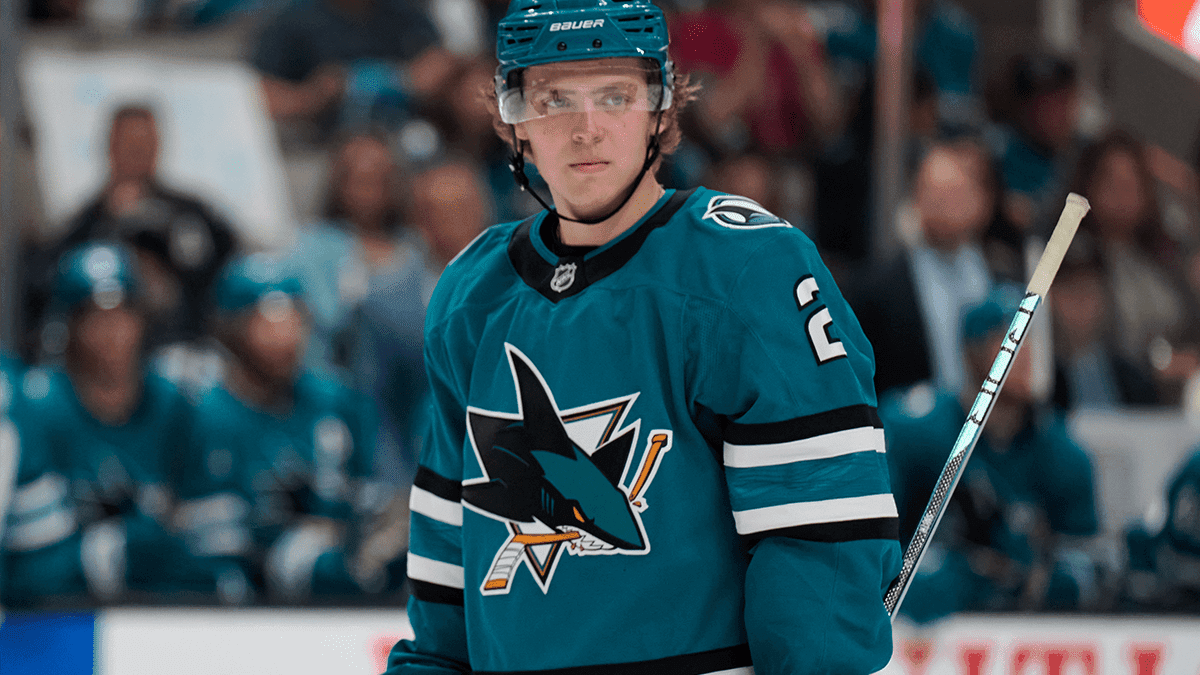
The San Jose Sharks moved fast Wednesday, inking Macklin Celebrini to a five-year, $94 million extension beginning in 2027-28—the richest average annual value deal in NHL history at $18.8 million per season. But before the ink dried, GM Mike Grier pivoted to the next priority: locking up Will Smith, the 24-year-old forward and restricted free agent in waiting, before the market for young, cost-controlled talent evaporates.
Smith's numbers explain the urgency. Coming off a 59-point season (24 goals, 35 assists in 69 games) in his second pro year, he's sitting on an entry-level cap hit of $950,000 with one year remaining. That massive gap between current salary and market value—Grier openly acknowledged Smith's next contract could land at $10 million AAV or higher—creates a binary choice: extend him now at a reasonable number, or risk watching his arbitration ask spiral upward if his production accelerates over the next 12 months. The Sharks went from league basement to playoff contender in a single season, which means the roster won around Smith's two-way impact. His efficiency matters more now.
The timing isn't coincidental. Celebrini's mega-deal consumed cap space and sets a tone: San Jose is in win-now mode with a young, ascending core. That confidence allowed Grier to speak publicly about his preference for keeping Smith locked down, even while hedging with "if it doesn't happen, we'll figure it out." That's negotiating theater. The real signal is internal: the Sharks' front office believes Smith's trajectory justifies paying him before the RFA market inflates his asking price next July. Every month Smith plays without a deal, his leverage grows—and so does San Jose's liability.
For bettors tracking Sharks team construction, this matters because roster stability correlates with predictable offensive output. Smith's 59-point campaign arrived on the back of consistent ice time and defined role clarity. If negotiations drag into the season or sour, his production could flatten—uncertainty almost always depresses individual scoring. Conversely, an early extension removes the distraction and locks in the lineup continuity that fueled San Jose's 2025-26 surge. Watch for contract news in the next 4-6 weeks (by mid-September). If Smith inks before training camp, his player totals props should reflect baseline expectations. If negotiations stay frozen into October, discount his early-season point-per-game projections by 5-8% and lean toward unders on his assist line until clarity emerges.
Celebrini's extension also created a secondary angle: with $18.8 million committed to one forward starting next season, the Sharks have limited cap flexibility for external additions. That means Smith's production—whether he remains cost-controlled or graduates to a premium salary—becomes the secondary engine driving team total goals and assists. His line combinations and ice time will be scrutinized carefully. If Smith doesn't extend and hits RFA arbitration next summer at a $10 million ask, San Jose may need to shed salary elsewhere, potentially affecting lineup depth and offensive distribution. Celebrini alone can't carry the team's offensive load. Smith's stability matters.