Sharks Punt on Eklund's Upside, Bet on Draft Capital Volatility
By Erik Schwartz ·
San Jose trades away a 23-year-old winger locked in at $5.6M to Ottawa for the No. 9 pick, signaling organizational desperation and reshuffling its offensive core ahead of next season.
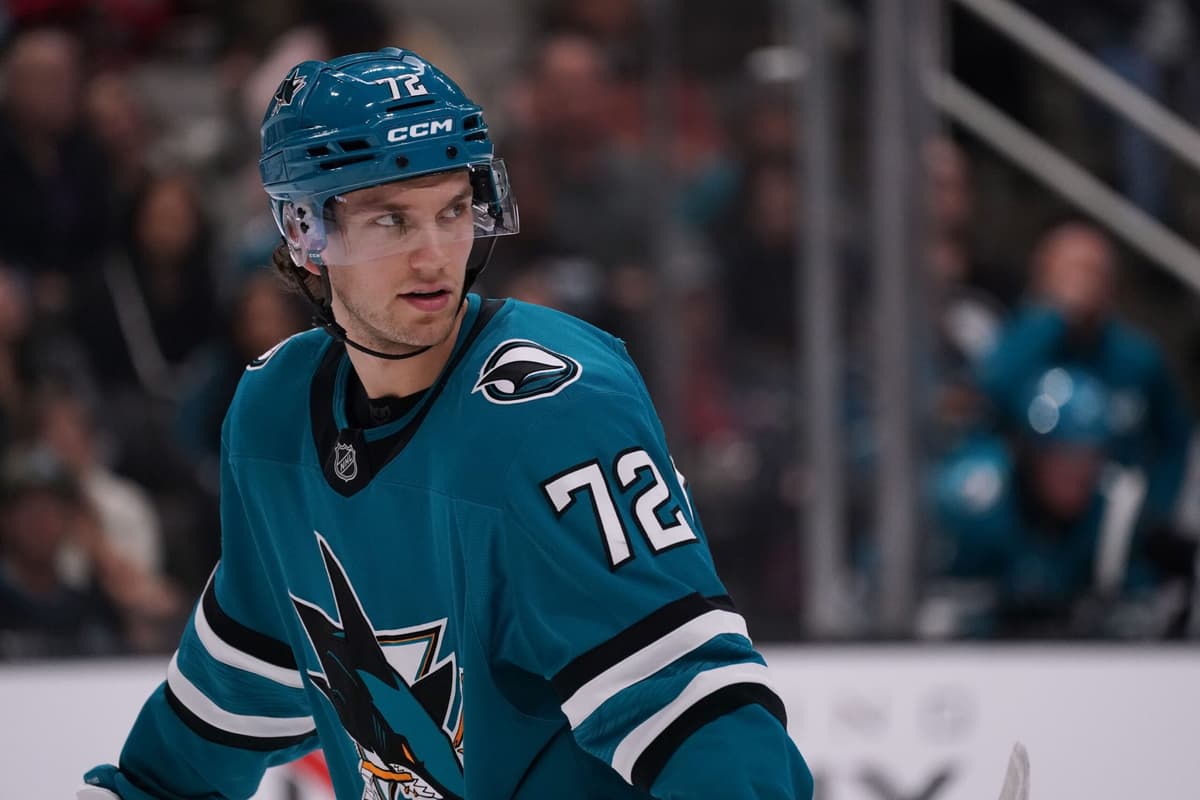
The San Jose Sharks have traded William Eklund, Kasper Halttunen, and Brandon Svoboda to the Ottawa Senators for the No. 9 overall pick in the 2026 NHL Draft, the team announced Tuesday. Eklund, 5'10" and under contract through 2029 at a $5.6M annual cap hit, posted 15 goals and 53 points in 78 games during the 2025-26 season—a middling return for a winger the Sharks selected seventh overall in 2021. The move represents a stark reversal of faith in organizational continuity; San Jose is essentially cashing out on a player still in his prime earning years to gamble on draft lottery variance.
The trade mechanics reveal the depth of San Jose's roster constraints. Eklund had settled into a secondary-option role, neither elite enough to anchor a power-play unit nor versatile enough to carry shutdown assignments. His 53 points over a full season suggest someone capable of depth-line production in a stable system—exactly the type of player contenders value at deadline time. Ottawa, freshly armed with first-round ammunition after absorbing Brady Tkachuk from Florida, is willing to absorb Eklund's mid-tier salary and development risk in exchange for financial flexibility and immediate roster depth. San Jose, meanwhile, has chosen depth rebuilding over present-day forward stability, a choice that typically precedes either a full teardown or a failed experiment that cascades into further asset depletion.
For San Jose's offensive envelope, this trade tightens margins considerably. The Sharks were already operating below league-average goal-scoring rates; losing Eklund's 15-goal contribution without a corresponding addition suggests their 2026-27 team total will compress. Over his 78-game season, Eklund averaged 0.68 shots per game, a modest volume metric typical of a third-line option. When a team trades away 50+ points of secondary scoring and immediately replaces it with a speculative draft selection, the incoming depth-chart uncertainty weighs directly on team offensive projections. The No. 9 pick will not contribute meaningfully during the 2026-27 regular season; San Jose is banking on a longer-term rebuild that concedes the next 12 months to a lower-volume offense.
The prop implication is straightforward: San Jose's team total and team over/under lines will face early downward pressure once sportsbooks model the Eklund departure. If the Sharks opened preseason with a team total projection of 3.0-3.1 goals per game (roughly aligned with their 2025-26 output), subtract approximately 0.15-0.2 goals per game for Eklund's removal and the organizational chaos that typically follows such mid-tier departures. Their second-half 2026-27 games—once draft pick integration becomes relevant—may recover some elasticity, but the opening 20-30 games of the season will reflect pure subtraction. Oddsmakers will likely price San Jose team unders at 3.0 or below by late August; that number is sustainable given the roster surgery and timeline mismatch between now and legitimate replacement scoring.
Ottawa, conversely, gains offensive optionality in Eklund, though the Senators absorbed significant salary in the process. If the Tkachuk trade was about dumping Eklund-level salary to create cap space, Ottawa's willingness to re-add it via Eklund signals they view him as tradeable again before 2029. The No. 9 pick now sits with San Jose, a team that historically struggles to develop depth from the early-to-mid rounds; that pick's eventual value is a pure volatility play dependent on San Jose's scouting competence. For bettors, the angle is not on Eklund's next destination—it's on San Jose's contracted offensive environment tightening measurably through at least Q1 2026-27.