Sennecke's 60-Point Rookie Year Vindicates Anaheim's Third-Overall Gamble—and Signals Durability in His Props
By Erik Schwartz ·
The Ducks saw what the market missed: a 6-foot-3 winger operating with small-man skill inside a power-forward frame, and his 60-point rookie season proves their scouting edge was earned, not lucky.
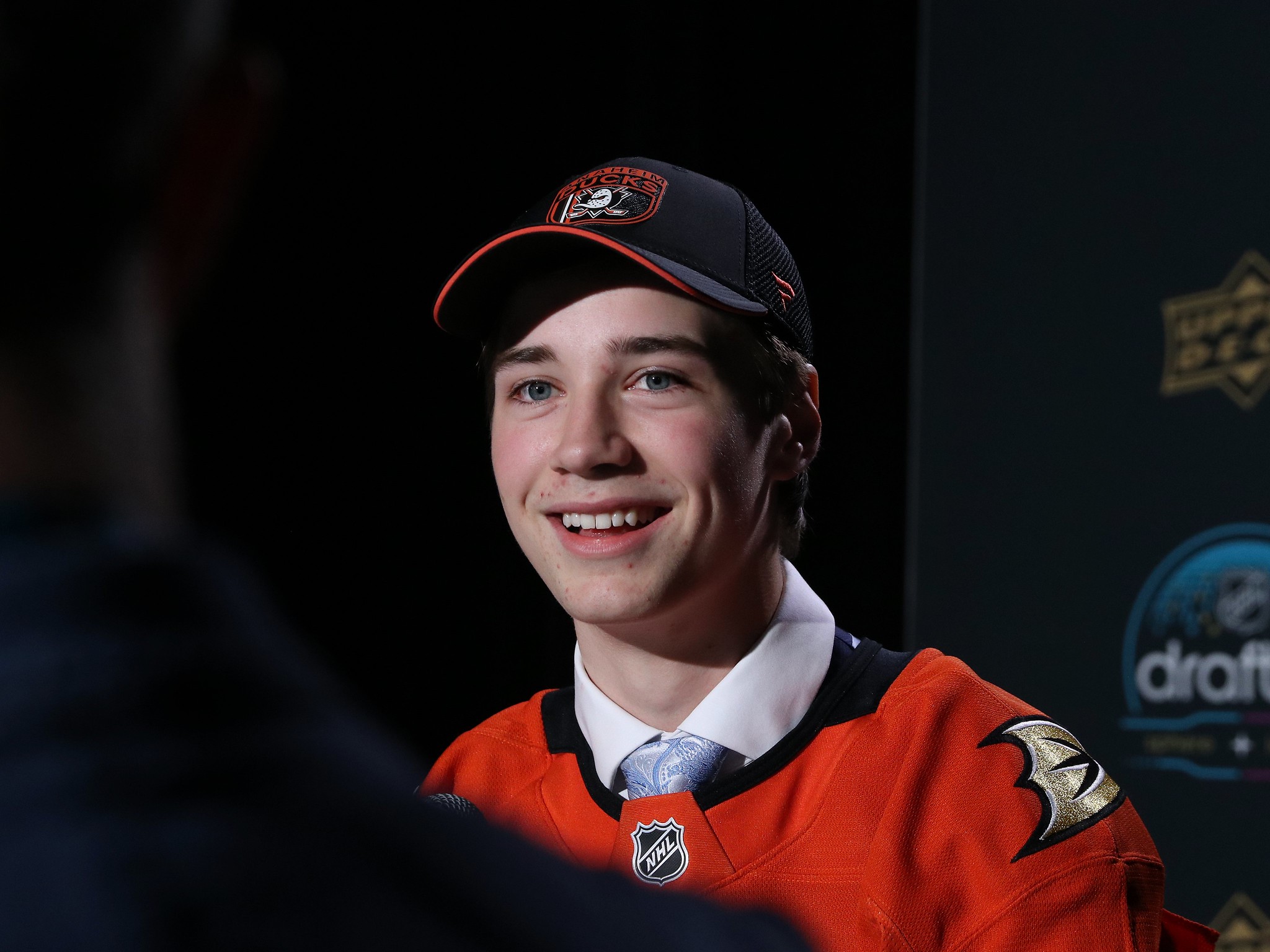
Beckett Sennecke's draft-night face went viral for the right reason—shock, disbelief, a winger nobody outside Anaheim's war room truly understood. When the Ducks called his name third overall in June 2024, the consensus was swift and nearly unanimous: the kid looked stunned because scouts and analysts were stunned too. Higher ceilings existed at that spot. Better combine metrics. Safer archetypes. Anaheim had built their entire thesis on a projection most of the league refused to make, and 18 months later, a 60-point inaugural season in 82 games with a Calder Trophy nomination has vindicated them completely.
The core evaluation problem was architectural. Sennecke had developed as a compact playmaker with elite hands and quick-twitch puck sense—the kind of skill set you'd expect from a 5-foot-10 setup man. By draft year, he'd grown to 6-foot-3 and 182 pounds, creating a frame mismatch that draft-board templates struggle to process. A power forward's wingspan wrapped around a skill player's neurology. His wrist shot adjusts angle in tight windows where goalies think the post is covered. His playmaking operates at long range, creating ice rather than just filling it. The compete metrics—backcheck intensity, forecheck engagement, direct attack—materialize in video and vanish from spreadsheets. That kind of gap between measurable output and actual value only closes when the player produces immediately, which he did.
A foot fracture in training camp cost Sennecke six to eight weeks—real lost ramp-up time for a rookie acclimating to the NHL's speed and physicality. The market repriced him down. Skeptics circled back. Instead, he posted 60 points over 82 games and locked into Anaheim's top six with the kind of efficiency that doesn't correct downward. His playmaking range (long-distance feeds, drive-and-dish from the perimeter) keeps opposing defenses laterally honest, and that structural gravity directly inflates his linemates' shot generation. In Anaheim's top-six deployment, Sennecke becomes a multiplier—not just a point-producer, but a defense-stretcher who creates shooting opportunities for others by forcing coverage decisions outward.
For prop purposes, the durability of Sennecke's output matters more than the raw 60-point finish. His ceiling wasn't some statistical mirage born from a soft schedule or a heater phase late in the season. It was built on stable mechanics: elite wrist-shot accuracy in confined spaces, creative long-range passing that generates secondary chances, and the kind of relentless compete level that translates across opponents and back-to-back contests. Anaheim's GM Bob Verbeek bet organizational capital on a projection, and Sennecke's Calder finish proves it wasn't variance—it was scouting competence. That same competence suggests next season his assist totals stabilize in the 35-40 range (he should pick up volume as his linemates adjust to his positioning), and his shot volume holds in the 185-200 band, making his 50+ point pace sustainable rather than one-year aberration.
The market likely reprices Sennecke's season-long props upward this fall based on the Calder nomination alone, but the edge isn't in chasing inflated totals. The edge is in recognizing that his assist floor is genuinely higher than books initially valued—not because he had a good year, but because his mechanics and linemate placement create a sustainable, non-regression basis for that output. Fade overreactions to his name recognition; lean into assists and shot volume at early season opens, when the market still discounts the scouting certainty that Anaheim built this entire gamble upon.