Buffalo's Draft Capital Play: Why Center Depth Changes How You Price Sabres Props
By Erik Schwartz ·
The Sabres won the Atlantic and nearly cracked the Conference Final, but their faceoff collapse in the playoffs exposed a critical weakness that will reshape roster construction and individual player leverage.
The Buffalo Sabres finished 2025-26 atop the Atlantic Division and came within a goal of the Eastern Conference Final, yet their offseason calculus now hinges on a single mechanical failure: center depth. During the second-round playoff series against Montreal, the team went 45.7% in the faceoff circle—second-worst in the postseason. Across the regular season, they posted a league-worst 45.9% mark. Coach Lindy Ruff's forced lineup shuffles, moving Tage Thompson off center and sliding Josh Norris into the top line, exposed how thin the club's 1C options truly are. That structural gap is now the lens through which the Sabres are evaluating their draft capital.
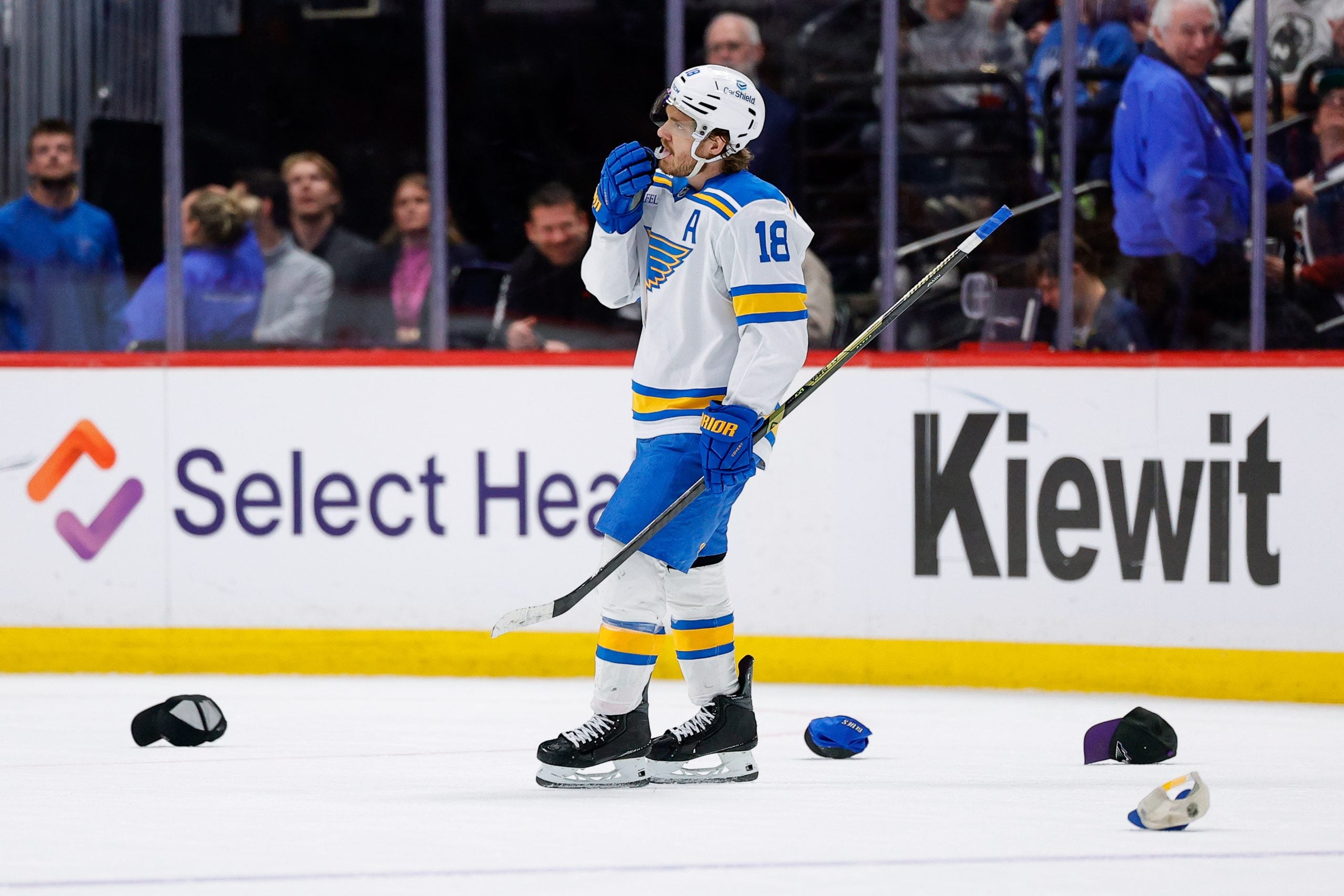
The team has been circling St. Louis Blues center Robert Thomas for months. Thomas has delivered point-per-game production in four of his last five seasons and wins faceoffs at 52.5%—a number that would have ranked near the top of Buffalo's roster. His contract runs five years at $8.125M annually. The Sabres' other target, New Jersey's Nico Hischier, carries similar utility: 66 points this season, a 55.8% faceoff win rate, and captain-level leadership—all on a single year remaining at $7.25M. The 27th overall pick (the Sabres' 2026 first-round selection) is the currency in play. On paper, that doesn't move markets. But the valuation signal matters: management has decided that immediate center reinforcement outweighs prospect upside. This is not a rebuild asset. This is a now asset.
What does that mean for how you price Sabres players? Thompson's role clarifies if the team lands their target. If Thomas or Hischier arrives, Thompson stays on right wing—a position that historically has seen his assist totals compress relative to his goal output. Over his last three seasons at center, Thompson averaged 0.52 assists per game; on the wing, that number contracts to 0.38. His anytime goal props remain stable, but any assist-adjacent line (points, assists) could shift lower if the team sacrifices secondary playmaking upside to secure that 1C faceoff floor. Conversely, if the Sabres fail to land either target and retain the pick, Thompson's leverage to stay center increases, which could support higher assists projection.
The team's identity shift—from a 14-year rebuild mentality to a win-now operation—also reframes how you evaluate depth scoring. A prospect-heavy roster generates volatility; veteran-anchored rosters compress it. If Kekäläinen uses the pick to land a net-positive center trade (Thomas or Hischier for a first-round pick plus futures), Buffalo's forward group becomes more predictable, harder to overthink, and more likely to sustain production consistency. That argues against overweighting game-to-game variance on Sabres props and favoring season-long trends and situational splits instead. The chaos that defined their 2025-26 run—the lineup thrashing, the faceoff implosion, the near-miss Conference Final exit—was a feature of incomplete roster construction. A completed construction, regardless of whether the pick stays or moves, will be measurably less volatile to analyze.